Lega
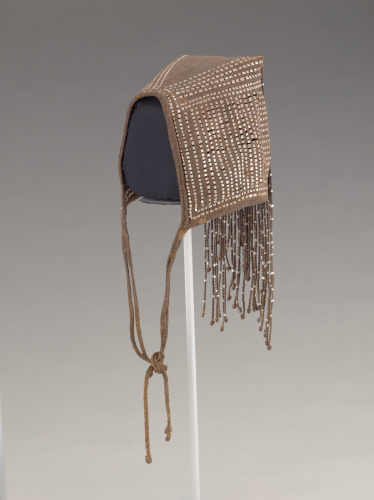
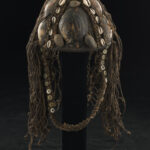
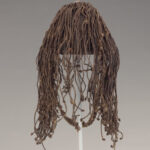
Man’s Hat
Lega, 2000
Scroll
Lega
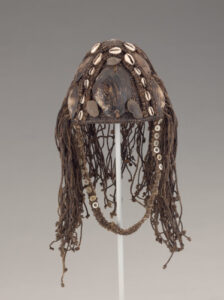
Man’s Hat
Lega, 2000
Physical Qualities
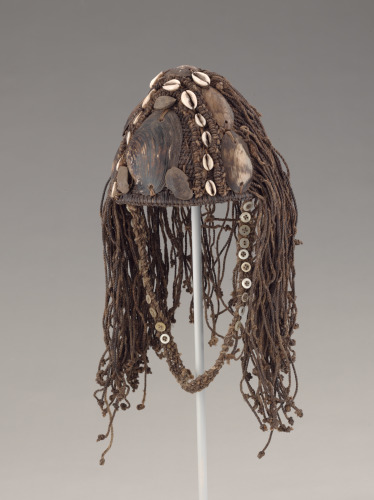
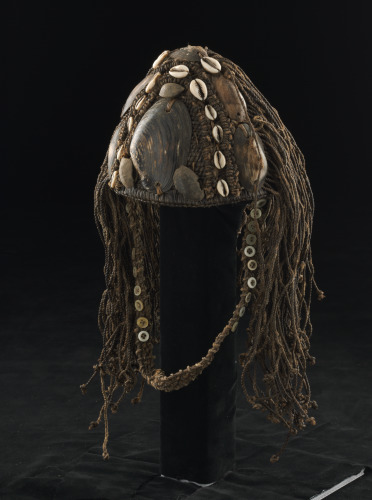
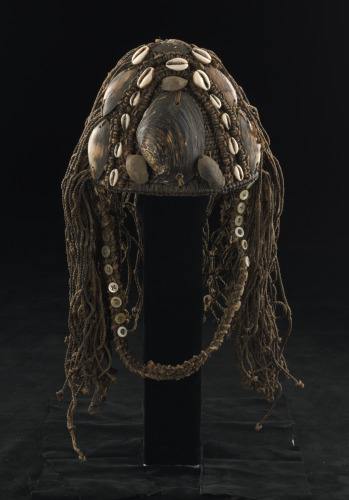
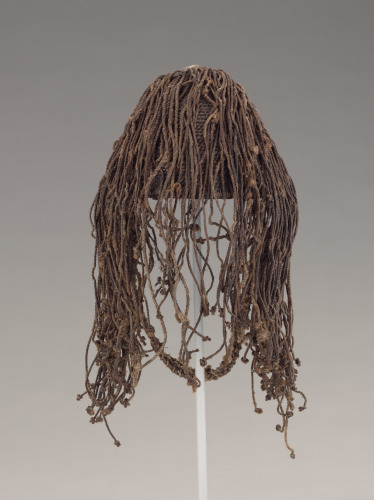
Plant fiber, clam, mussel, nut, cowrie shells, and plastic buttons, 14 x 6 1/2 x 7 in. (35.6 x 16.5 x 17.8 cm.)
Credit Line
Gift of Gilbert and Jean Jackson, Potomac, Maryland
Object Number
2009.211
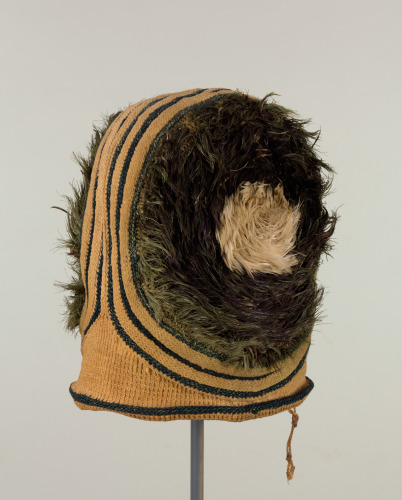
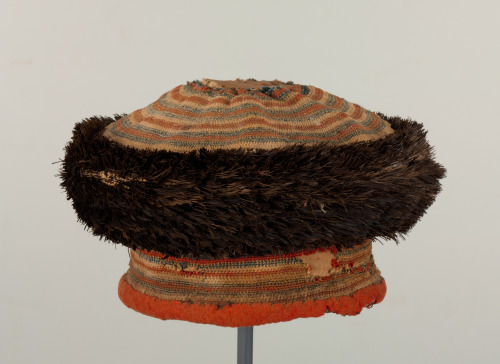
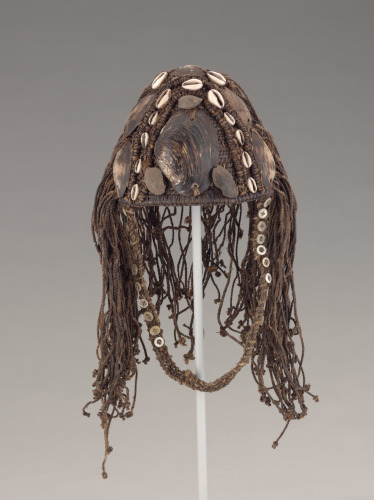
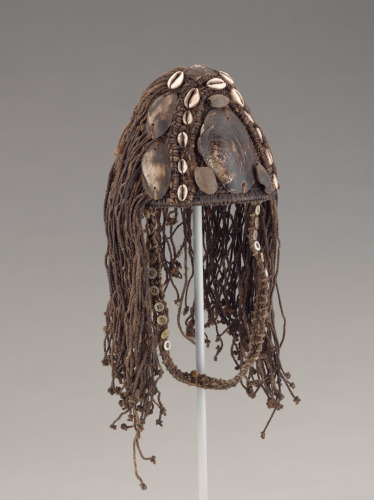
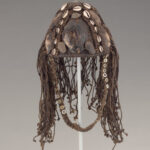
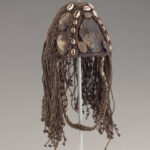
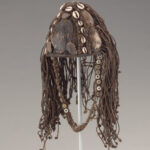
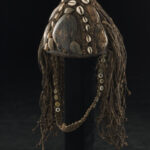
Adorned with clam shells and surrounded by seed pods, mussel shells, and cowries, this hat was once the most prominent sign of an unidentified Lega man’s rank and status. Before 1933, when most Indigenous political organizations were outlawed by the colonial government, the political, economic, and religious life of Lega communities revolved around a hierarchical association called Bwami.
As an individual advanced through the association’s five ranks, they were entitled to own and wear different types of clothes and objects. The man who owned the hat you see here had advanced to the fifth and highest grade, kindi.
The Baltimore Museum of Art by gift, 2009; Gilbert and Jean Jackson, Potomac, MD
Hand Held: Personal Arts from Africa
Subverting Beauty: African Anti-Aesthetics
African Gallery Rotations 2021
African Gallery Rotations 2022
African Gallery Rotations 2023
African Wing Rotations 2024
African Wing Rotations 2025
"In a New Light," BMA Today, Summer 2010, p. 11, ill.
 On View at the BMA