Paracas
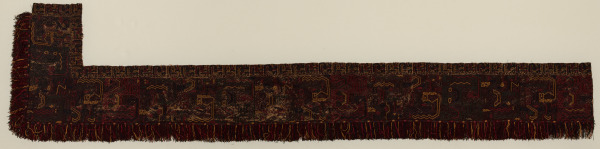
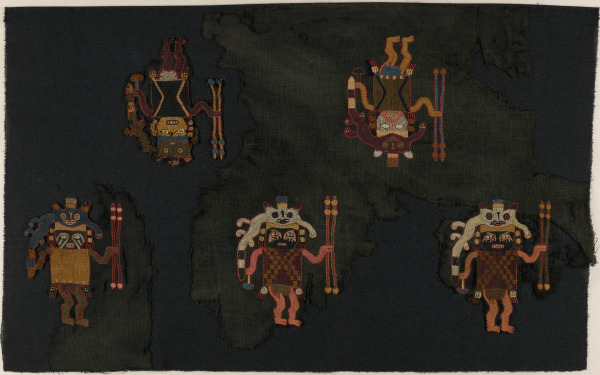
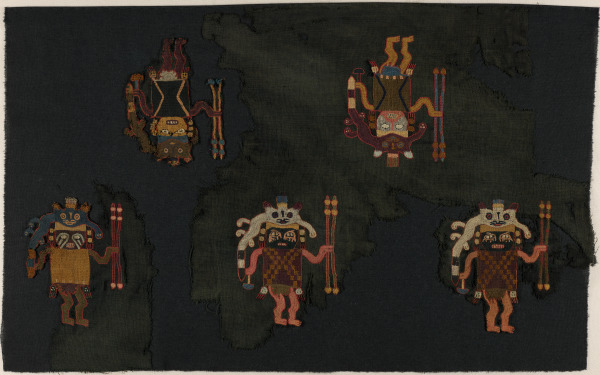
Mantle Fragment
Paracas, 200
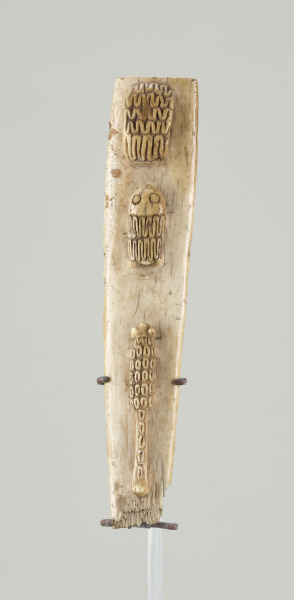
Scroll
Paracas
Mantle Fragment
Paracas, 200
Physical Qualities
Cotton, camelid fiber, 16 7/16 x 24 3/16 in. (41.7 x 61.4 cm.)
Credit Line
Purchase with exchange funds from Frank J. and Elizabeth L. Goodnow Collection
Object Number
1956.121
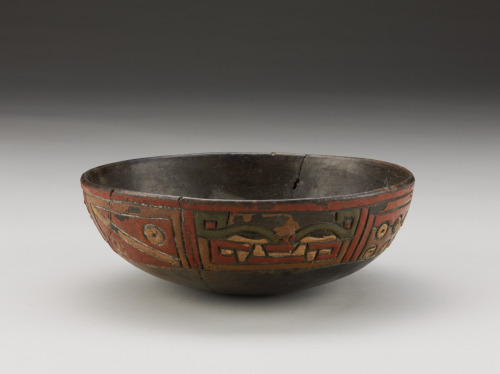
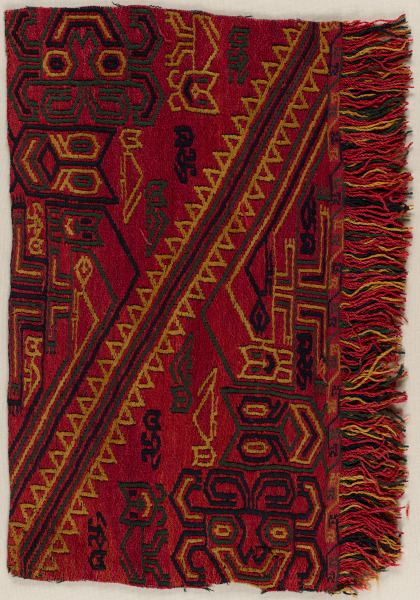
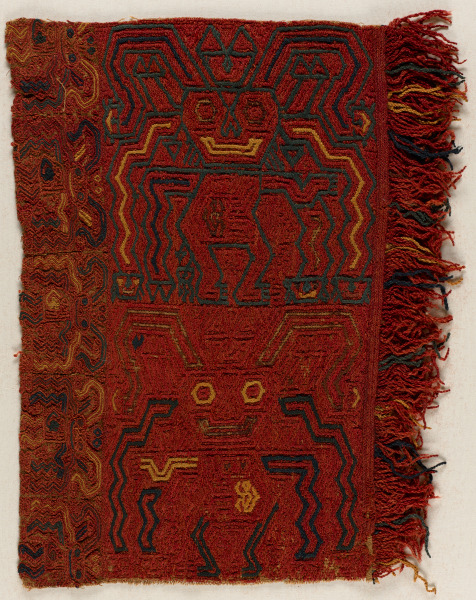
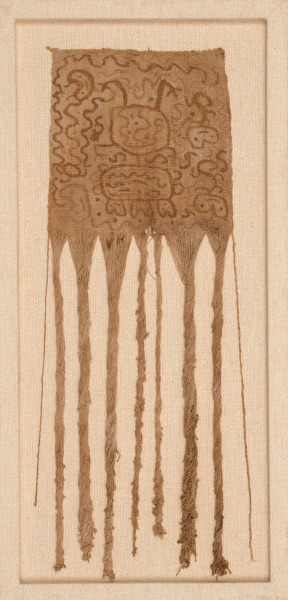
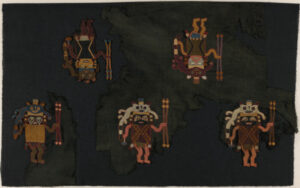
Richly colored and offering warmth, these mantles were woven from the wool of llamas, alpacas, or vicuñas and embroidered with cotton thread, making intricate images full of symbolism. Draped over the shoulders of prestigious leaders within Paracan society, such mantles would highlight leaders’ status and power.
The Paracas culture, which inhabited the harsh deserts of the Paracas peninsula of modern-day Peru from around 700 BCE–200 CE, prized textiles. Like other Andean communities, they valued these luxury goods as one of the most important art forms because they were masterfully crafted, reflected social identities, and forged relationships with the divine.
Paracans embroidered in two styles—linear style, seen on the left and right, and block color style seen in the center. The linear style emerged earlier, around 200 BCE, and covers the entire surface of the textile. Straight lines in a few colors create nested geometric shapes that showcase felines, snakes, or supernatural beings. These stylized figures may appear to smile, but are most likely aggressively baring their teeth.
The block color embroidery technique recorded elements of the visible world, such as the figures dressed in elaborate, ritualistic attire in the center mantle fragment. This technique utilized a wider range of colors to depict forms in a more naturalistic manner. Artists could experiment with composition, as they were not limited to straight lines.
Group label for 1953.209.5, 1953.209.6 and 1956.121.
Purchased from E. Hollis Hopkins, Artifacts of the Ancient Worlds, 5714 Beechdale Ave., Baltimore, MD 21214, ca. 1956.
Ancient Americas Gallery Rotations 2021
Ancient Americas Gallery Rotations 2022