
Ndebele
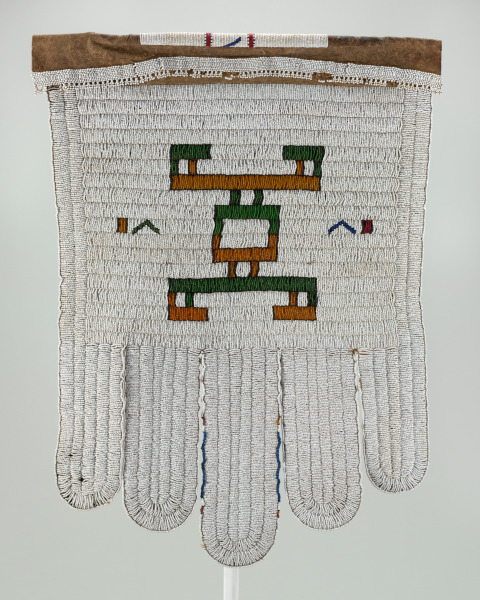
Married Woman’s Ceremonial Apron (Tshogholo)
Ndebele, 1933-1999
Scroll

Ndebele
Married Woman’s Ceremonial Apron (Tshogholo)
Ndebele, 1933-1999
Physical Qualities
Hide, glass beads, and plant fibers, 24 11/16 × 17 15/16 in. (62.7 × 45.5 cm.)
Credit Line
Gift of Caroline Popper, Baltimore
Object Number
1991.367
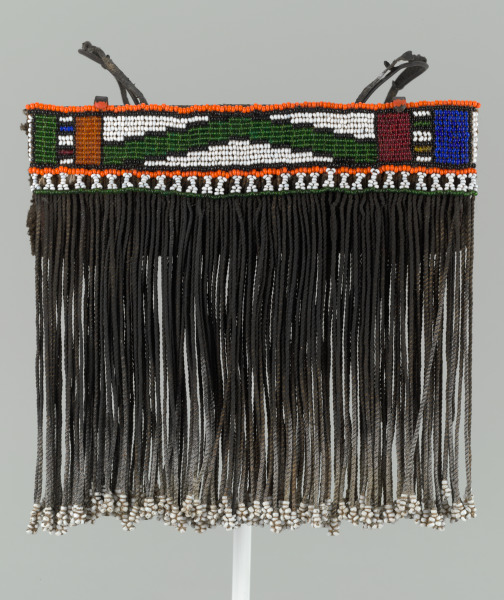
Between 1948 and 1994, the Apartheid government of South Africa stripped the Ndebele community of both their land and their rights as part of a larger process of racial segregation and legal discrimination. During this period, the bright geometric patterns painted on Ndebele homes and beaded onto their textiles grew increasingly colorful and complex. This trend is visualized dramatically in the two marriage aprons seen here. The apron with fewer beads, visible animal hide, and a relatively simplistic design is from the early 1900s while its brighter, heavily beaded counterpart comes from much later in the 20th century.
Known as tshogolo in isiNdebele, the local language, these textiles would have been decorated by a bride and her mother-in-law in the days and weeks following her wedding. Each features the five rounded flaps characteristic of this ceremonial dress form. The enhanced design on the later apron, however, reflects changing conceptions about the role of art and the importance of ethnic identity in this northeastern region of South Africa. Indeed, in the face of widespread and oftentimes brutal state oppression, the proliferation of distinctive Ndebele designs during the Apartheid era can be understood as an act of artistic protest, an assertion of ethnic identity and cultural pride in the midst of a virulent anti-Black climate.
Collected by the donor in South Africa in the early 1980's.
Mountain, Alan, "Ndebele: Artist Nation," Capetown: Struik Publishers, c1995, p25.