Asmat
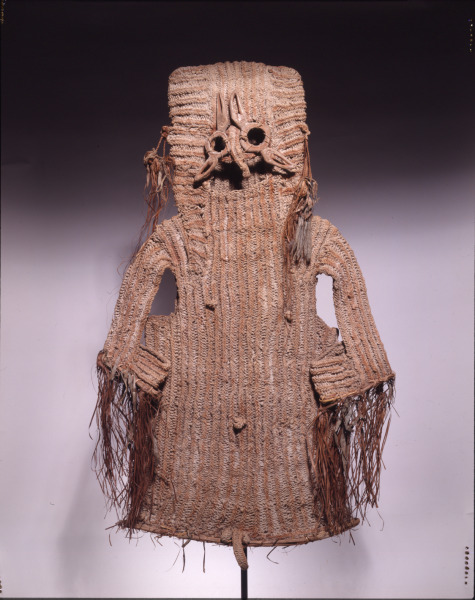
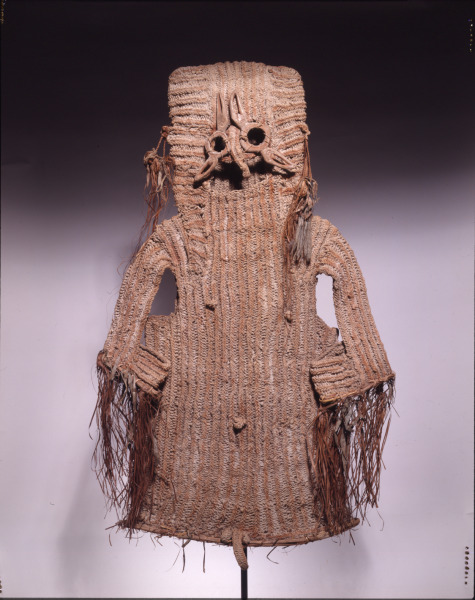
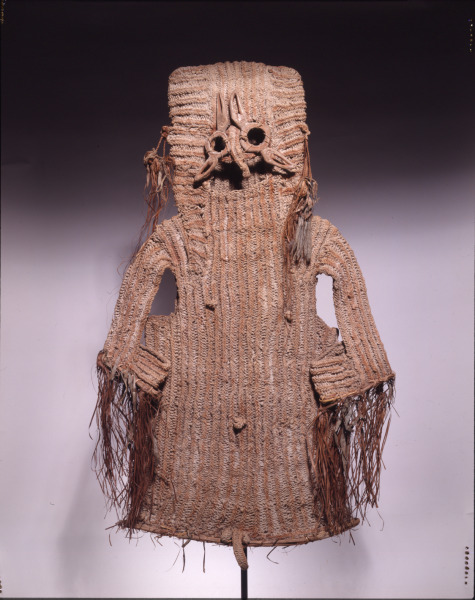
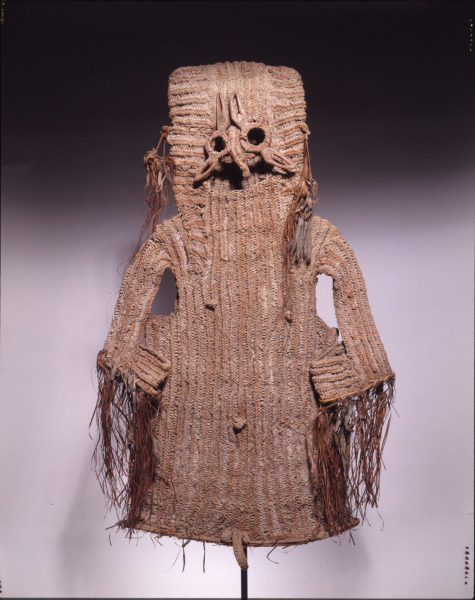
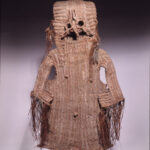
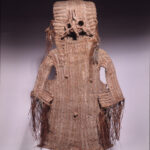
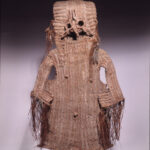
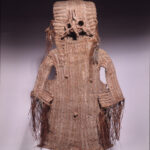
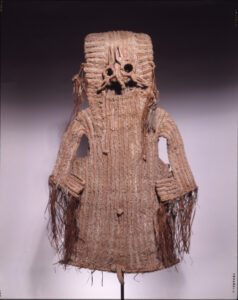
Mask Costume (Det)
Asmat, 1933-1966
Scroll
Asmat
Mask Costume (Det)
Asmat, 1933-1966
Physical Qualities
Mulberry tree bark, fiber, carved wood, pigments, 38 3/16 x 35 1/16 x 4 5/16 in. (97 x 89 x 11 cm.) without fringe, arms extended
Credit Line
Gift of Robert and Mary Cumming, Baltimore
Object Number
1995.224
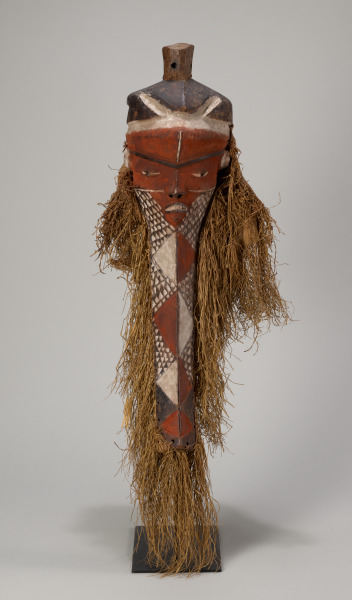
Jipae costumes are worn at the feast of the same name. Held every few years, and lasting several months, the feast commemorates those who have died since the last ceremony, and celebrates the successful journey of their spirits to the world of the dead. Two forms of costume are worn in the ceremony. This form is used to represent the recently deceased whp return to the village for a single night before leaving the village permanently. The costumes are worn by those who take on the deceased person's responsibilities in the community, including the care of their children. This costume is important to our collection because it enhances our ability to represent a wide variety of ritual practices. Additionally, it is one of only tow examples of Asmat textile art in our collection; the rest of our Asmat collection comprises woodcarvings.
The Baltimore Museum of Art by gift 1995; Robert and Mary Cumming