Wè
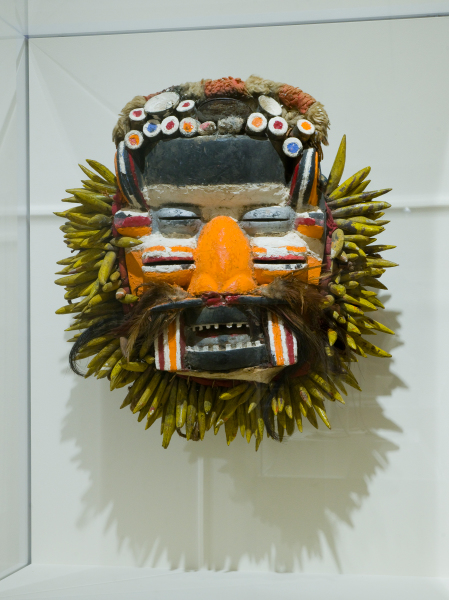
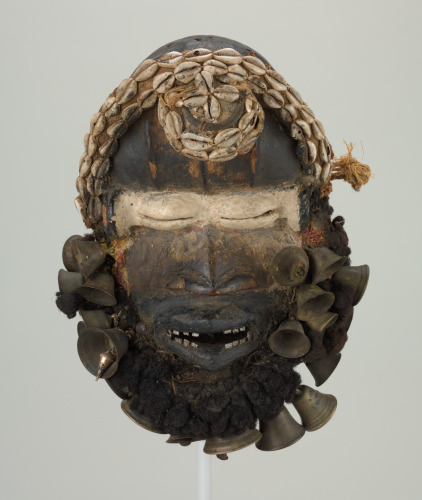
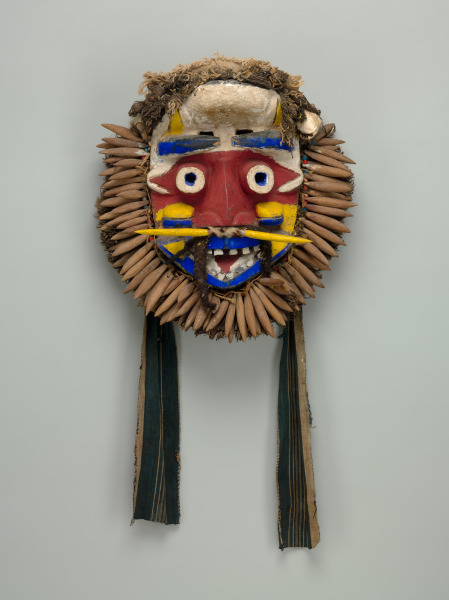
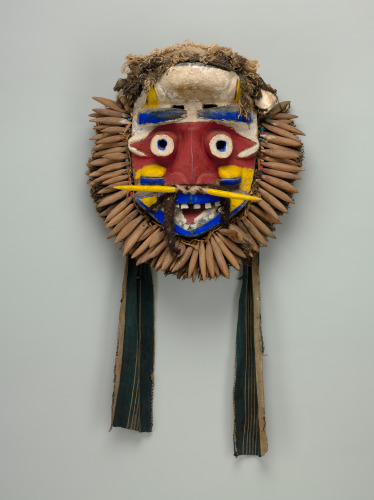
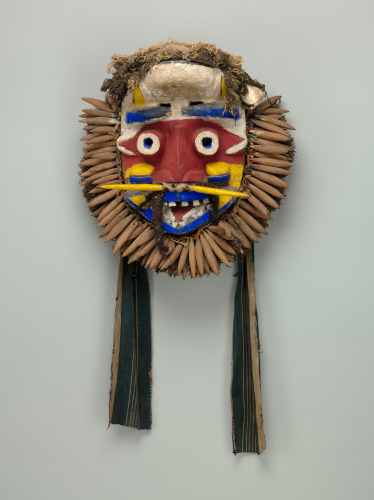
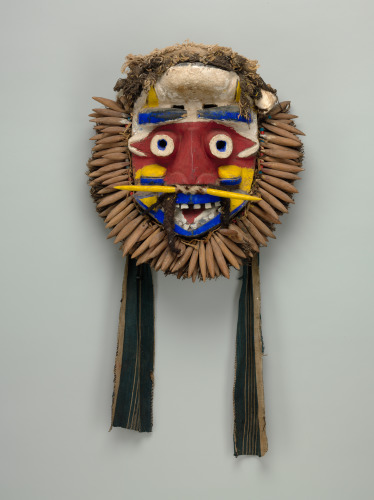
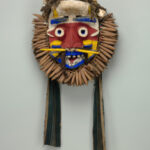
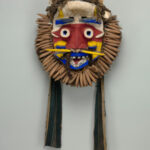
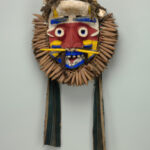
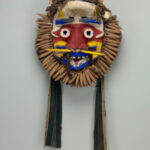
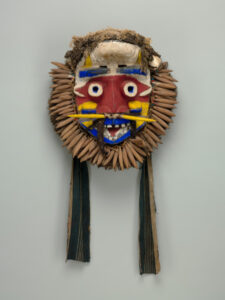
Mask of Wisdom (Gbona Gla)
Wè, 1933-1966
Scroll
Wè
Mask of Wisdom (Gbona Gla)
Wè, 1933-1966
Physical Qualities
Wood, paint, cloth, fur, glass beads, hair, plant fibers, iron teeth, 18 x 15 3/4 x 6 11/16 in. (45.7 x 40 x 17 cm.)
Credit Line
Gift of Dr. and Mrs. Bernard Berk and Mr. and Mrs. Leonard Whitehouse
Object Number
1969.11
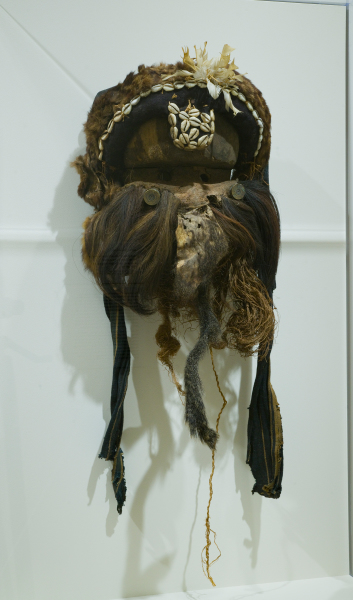
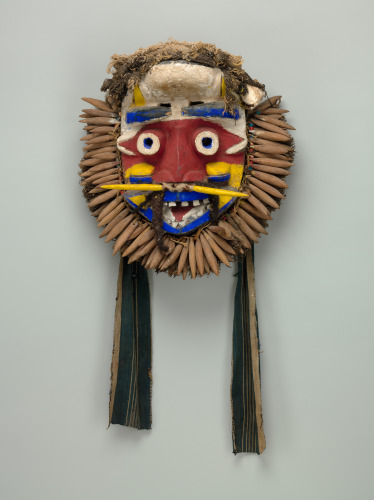
The unkempt ruffs of these Wè masks convey the aggressive character of the forest spirits represented by the Mask of Wisdom (Gbona gla). The mask behind you is a few decades older than the other two. Its lower jaw is obscured by hair and animal pelts, and its eyes are formed from Remington bullet casings dated to the 1920s. The two brightly colored masks were likely made between the 1940s and 1960s and reflect the availability of affordable commercial paint. Despite the shift in decorative devices over time, the three artists responsible for these masks maintained the jutting tubular eyes and bulging foreheads that characterize the Mask of Wisdom form. Each artist made inventive use of imported materials.
The masks in these cases once had proper names, handed down through families along with the artworks. Each Mask of Wisdom is therefore known individually, although it may be an infrequent visitor. The mask may play peacemaker during a breach between families or resolve an offense against the village. It may also share the community’s grief at the funeral of a well-respected man. In some Wè communities, the Mask of Wisdom only dances every 10 to 15 years. Which of these impressive ensembles would you remember during the long wait for its next appearance?
African Reinstallation
African Wing Rotations 2025
"BMA Today," November - December 2004, p. 15, ill.
Frederick John Lamp, "See the Music Hear the Dance: Rethinking African Art at the Baltimore Museum of Art." New York: Prestel, 2003, p. 43, ill.
African Spirit Series [brochure], Baltimore Museum of Art, 2003-2004. ill.