






Kuba
Masquerade Costume
Kuba, 1900
Scroll

Kuba
Masquerade Costume
Kuba, 1900
Physical Qualities
Bark cloth, pigment, fiber, cowrie shells, See component screen
Credit Line
Art Acquisition Fund
Object Number
2007.315
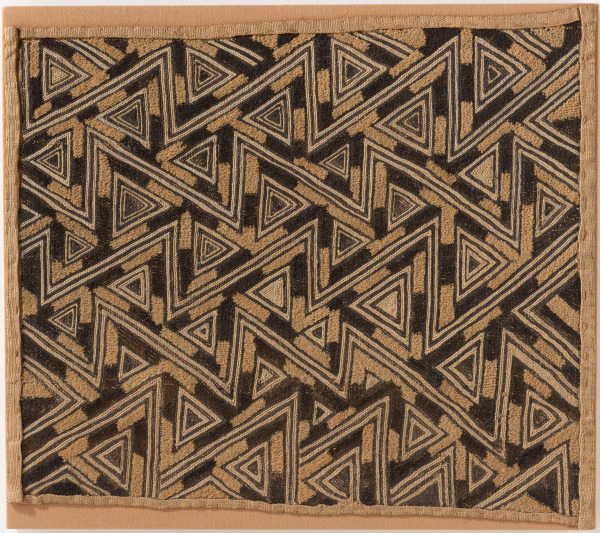
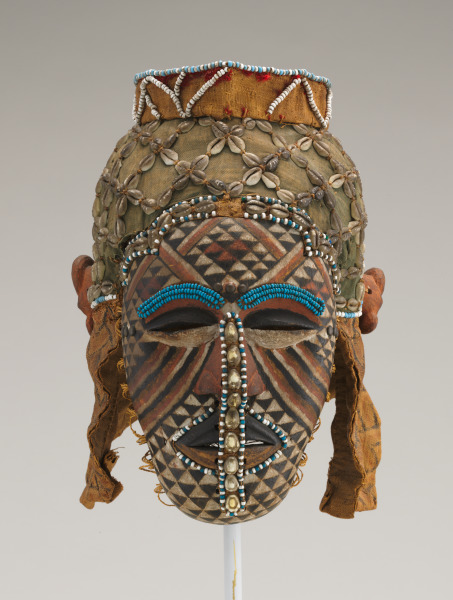
The triangular designs painted on this bark cloth ensemble are the same as those painted onto masks representing Mweel, the mythical woman from whom the Kuba royal dynasty descends. Bark cloth forms the base layer of the garment worn by the dancers
who perform as Mweel and her male counterpart, Wóót. Across central Africa, bark cloth is frequently associated with history and the past. The BMA purchased this example from Prince Mikoom Lyeen Yemaam, a member of the Kuba royal family, in 2007.
The Baltimore Museum of Art by purchase, 2007; Mikoom Yemaam
Karen Milbourne, "Meditations on African Art: Pattern," Baltimore Museum of Art, March 12-August 17, 2008
Kevin Tervala, "The Matter of Bark Cloth," Baltimore Museum of Art, May 7-October 1, 2023.
Kevin Tervala, "The Matter of Bark Cloth," Baltimore Museum of Art, May 7-October 1, 2023.