George Romney
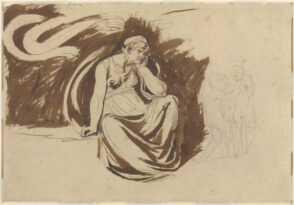
Medea Contemplating the Murder of Her Children (recto); Medea Contemplating the Murder of Her Children (verso)
1771-1781
Scroll
George Romney
Medea Contemplating the Murder of Her Children (recto); Medea Contemplating the Murder of Her Children (verso)
1771-1781
Physical Qualities
Pen and brown ink and brush and brown wash over graphite (recto); pen and brown ink and brush and brown wash over graphite (verso), Sheet: 301 x 439 mm. (11 7/8 x 17 5/16 in.)
Credit Line
Purchase Fund
Object Number
1964.117
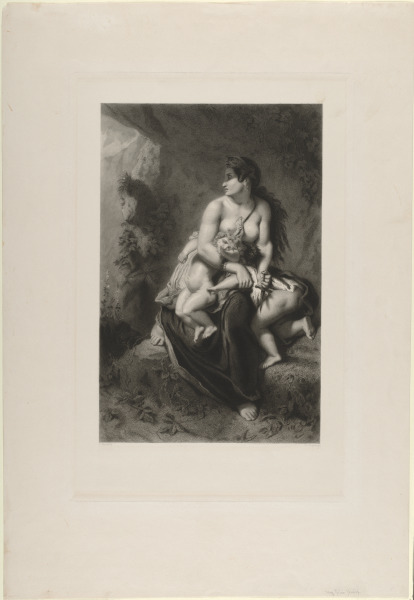
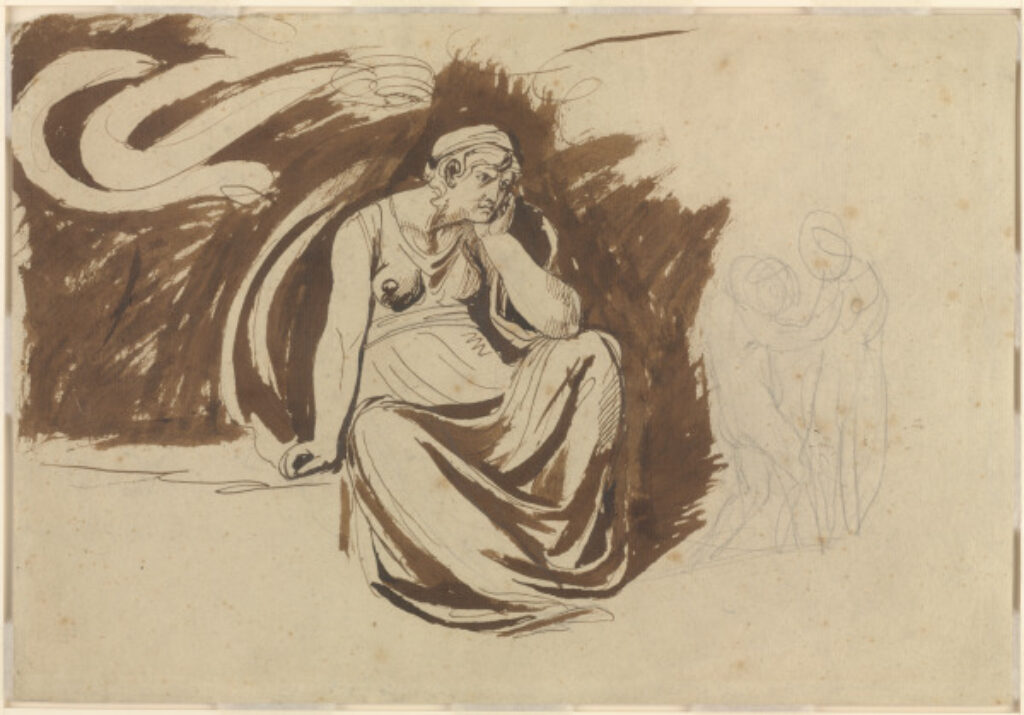
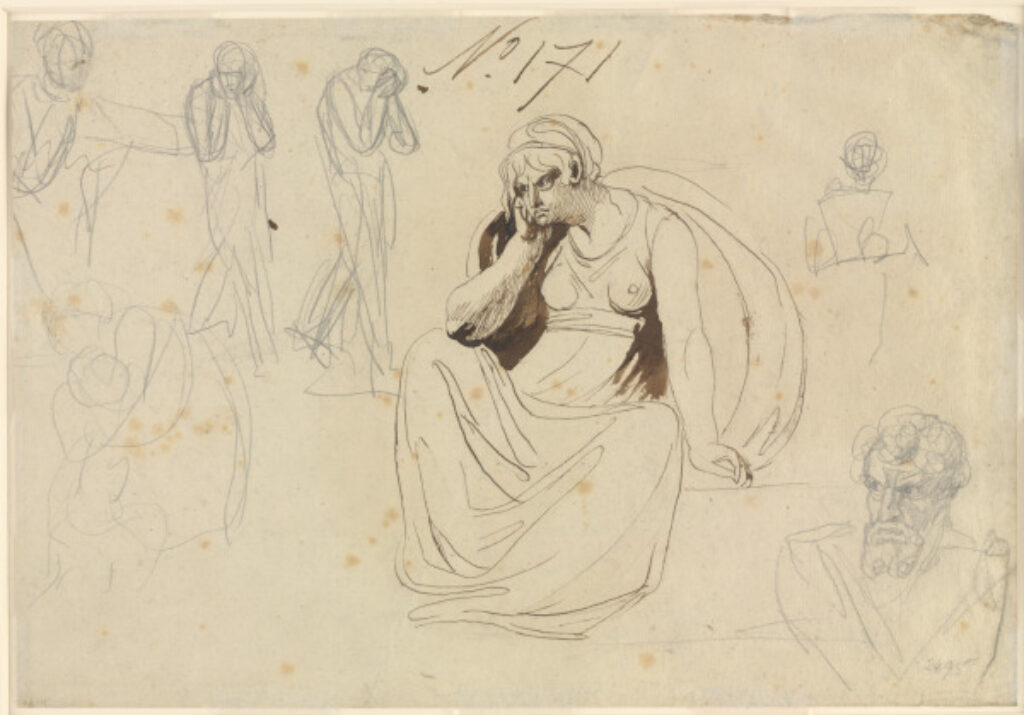
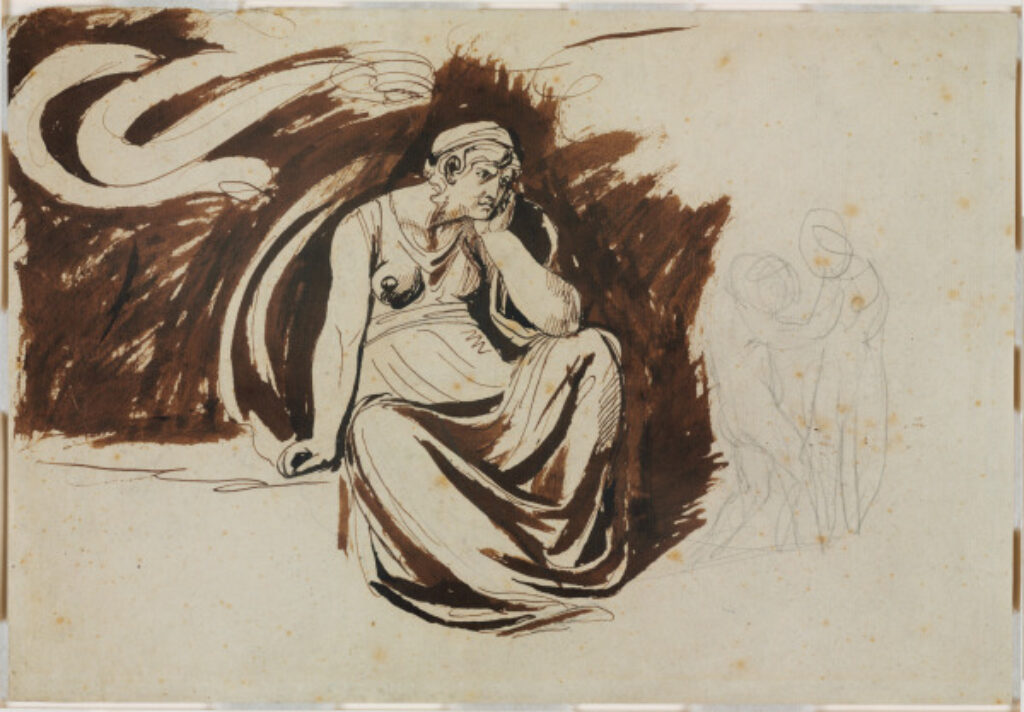
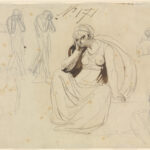
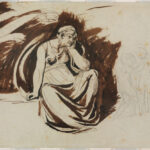
In Greek mythology, the sorceress Medea is infamous for her unspeakable actions. Loved and then abandoned by Jason of the Argonauts, Medea took jealous revenge by killing their two young sons. George Romney took up this narrative in several drawings he made in the 1770s, focusing on the moment before the murder. Here we see Medea, surrounded in darkness and seated with head in hand, her intense stare suggesting the turmoil of her thoughts. Her sons’ presence is barely indicated through the sketchy outlines of their figures at right. Romney also drew her figure on the reverse of this sheet.
Helene C. Seiferheld Gallery; London, Sotheby's, 20 March 1963, no. 15
Chapel Hill, NC, William Hayes Ackland Memorial Art Center, "English Watercolors and Drawings 1700-1900," 21 September - 26 October, 1975, cat. no. 52, repr. pl. 15
Baltimore Museum of Art, ''Sketches and Sketchbook Pages'', April 25-June 25, 1978.
New Haven, Yale Center for British Art, "The Fuseli Circle in Rome: Early Romantic Art of the 1770s," 12 September - 11 November, 1979, cat. no. 124, repr. pg. 123
Jay Fisher, BMA, "Old Master Drawings from the BMA and Gilmor Collections," 10 October - 10 December, 1989.
Jay Fisher, BMA, "The Antique as Inspiration: Eighteenth-Century European Drawings and Prints," 27 June - 26 September 1993.
BMA, Jacobs wing rotation, July 27 - November 26, 2012.
Baltimore Museum of Art, ''Sketches and Sketchbook Pages'', April 25-June 25, 1978.
New Haven, Yale Center for British Art, "The Fuseli Circle in Rome: Early Romantic Art of the 1770s," 12 September - 11 November, 1979, cat. no. 124, repr. pg. 123
Jay Fisher, BMA, "Old Master Drawings from the BMA and Gilmor Collections," 10 October - 10 December, 1989.
Jay Fisher, BMA, "The Antique as Inspiration: Eighteenth-Century European Drawings and Prints," 27 June - 26 September 1993.
BMA, Jacobs wing rotation, July 27 - November 26, 2012.
"Gazette des Beaux-Arts" (Supplement February 1965) p. 48, no. 206.
Maria Ângela Moreira Limes. "Uma Identidade em (Des)Construçao: A figura de Jasão no romance, 'Medea.Stimmen" de Christa Wolf e no drama 'Manhattan Medea' de Dea Loher." Coimbra: MinervaCoimbra, Centro Interuniversitário de Estudos Germanísticos, 2008, p. 145, repr.
Alex Kidson. "George Romney 1734-1801." Princeton: Princeton University Press, 2002, p. 128 and p. 138n.48.
Inscribed: Recto: none; Verso: at upper center, in brown ink: "No. 171"; at lower right, in graphite: "2495"
Markings: None