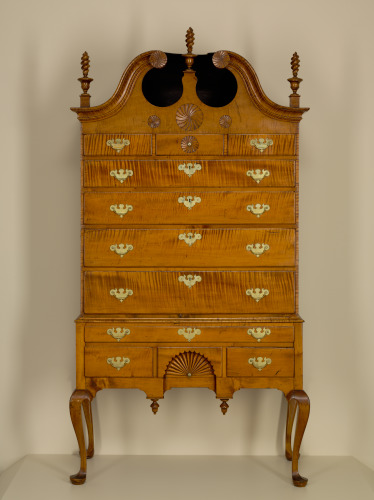


Miniature Chest
2000
Scroll

Miniature Chest
2000
Physical Qualities
Cedar with mahogany veneer; light wood inlays; pine secondary wood; brass, 7 3/4 x 11 1/8 x 6 5/8 in. (19.7 x 28.3 x 16.8 cm.)
Credit Line
Dorothy McIlvain Scott Collection
Object Number
2012.330
Carefully crafted in the late 19th and early 20th centuries, probably in the United States, these diminutive pieces of furniture were made chiefly for the amusement of adults. Old wives tales held that such miniatures served either as apprentice pieces (intended to demonstrate cabinetmaking skills) or as samples carried by traveling salesmen. However, those explanations have been gradually dismissed by scholars who continue to delve into the complexities of the international cabinet-making trade conducted over the past several centuries. The earliest doll houses were made for wealthy adults, but with the advent of the German toy industry in the early 19th century, furnished doll houses became popular playthings for children. The delight that tiny replicas of objects from everyday life can engender remains universal.
The Baltimore Museum of Art by bequest, 2012; Dorothy McIlvain Scott, Baltimore