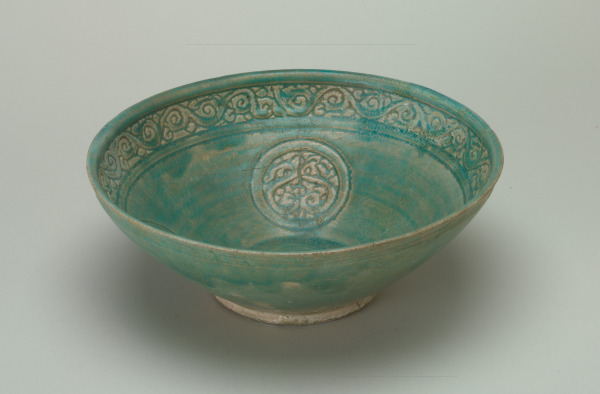









Mughal-Style Bowl Decorated with Lotus Scroll
1766
Physical Qualities
Nephrite, 5 1/16 in. Diam. (12.8 cm.)
Credit Line
The Mary Frick Jacobs Collection
Object Number
1938.809
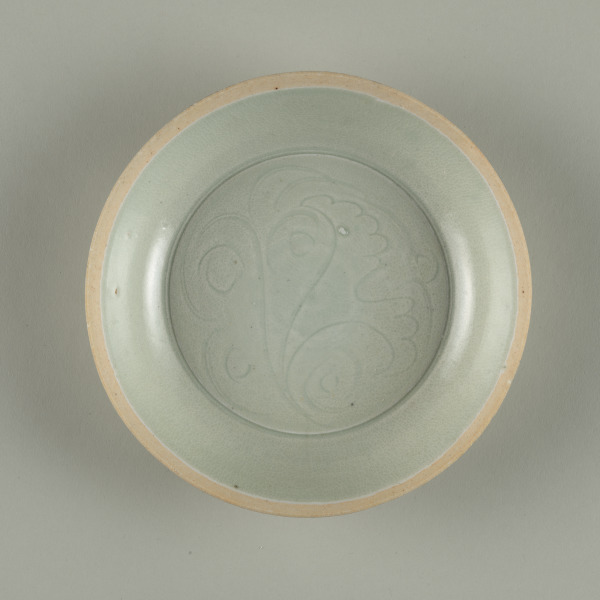
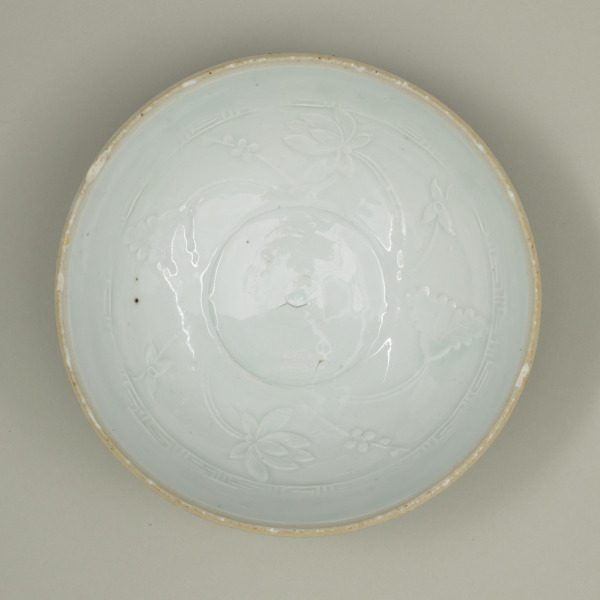
The bowl combines charateristic elements of Mughal decoration, specifically the low-relief carving, acanthus leaf scroll around the body and the foot carved in a chrysanthemum flower design with Chinese lotus flowers and a purely Chinese shape.
The Baltimore Museum of Art by bequest, 1938; Mary Frick Jacobs
Frances Klapthor, "BMA Past/Future: Guyton/Chiu; Two Collections of Chinese Art," BMA, August 18, 2010-
Collection installation, "Asia. Artistic Innovation & Exchange", Levy Gallery, Baltimore Museum of Art, October 5, 2023-
Collection installation, "Asia. Artistic Innovation & Exchange", Levy Gallery, Baltimore Museum of Art, October 5, 2023-
 On View: Levy Gallery 1, Case 01/A