Yorùbá and Ijo
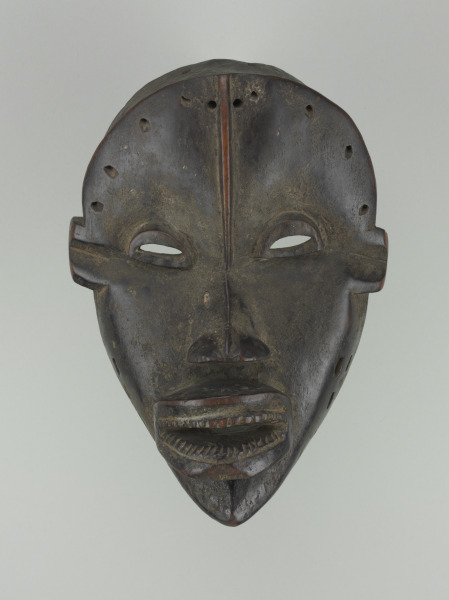
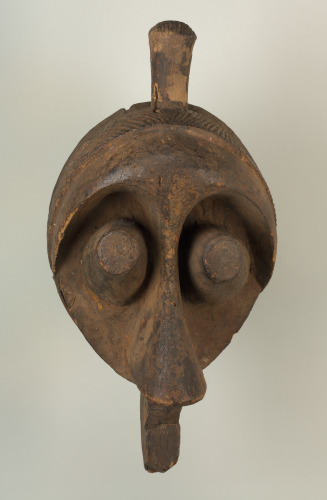
Nature Spirit Mask
Yoruba (Ijebu subgroup) or Ijo, 1899-1932
Scroll
Physical Qualities
Wood, 14 H x 7 W x 6 D cm. (5 1/2 x 2 3/4 x 2 3/8 in.)
Credit Line
Gift of Asif and Jean Shaikh, Chevy Chase, Maryland
Object Number
2005.233
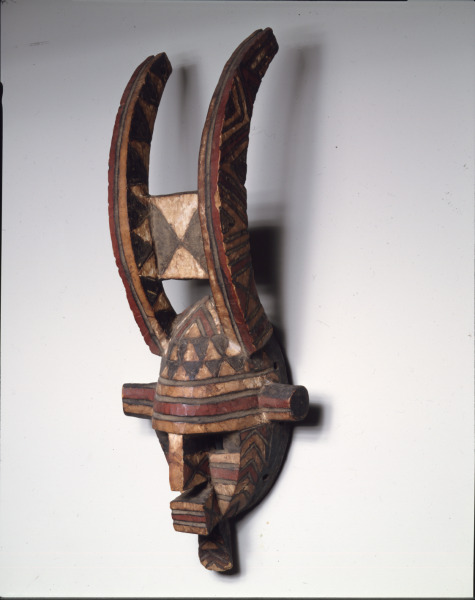
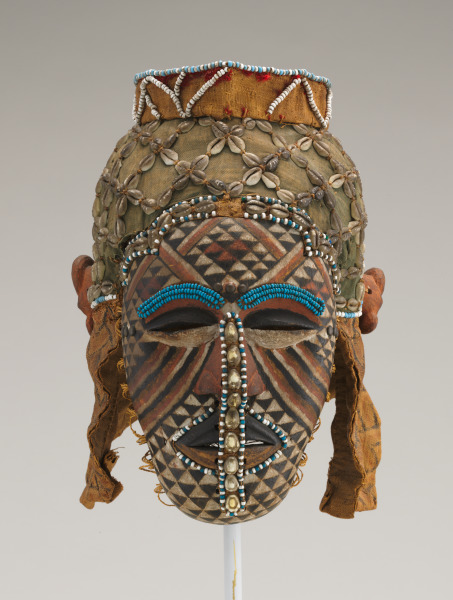
The wide, bulging eyes of these masks refer to supernatural authority and the ability of those associated with the spiritworld to see things that humans cannot. In the context of the fast-moving masquerades in which each mask was danced, these disproportionate facial features helped communicate the metaphors embedded in each work.
The Baltimore Museum of Art by gift, 2005; Asif and Jean Shaikh, Chevy Chase, Maryland; purchased from L. Kahan Gallery, NY, 1997.
Subverting Beauty: African Anti-Aesthetics
Anderson, Martha G., ed., Ways of the rivers: Arts and Environment of the Niger Delta, Los Angeles: UCLA Fowler Museum of Cultural History, c2002, ch 6, pp 193-219.