
Fijian
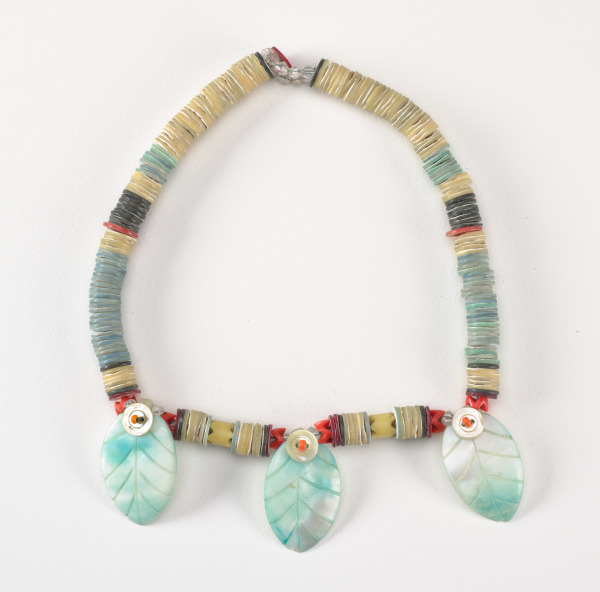
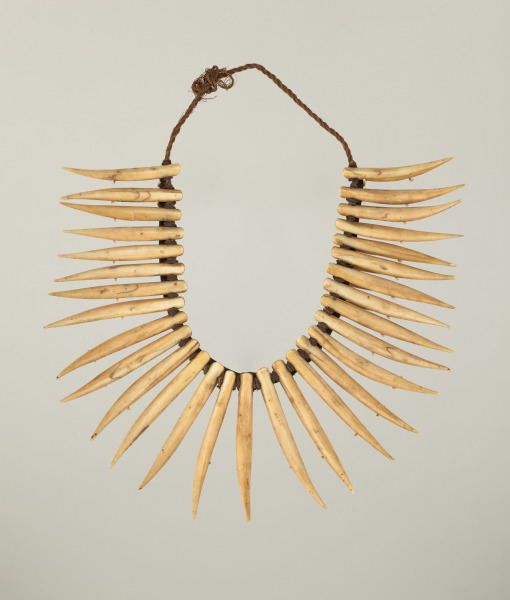
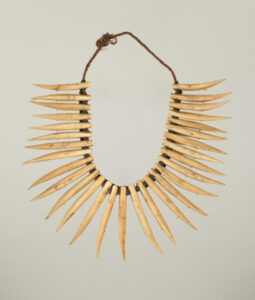
Necklace (Wasekaseka)
Fijian, 1869-1899
Scroll
Fijian
Necklace (Wasekaseka)
Fijian, 1869-1899
Physical Qualities
Sperm whale ivory, plant fiber, L. 27 in. (68.6 cm.)
Credit Line
Gift of Alan Wurtzburger
Object Number
1955.251.162
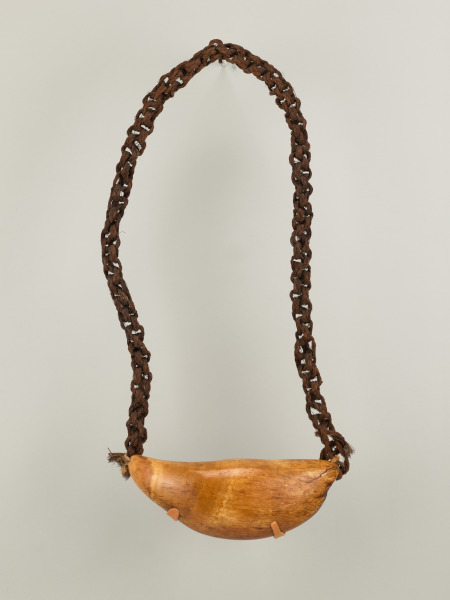
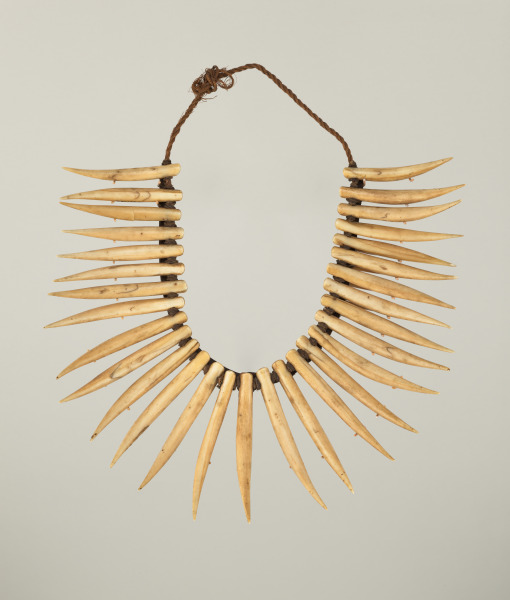
Necklaces made of sperm whale ivory teeth were incredibly rare prior to the 19th century. Many Fijians highly valued the material, which they associated with the ocean god Tangaloa, but they did not hunt the whales from which the material came. Instead, they only retrieved ivory from whales that had beached themselves.
In the 19th century, European whalers began to exchange ivory from slaughtered whales for sandalwood and other raw materials. The surge of this precious material in eastern Oceania resulted in new art forms, like the necklace displayed here. By 1870, ivory necklaces were so common that Fijians bean to trade them back to Europeans as souvenirs.
The Baltimore Museum of Art by gift, 1955; Alan Wurtzburger
Oceanic Gallery Rotations 2021
Oceanic Gallery Rotations 2022
Oceanic Gallery Rotations 2023
Earth as Medium: Extracting Art from Nature
Cone Wing Rotations 2025
Oceanic Wing Rotations 2025
Douglas F. Fraser & Paul S. Wingret, "The Wurtzburger Collection of Oceanic Art". Baltimore Museum of Art. 1956 pg. 37. cat no. 162.
Razga, Kirk. "Tabua and Whale Tooth Ornaments from Fiji". Australian Museum.australianmuseum.net.au.updated April 15th 2019.
Hooper, Steven. "'Supreme among our valuables': Whale teeth tabua, chiefship and power in eastern Fiji." The Journal of the Polynesian Society (2013): 103-160.
Neich, Roger, and Pandora Fulimalo Pereira. Pacific jewelry and adornment. University of Hawaii Press, 2004.
Hooper, Steven. "'Supreme among our valuables': Whale teeth tabua, chiefship and power in eastern Fiji." The Journal of the Polynesian Society (2013): 103-160.
Neich, Roger, and Pandora Fulimalo Pereira. Pacific jewelry and adornment. University of Hawaii Press, 2004.
 On View at the BMA
Explore the Collection Further