Idoma
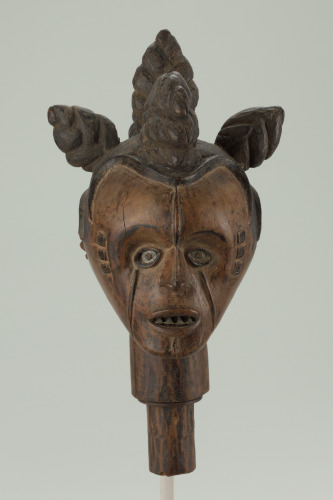
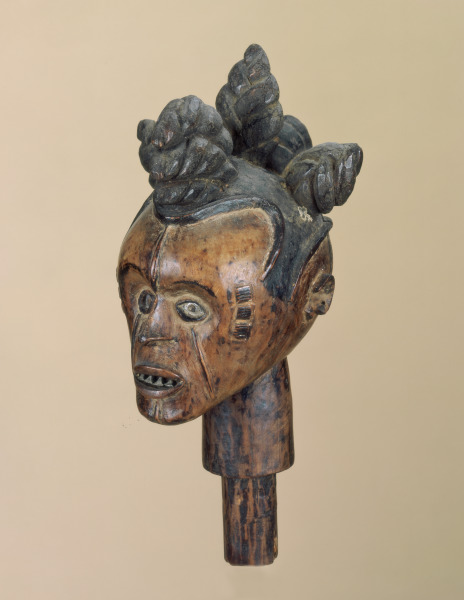
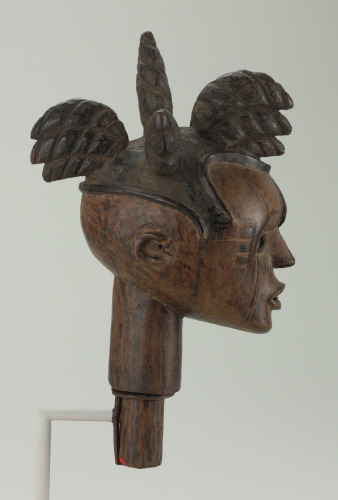
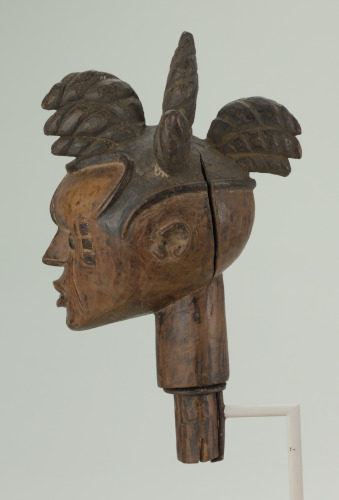
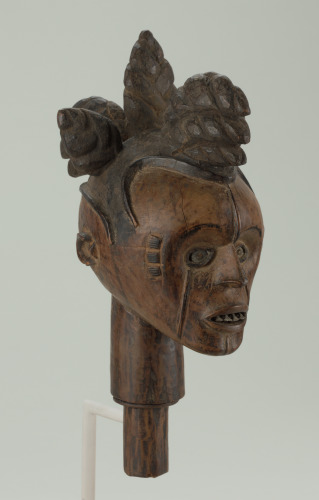
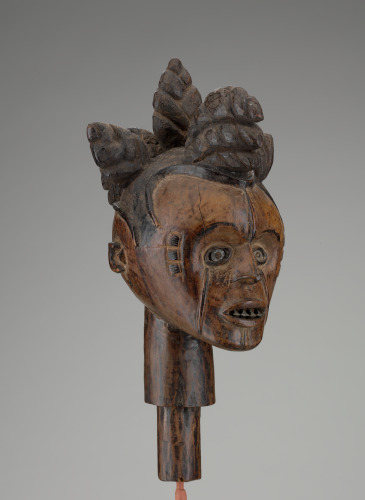
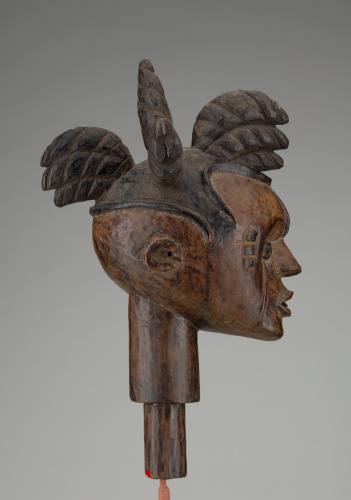
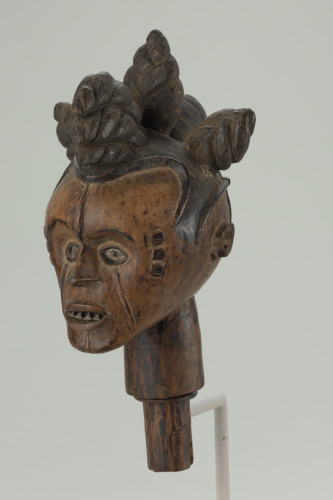
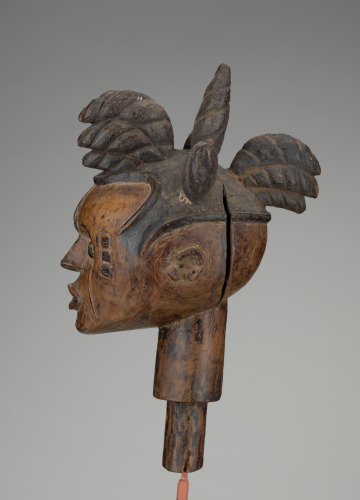
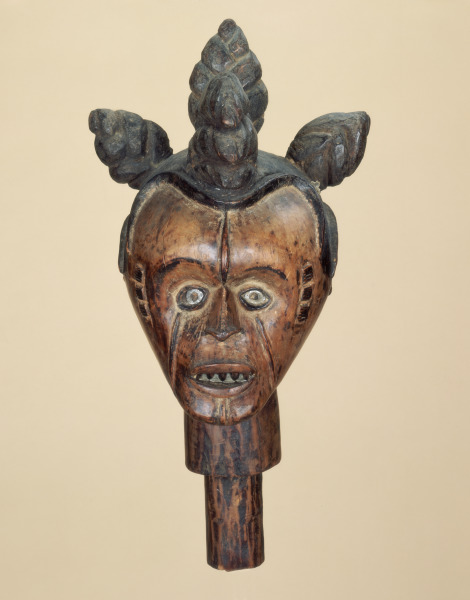
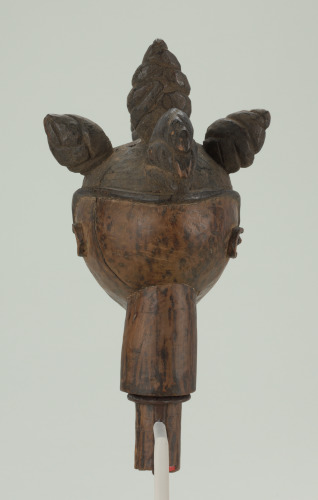
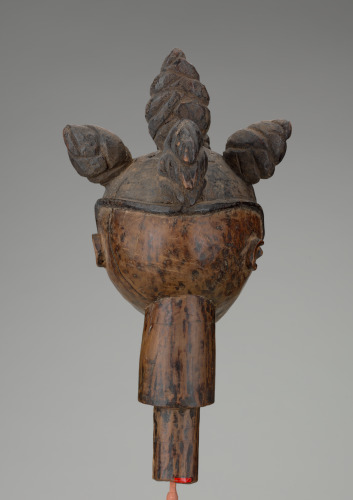
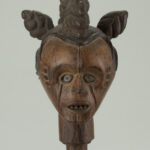
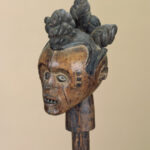
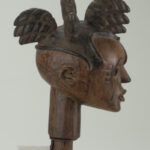
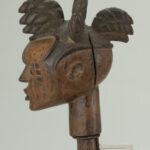
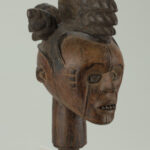
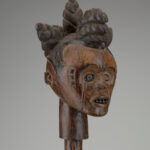
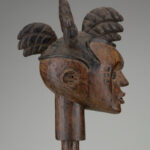
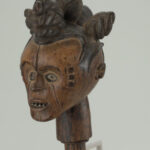
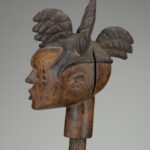
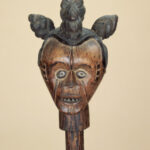
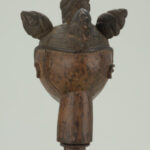
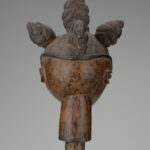
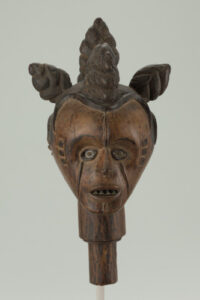
Oglinye Society Dance Headdress
Idoma, 1900-1932
Scroll
Idoma
Oglinye Society Dance Headdress
Idoma, 1900-1932
Physical Qualities
Wood, metal, pigment, 13 3/4 x 7 1/16 x 8 1/4 in. (35 x 18 x 21 cm.)
Credit Line
Purchased as the gift of Helen and Howard Benedict, Tiburon, California, in Memory of Alan and Janet Wurtzburger
Object Number
1982.65
The 17th and 18th centuries witnessed great wars across the area that is now Nigeria. States fought for control of the Benue and Cross Rivers in order to exact trading duties on local and European merchants. They also fought to capture slaves and sell them to Europeans on the coast or to Hausa kingdoms farther to the north.
At this time, being a man meant being a warrior—someone able to defend his own town and conquer others. Members of young men’s societies demonstrated their victories by participating in warriors’ performances, where some dancers wore the skulls of defeated enemies on their heads. As warfare declined in the 19th century, skulls were replaced by carved wooden heads, usually portraying beautiful women like those the warriors had fought to protect. The sharp cheekbones and well-defined bone structure of the masks may relate to the skulls previously worn by dancers. The transformation from warrior parade to masquerade was made complete in 1917, when the British banned dancing with enemy skulls as a way of discouraging the formation of local militias.
In this case, four headcrests are on display. How did each artist respond to the original warrior society tradition? How has the artist envisioned the juxtaposition of the carved head and the living head that supported it?
Purchased from Issaka Zango, I. Z. Timbe, Inc., New York; ex coll: Klejmann Gallery, New York
Wurtzburger Traveling
Diverging Streams: Eastern Nigerian Art
Frederick John Lamp, "See the Music Hear the Dance: Rethinking African Art at the Baltimore Museum of Art." New York: Prestel, 2003, p.66, ill.
Eli Bentor. "Warrior Masking, Youth Culture, and Gender Roles: Masks and History in Aro Ikeji Festival." African Arts 52, no. 1 (2019): 34-45. https://muse.jhu.edu/ (accessed March 14, 2019).