Bamana
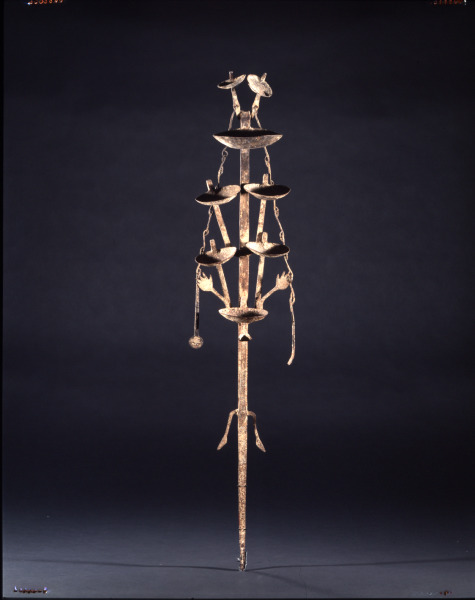
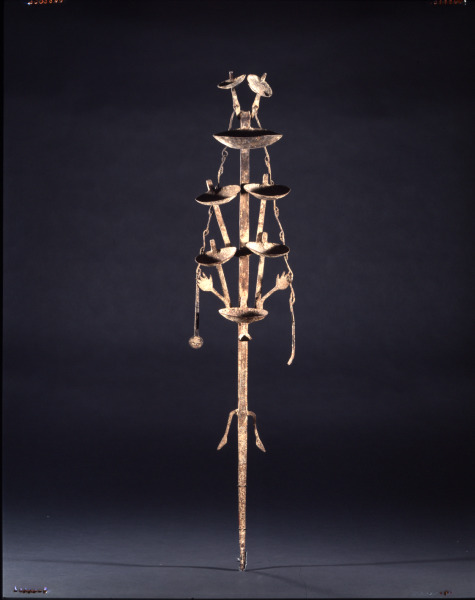
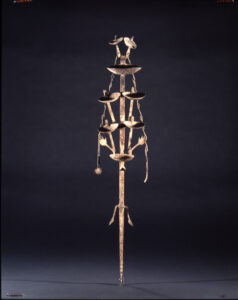
Oil Lamp (Konyo Fitine)
Bamana, 1867-1899
Scroll
Bamana
Oil Lamp (Konyo Fitine)
Bamana, 1867-1899
Physical Qualities
Iron, 35 1/16 x 6 9/16 x 3 5/16 in. (89 x 16.7 x 8.4 cm.)
Credit Line
Gift of Robert and Nancy Nooter, Washington, D.C.
Object Number
1985.283
Imagine a velvety black night in which the only illumination comes from the uplifted wells of this iron lamp. One witness to a Bamana nighttime ceremony described a similar lamp as evoking 'the imagery of a flaming bush.' The female figure integrated into this lamp’s form would have seemed to dance at the same time its upright and balanced form expresses Bamana preferences for clarity, purity, straightforwardness, and discernability. Bamana consider lamps to represent vitality, heartbeats and the energy that radiates from one’s soul. When the head of a household dies, it is said, 'my lamp has gone out.'
Meditations on African Art: Light
Frederick John Lamp, "See the Music Hear the Dance: Rethinking African Art at the Baltimore Museum of Art." New York: Prestel, 2003, p.218, ill.
Prussin, Labelle, "David in West Africa: 'No More Forever'?" Yale University Art Gallery Bulletin, 2005, pp 89-106.