Lakota (Sioux)
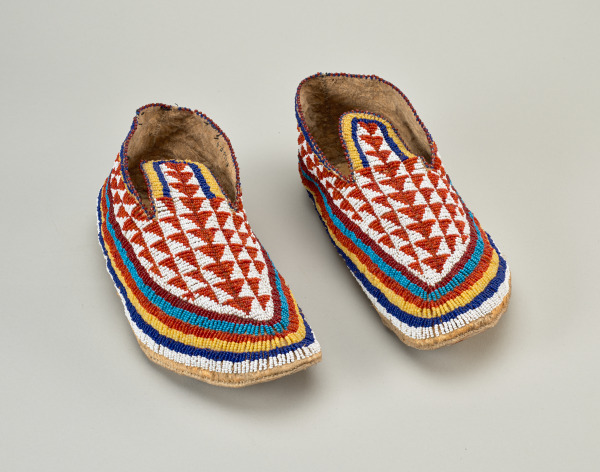
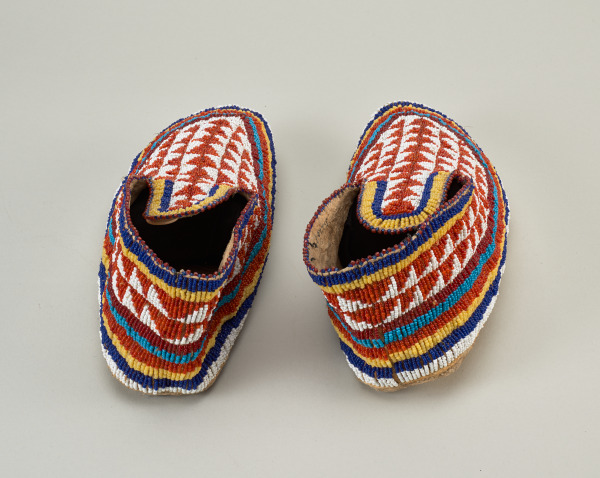
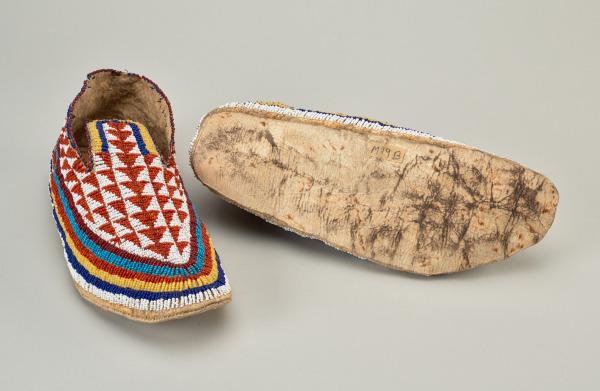
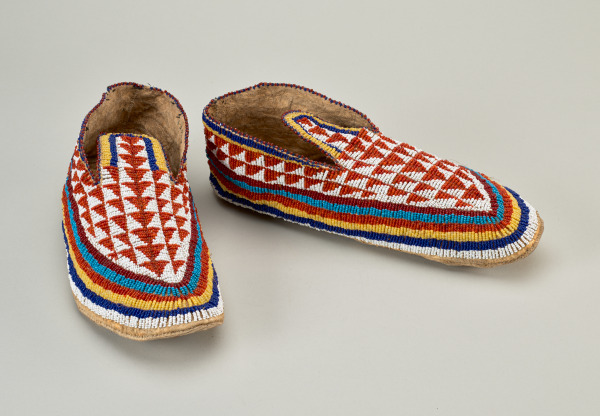
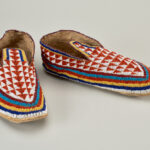
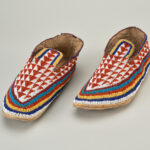
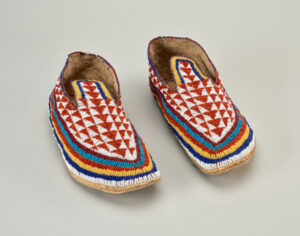
Pair of Man’s Beaded Moccasins
Absaroke (Crow)/Lakota (Sioux), 1919-1929
Scroll
Lakota (Sioux)
Pair of Man’s Beaded Moccasins
Absaroke (Crow)/Lakota (Sioux), 1919-1929
Physical Qualities
Hide, glass beads, 10 3/4 × 3 3/4 in. (27.3 × 9.5 cm.)
Credit Line
Bequest of Florence Reese Winslow
Object Number
1953.220.F.4a-b
Unidentified Lakota (Sioux) Artist
Pair of Man’s Beaded Moccasins
1920–1930
United States
Hide, glass beads
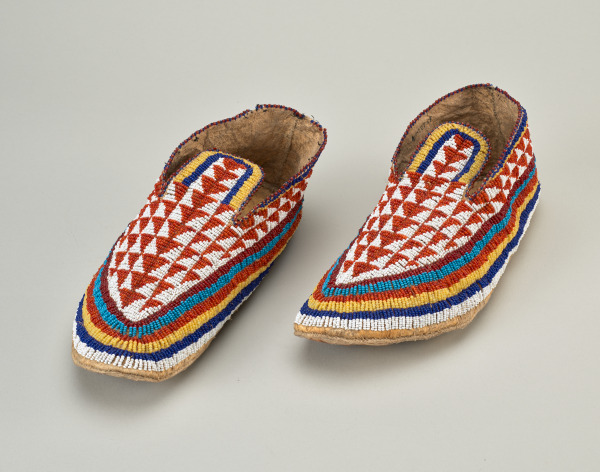
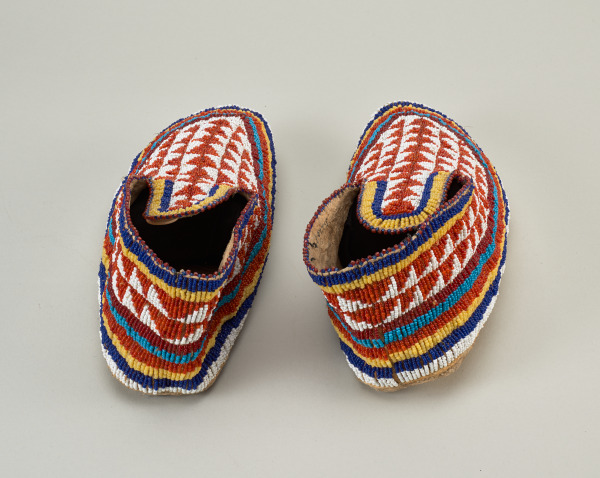
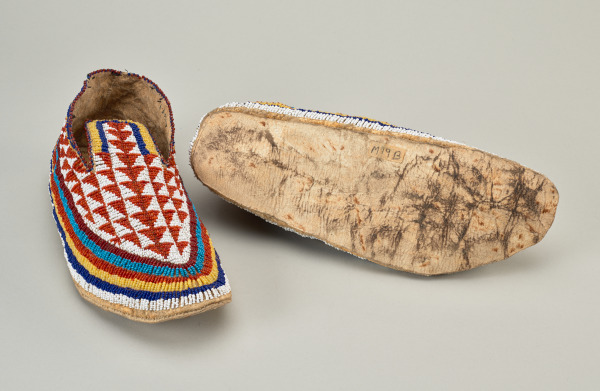
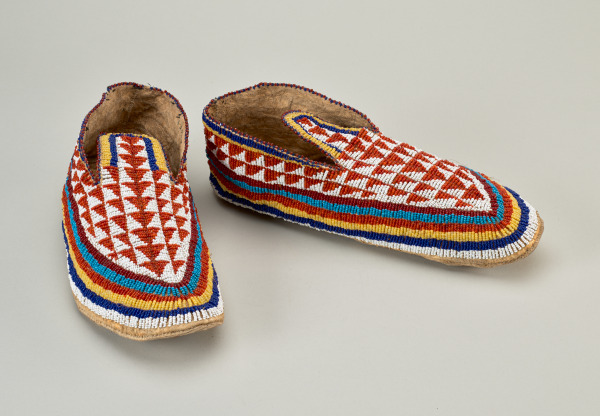
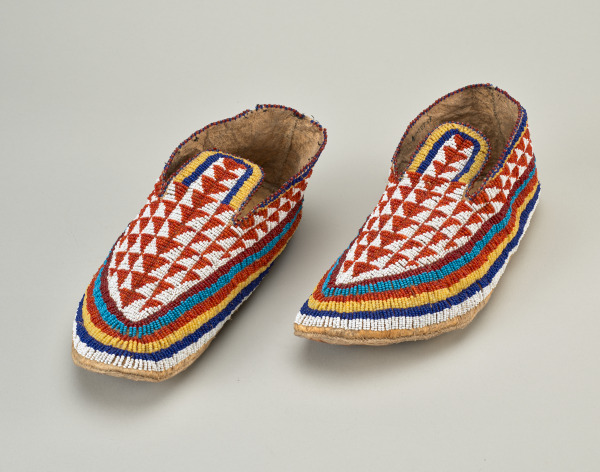
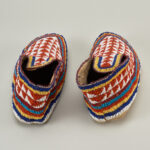
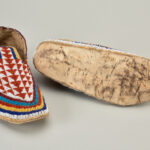
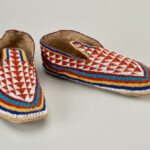
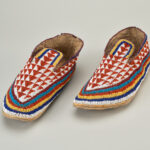
The triangular beadwork pattern on these moccasins hybridizes 20th-century aesthetics with traditional techniques. Though Native people have created moccasins using tanned animal hides since time immemorial (for longer than memory), the shape and adornment of such shoes has not stayed static. While most Lakota moccasins have long tongues that fold over the top of the shoe, this shoe’s streamlined construction allows for dazzling, uninterrupted geometric decoration. An artist created the designs using a lane stitch beading method, sometimes disparagingly termed the lazy stitch, in which 8–10 beads are strung together and then attached to the leather with a single stitch.
White Hawk chose these moccasins for display because of their innovative style, stating that “These moccasins strike a balance between something unique and personal for the artist who made them and something that is still grounded in the aesthetics of our tribe. The color and composition also resemble my own moccasins, which I made for myself 16 years ago.”
The Baltimore Museum of Art by bequest, 1953; Florence Reese Winslow, Baraboo, WI.
Preoccupied: Dyani White Hawk