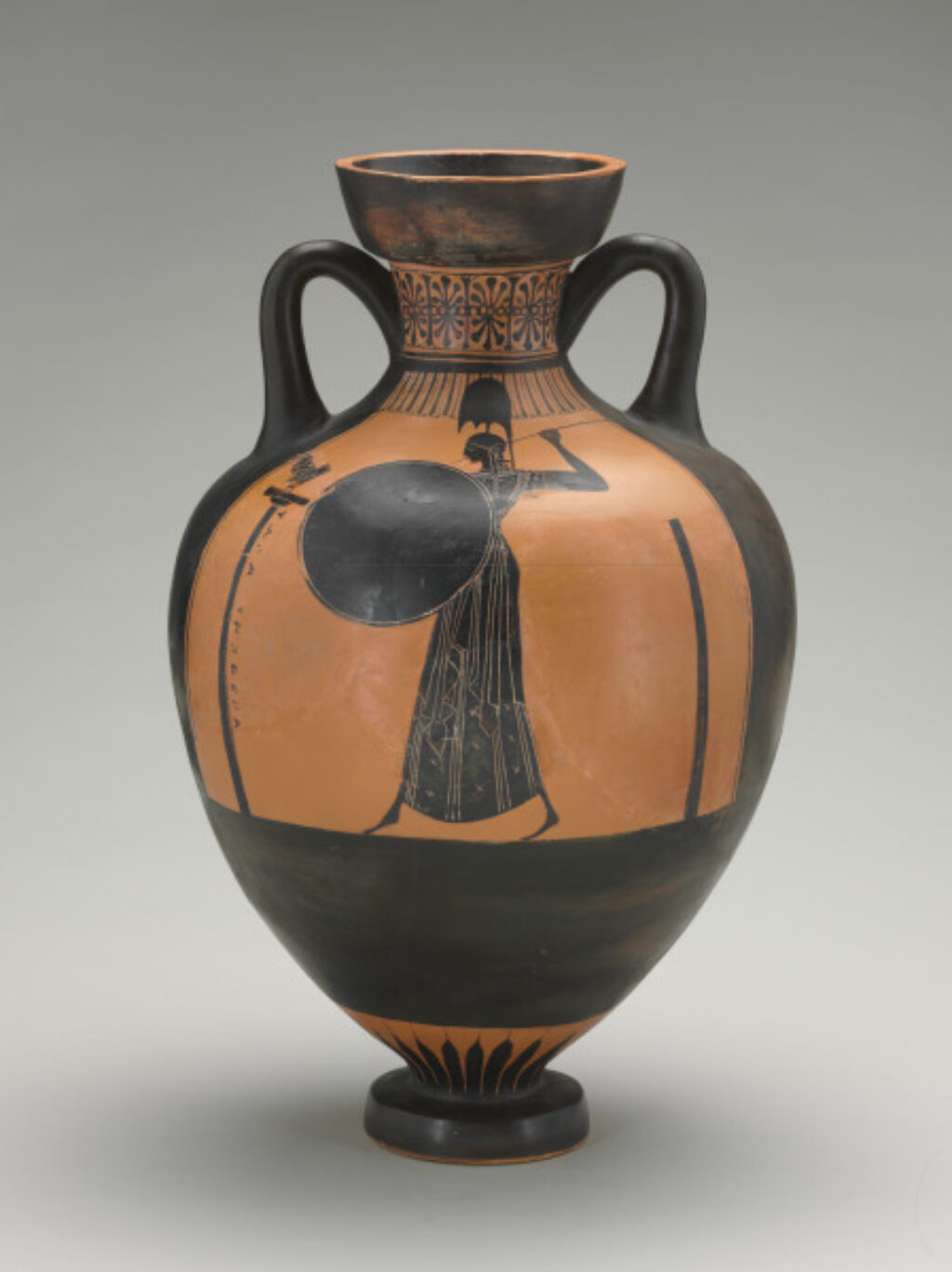

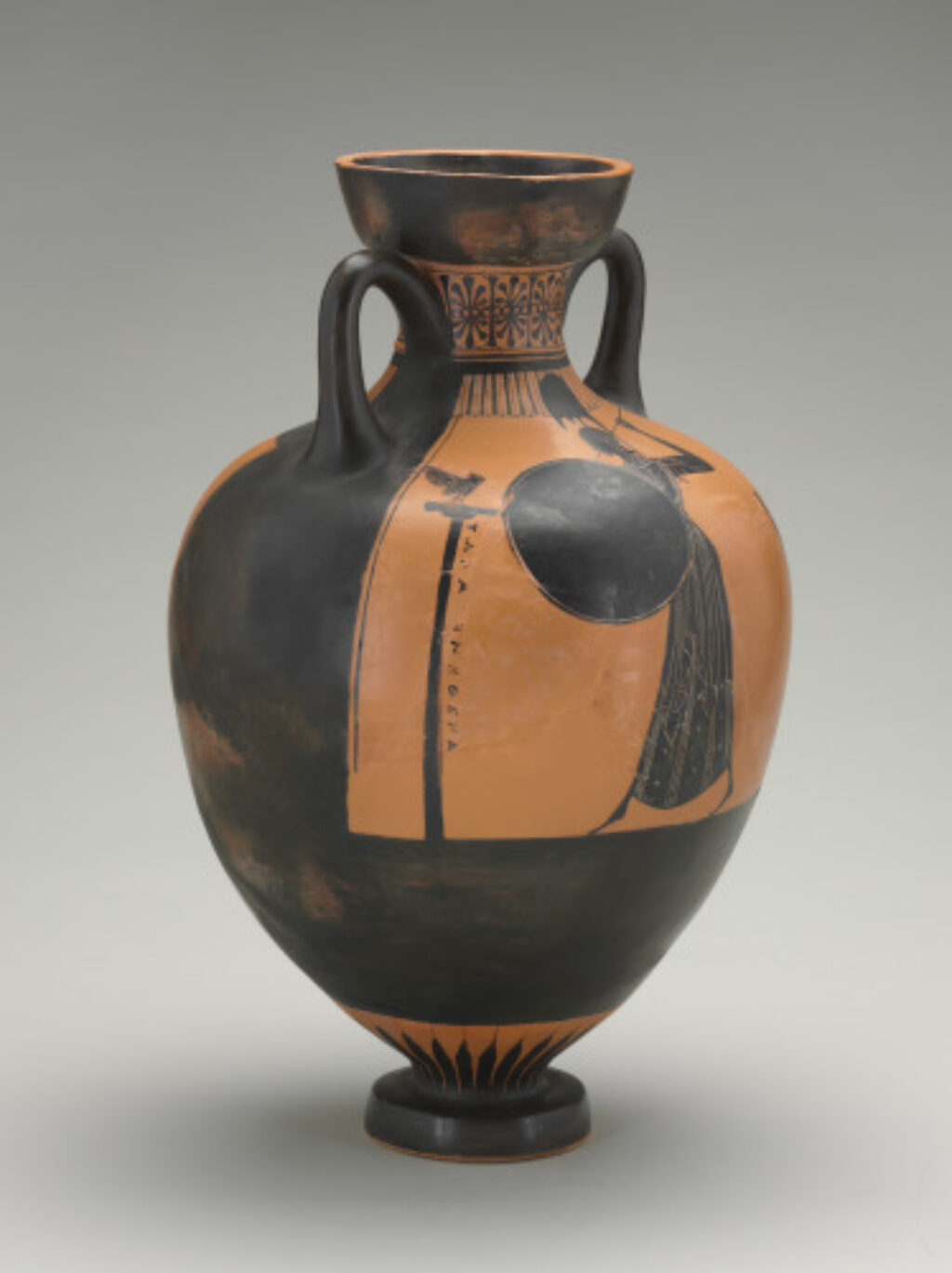
Niobid Painter
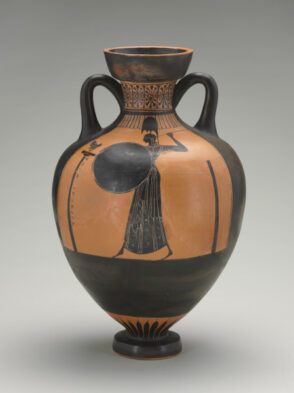
Panathenaic Amphora
400-500
Scroll
Niobid Painter
Panathenaic Amphora
400-500
Physical Qualities
Terracotta, 21 x 12 5/8 in. (53.3 x 32.1 cm.)
Credit Line
Purchase with exchange funds from the Antioch Subscription, and Frank J. and Elizabeth L. Goodnow Collection
Object Number
1960.55.3
The painter of the large vase in this case deliberately used conventional imagery, an old-fashioned linear style, and the outdated black figure technique appropiate to the vessel's function as a prize in the Panathenaic games, one of the most important civic traditions of ancient Athens. In contrast, the nearly contemporary white ground lekythos (oil flask) deploys the trendier red-figure technique and offers a looser and more three-dimensional rendering of the human body.
Despite such evidence of the rich variety of artistic styles and preferences of the Greek Classical period (480-323 BCE), art history persists in identifying an idealized naturalism often termed "classicism"--as the apex of Greek painting, and an exclusive throughline in Western art that represents its highest aesthetic achievement.
Ex. Coll: Dr. David M. Robinson. Purchased from the estate of Mrs. David Robinson.
Johns Hopkins University Archaeological Museum Exhibition
Asian Rotations 2024
David Moore Robinson, 'Corpus Vasorum Antiquorum, United States of America, The Robinson Collection, Baltimore, MD.' Fascicule 1, Cambridge (Mass.), 1934, pp. 46-48, pl. XXXI, 1a-b; XXXIII, 1; 'Art Quarterly,' vol. XXIV, no. 1, Spring 1961, p. 92; J. Beazley, 'Attic Black-Figured Vase Painters,' Oxford, 1956, p. 410, no. 2; J. Beazley, 'American Journal of Archaeology,' 47, 1943, pp. 450-453, no. 1; E. Vanderpoel, 'hesperia,' 15, 1946, p. 123.


 On View at the BMA