Sophia Jane Maria Bonnell and Mary Anne Harvey Bonnell
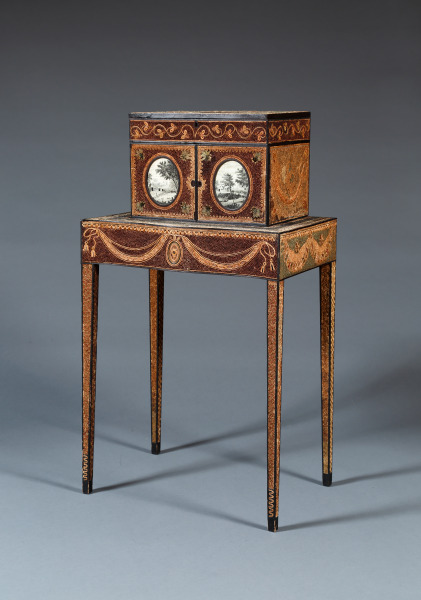
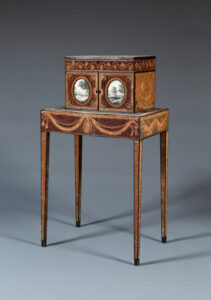
Paper Filigree Cabinet on Stand with Hairwork and Watercolor Panels
1783-1793
Scroll
- Maker: Sophia Jane Maria Bonnell
- Maker: Mary Anne Harvey Bonnell
Paper Filigree Cabinet on Stand with Hairwork and Watercolor Panels
1783-1793
Physical Qualities
Wood, watercolor on paper, metallic paper, silk, hair, 41 1/2 × 23 × 15 1/2 in. (105.4 × 58.4 × 39.4 cm.)
Credit Line
Decorative Arts Acquisitions Endowment established by the Friends of the American Wing
Object Number
2022.78
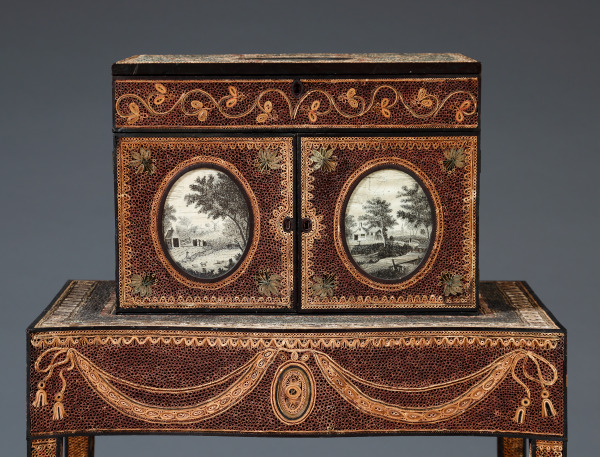
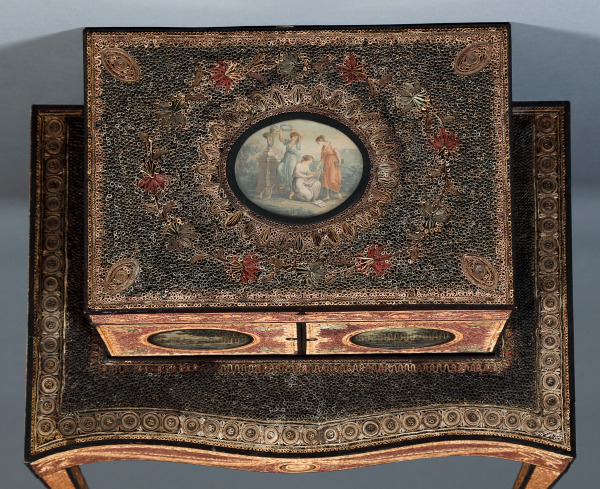
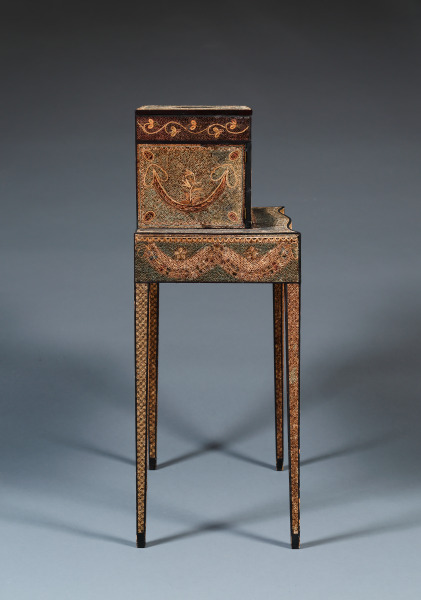
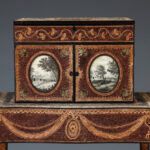
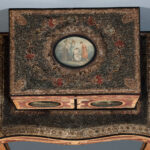
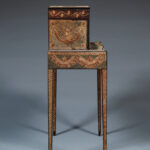
Sophia Jane Maria Bonnell and her sister-in-law Mary Anne Harvey Bonnell decorated this wooden cabinet in paper filigree. Paper filigree—applying short, rolled pieces of paper that have been dyed or gilded—is a decorative technique, also known as paper quilling, for imitating other materials, in this case, wood veneer or marquetry. It was practiced by women across continental Europe and England from the 1400s to 1800s.
This is a rare surviving piece of furniture decorated with paper filigree. The Bonnells would have ordered the carcass, or wood base, from a cabinetmaker. Specialty craft stores sold the paper, and period magazines published pattern designs. In addition to the paper filigree, the cabinet features landscapes made with hair,
a medium also used in the nearby self-portrait by Mary Anne Harvey Bonnell.
The Baltimore Museum of Art by purchase, 2022; Carlton Hobbs, LLC, New York, NY by 2016; Private Collection, United States; Florian Papp Gallery, New York, NY by 1988; Edric van Vredenburgh, Grosvenor House Antiques Fair, 1986; Pelling Place, Old Windsor, Berkshire, thence by descent
Grosvenor House Antiques Fair Handbook, 1986
Papp, Melinda F. and William J. Papp. Rolled, Scrolled, Crimped and Folded: The Lost Art of Filigree Paperwork, New York, 1988.
Reif, Rita. “Paper Filigree: An Art for Leisure, “ New York Times, 07 May 1988.
Riley, Noel. The Accomplished Lady – A History of Genteel Pursuits c. 1660-1860, Wetherby, Oblong Creative Ltd., 2017, p. 246-247, ill. 247