Juan Gris
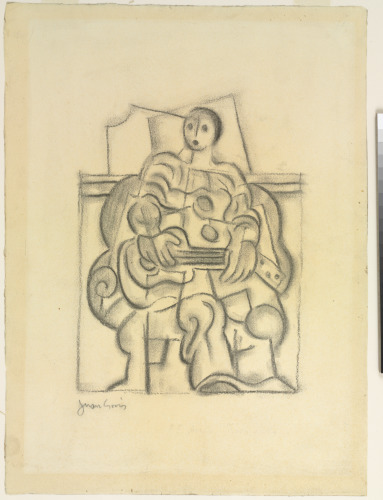
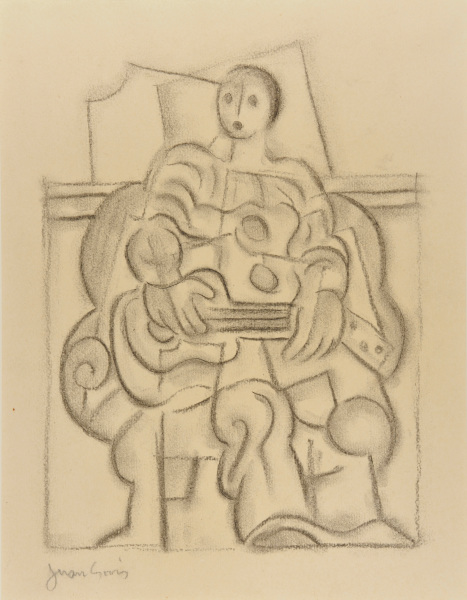
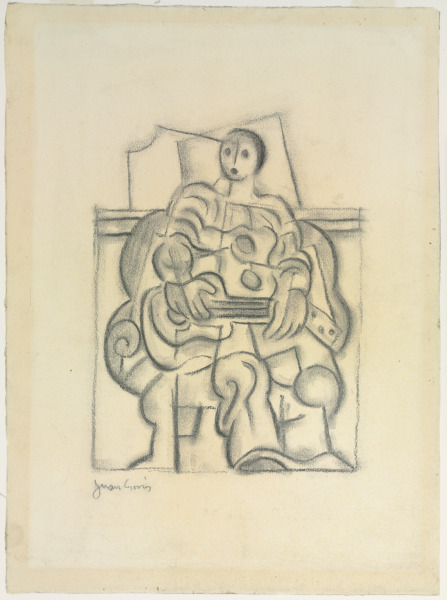
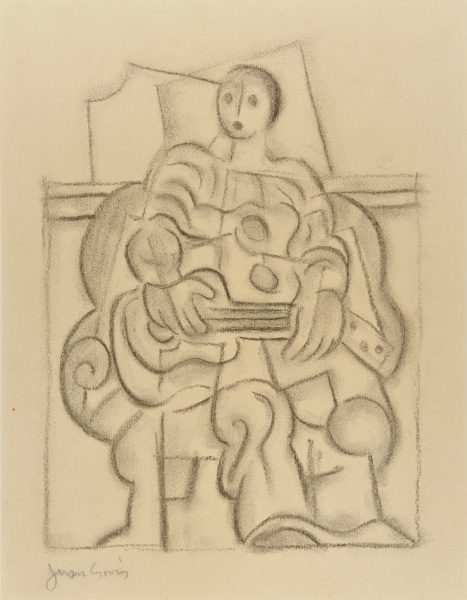
Pierrot with Guitar
1916-1926
Scroll
Juan Gris
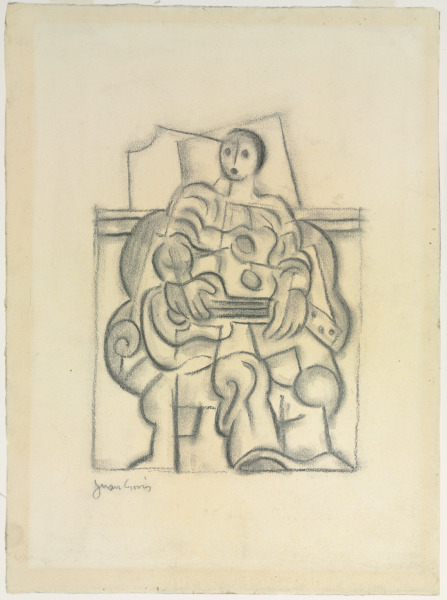
Pierrot with Guitar
1916-1926
Physical Qualities
Pen and black ink and charcoal with stumping on paper, Sheet: 384 x 284 mm. (15 1/8 x 11 3/16 in.)
Credit Line
Bequest of Saidie A. May
Object Number
1992.187
As a young man, Juan Gris studied mechanical drawing and trained with an academic painter in Madrid. In 1906, he moved to Paris, where he befriended leading modern artists including Henri Matisse, Georges Braque, Pablo Picasso, and Fernand Léger. Of these, Picasso had the greatest influence on his work. Gris acknowledged his debt to Picasso in his Cubist portrait of the artist, Homage to Picasso (The Art Institute of Chicago), exhibited at the Indépendants exhibition of 1912.
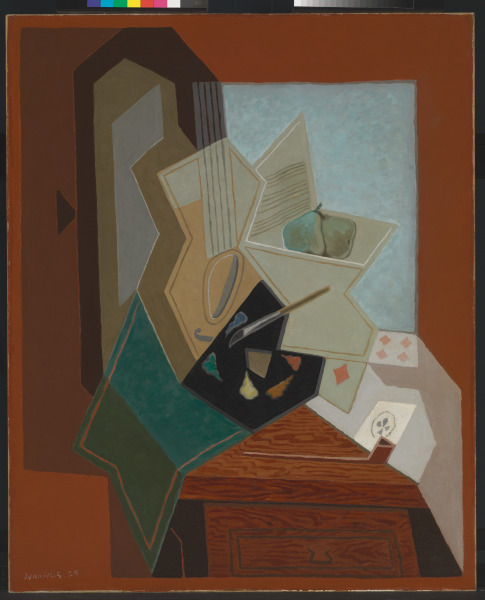
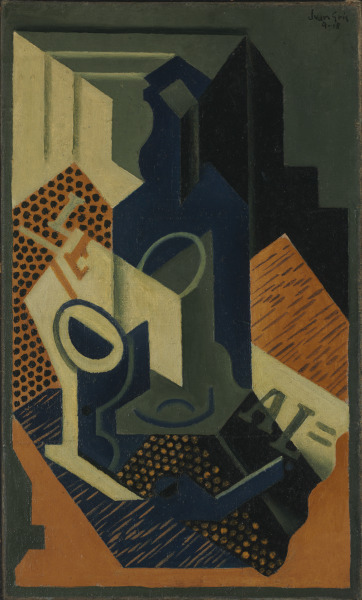
Gris’ Cubism is distinctive for its hard-edged precision and elaborate use of interlocking shapes. Gertrude Stein recognized it for its lucidity observing, “the only real Cubism, is that of Picasso and Juan Gris. Picasso created it and Juan Gris permeated it with his clarity and his exaltation.”
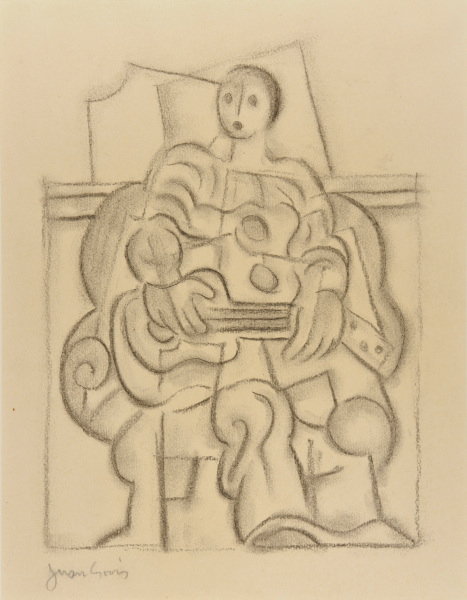
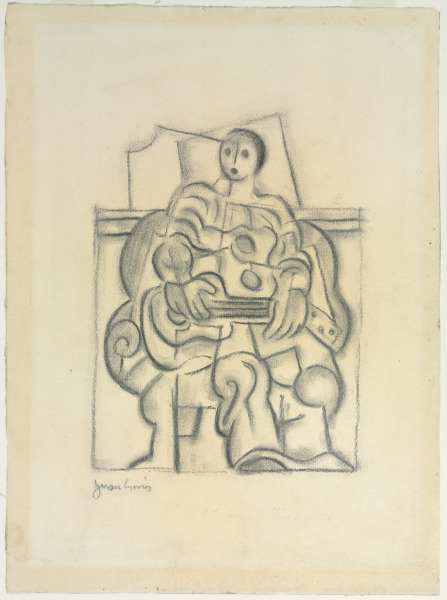
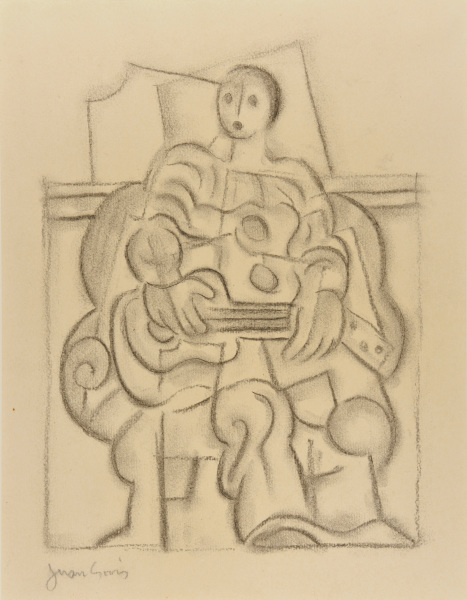
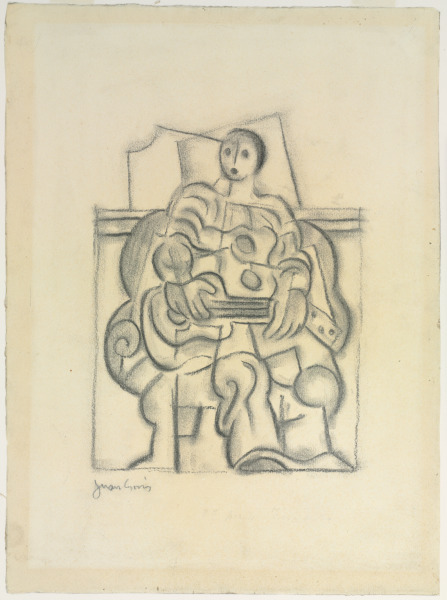
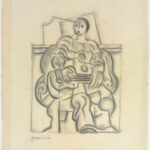
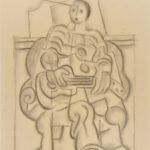
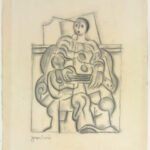
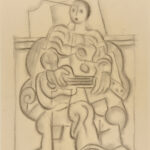
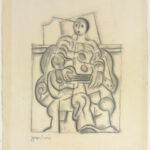
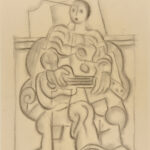
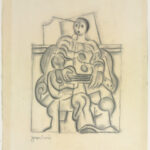
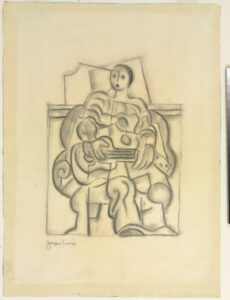
Starting in 1918, Gris produced a series of Harlequin paintings, after which he addressed the other important commedia dell’arte character, Pierrot. In this drawing, Gris knits a variety of curvilinear elements together to form a complex grid-like pattern. He employs overlapping shapes and selective transparent passages to situate his musical clown in a complex shallow space.
A Circus Family: Picasso to Léger
Inscribed: lower left in charcoal: "Juan Gris"