

Georges Rouault
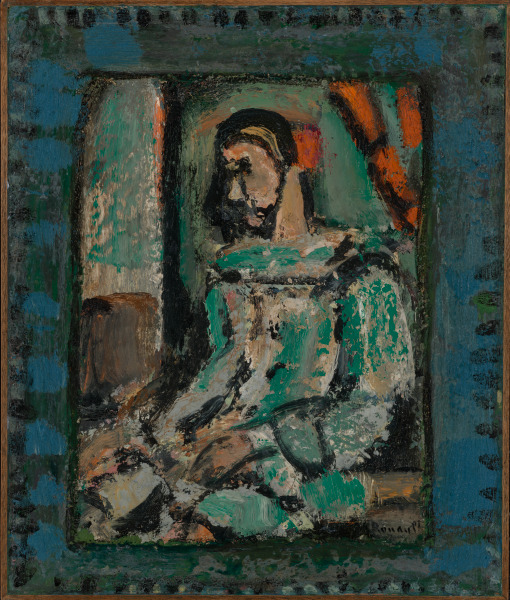
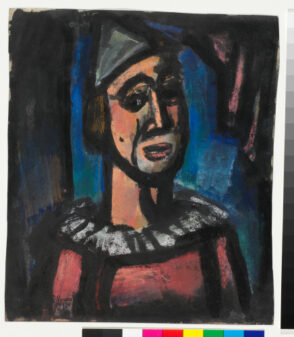
Portrait of a Clown
1929
Scroll

Georges Rouault
Portrait of a Clown
1929
Physical Qualities
Pastel, opaque watercolor, and brush and black ink on paper, Sheet: 349 x 300 mm. (13 3/4 x 11 13/16 in.)
Credit Line
Gift of Naomi Hendler Legum and Leslie Legum, Baltimore
Object Number
1993.166
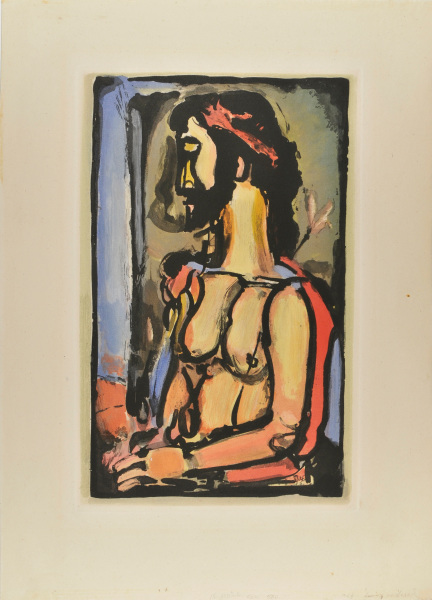
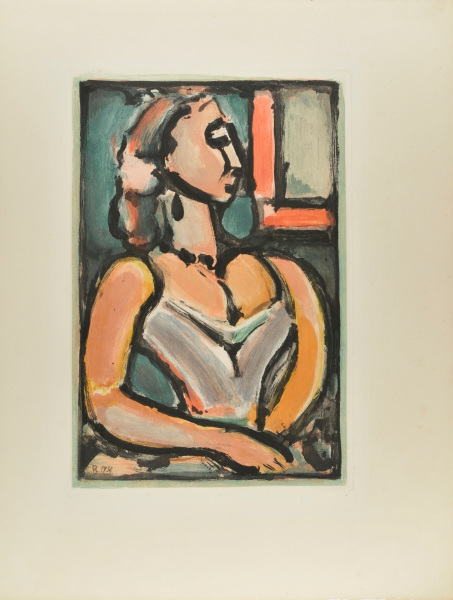
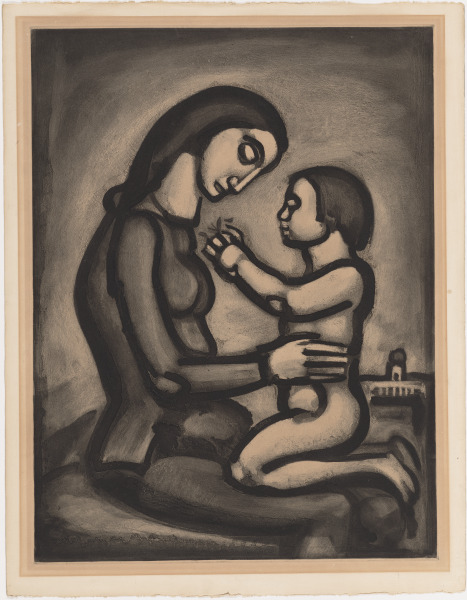
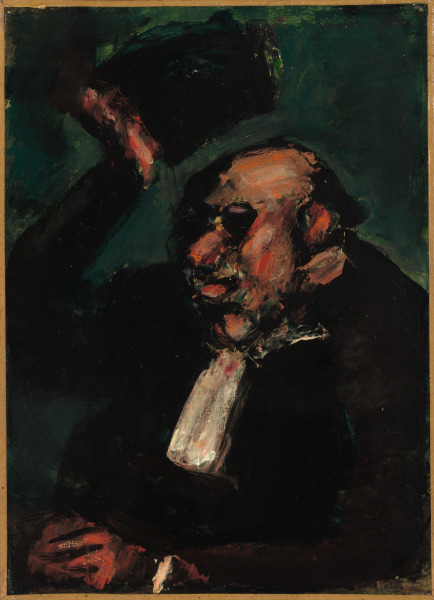
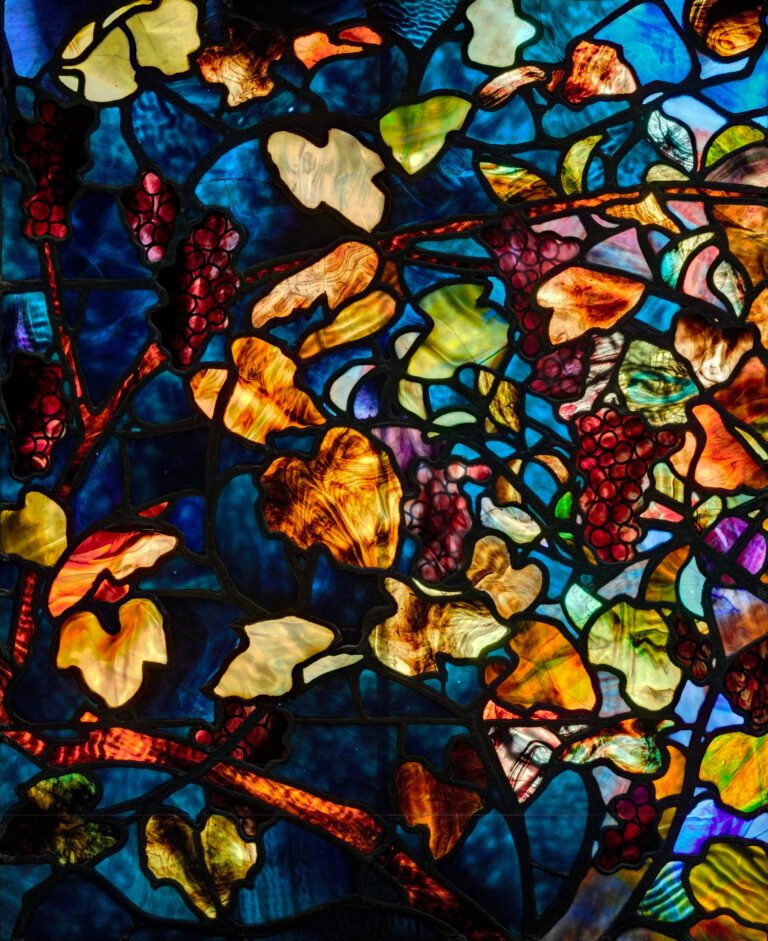
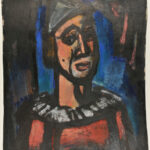
The heavy black outlines and glowing color of Georges Rouault’s distinctive style are often attributed to his experience as an apprentice glass painter and restorer in his youth. Later, while studying at the École des Beaux-Arts under Gustave Moreau, Rouault was influenced by his master’s spiritualism. But his ability to turn his back on traditional academic painting became clear when he joined Matisse in the infamous Fauves (wild beasts) room at the 1905 Salon d’Automne. In 1907, Rouault took up the theme of circus clowns, which, together with prostitutes and legal judges, became a recurrent theme. His
circus figures sometimes evoke pathos and at other times appear as mute otherworldly presences, reflecting Rouault’s growing religiosity and dark view of the human condition.
Theodore Schempp, Paris and New York, 1934; St. Louis Art Museum
Art Institute of Chicago, Twenty-First International Exhibition of Watercolors, 1942.
Oliver Shell, BMA, "A Circus Family: Picasso to Léger," 22 February through 17 May 2009.
Oliver Shell, BMA, "A Circus Family: Picasso to Léger," 22 February through 17 May 2009.
Inscribed: At lower left, in black ink: "G. Rouault / 1930"