
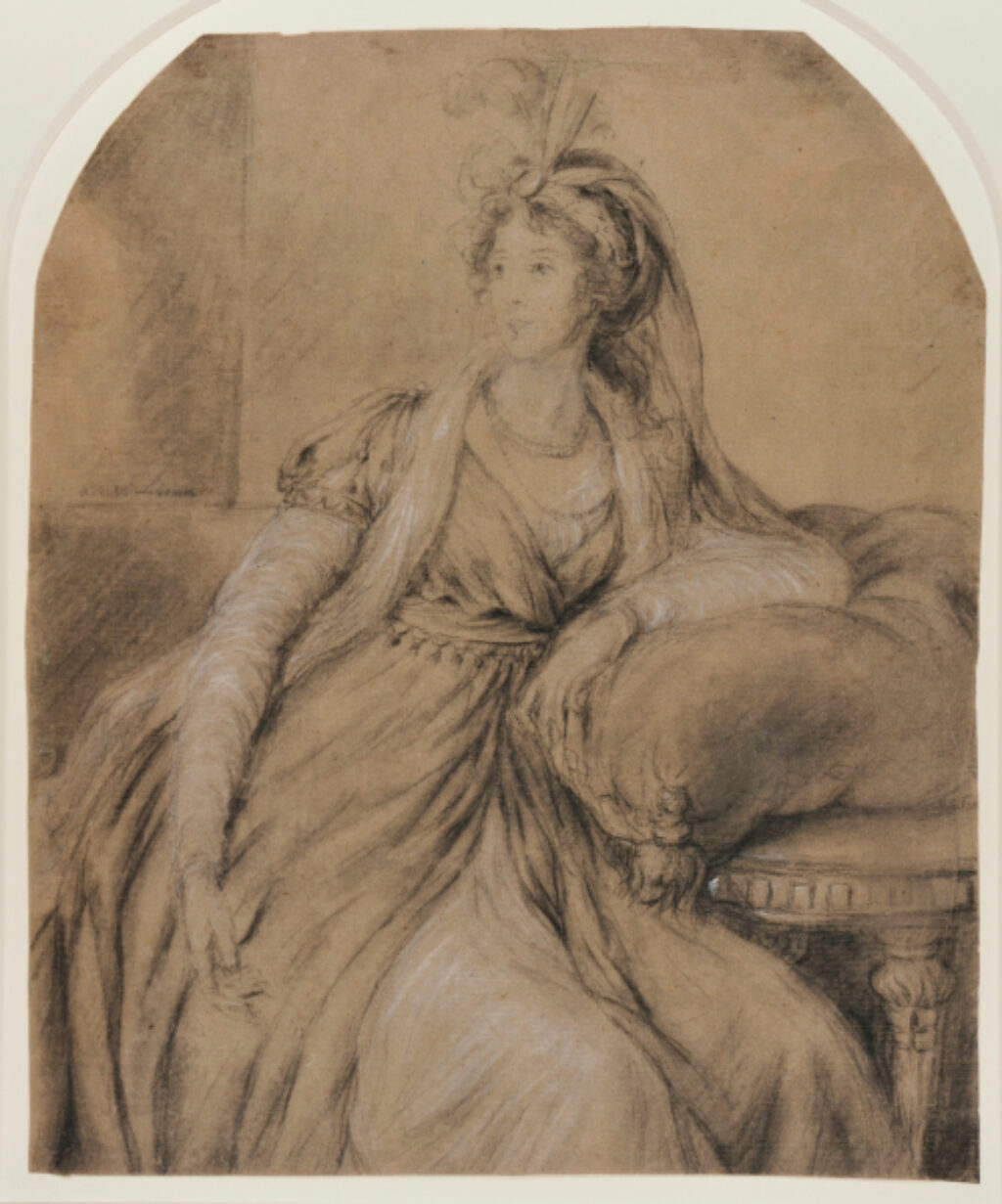
Élisabeth Louise Vigée Le Brun
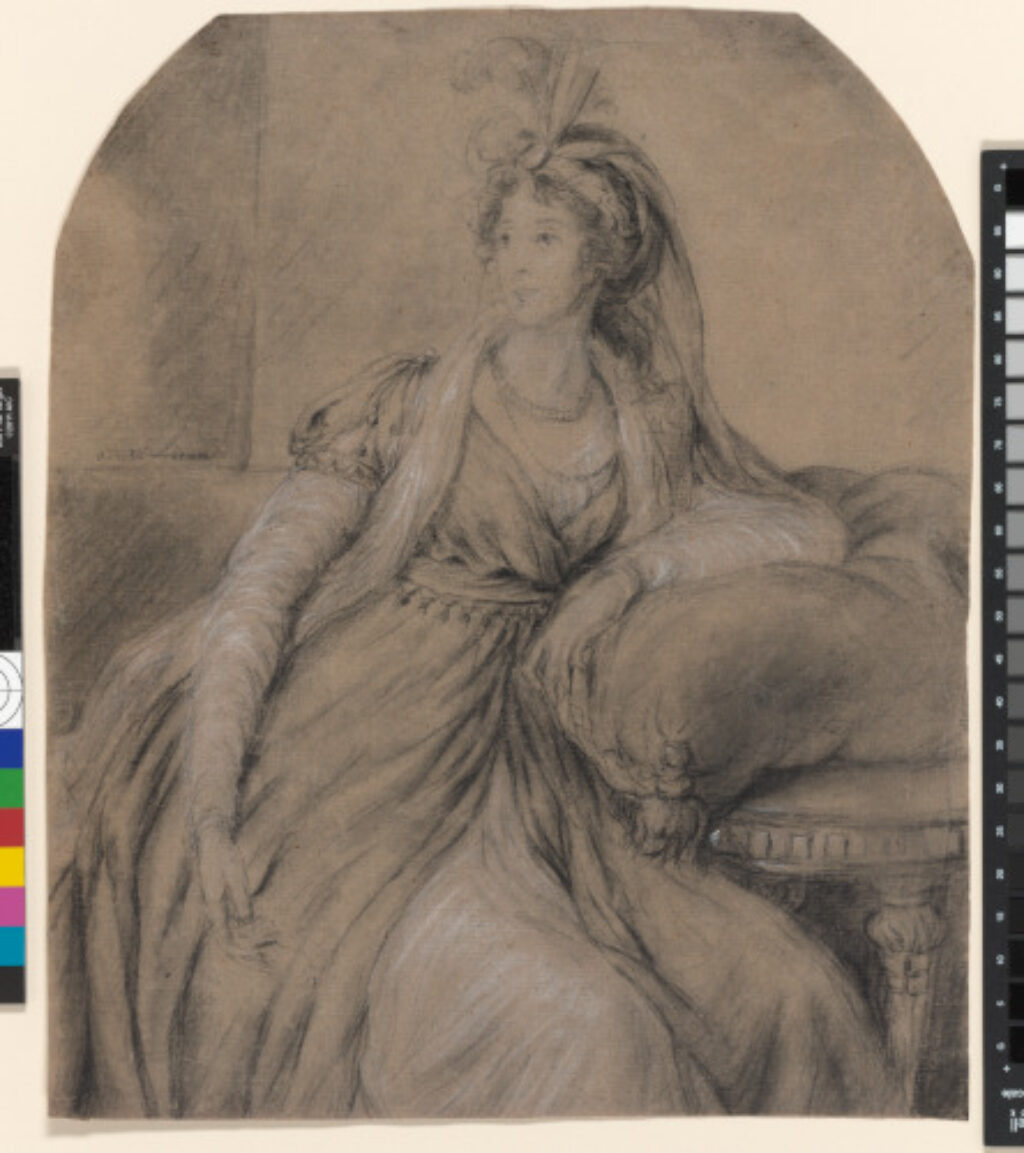
Princess Anna Alexandrovna Galitzin
1791-1801
Scroll
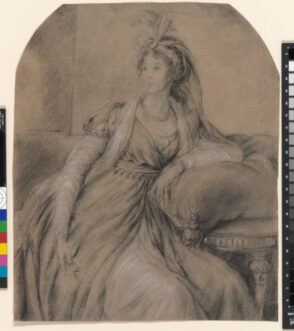
Élisabeth Louise Vigée Le Brun
Princess Anna Alexandrovna Galitzin
1791-1801
Physical Qualities
Black and white chalks with stumping on paper, Sheet: 282 x 234 mm. (11 1/8 x 9 3/16 in.)
Credit Line
Stiles Tuttle Colwill Acquisitions Fund, and Marion Tuttle Colwill Memorial Fund
Object Number
2016.2
After her patrons King Louis XIV (1638–1715) and Queen Marie Antoinette (1755–1793) of France were executed in 1793, Elisabeth Louise Vigée-LeBrun embarked on a 12-year exile circuit of European courts. She supported herself and her daughter, Julie, through portrait commissions. She often created chalk sketches, like the one on display here,
during an initial sitting that she later worked up intoa finished painting.
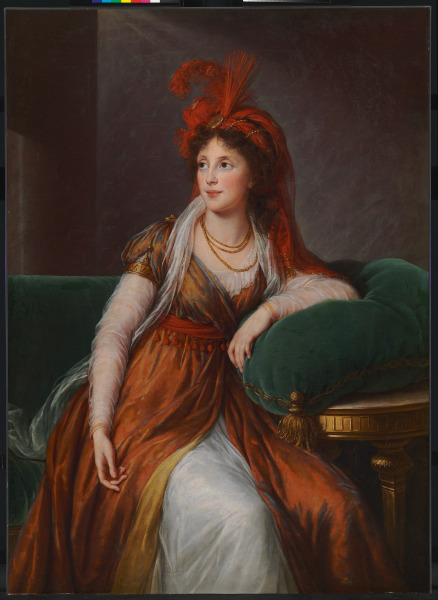
This painting follows on the artist’s years spent at the court of Catherine the Great (1729–1796) in Russia. Vigée-LeBrun complemented the sitter’s idealized appearance—youthful with flushed cheeks, a narrow nose, and delicate lips—with a gown meant for home wear and an elaborate headdress that refers to the sitter’s native country, Georgia. From wispy feathers to heavy silks and shining jewels, Vigée-LeBrun created the spectacular combination of glamorous yet casual female beauty and luxury that made her portraits popular among elites in France, Russia, and Austria.
The Baltimore Museum of Art by purchase at auction, 2016; Christie's New York, 27 January 2016, lot 72; private collection
BMA, Jacobs rotation, 13 June 2017 - 10 January 2018.
Women Artists in Europe, 1400-1800". The Baltimore Museum of Art, October 1, 2023-January 7, 2024. Circulated to the Art Gallery of Ontario, Toronto, March 30, 2024 - July 1, 2024.
Women Artists in Europe, 1400-1800". The Baltimore Museum of Art, October 1, 2023-January 7, 2024. Circulated to the Art Gallery of Ontario, Toronto, March 30, 2024 - July 1, 2024.
Markings: Watermark, lower right quadrant, "AI"
Artist
Élisabeth Louise Vigée Le Brun
1754–1841
French, 1755-1842
Meet Élisabeth Louise Vigée Le Brun