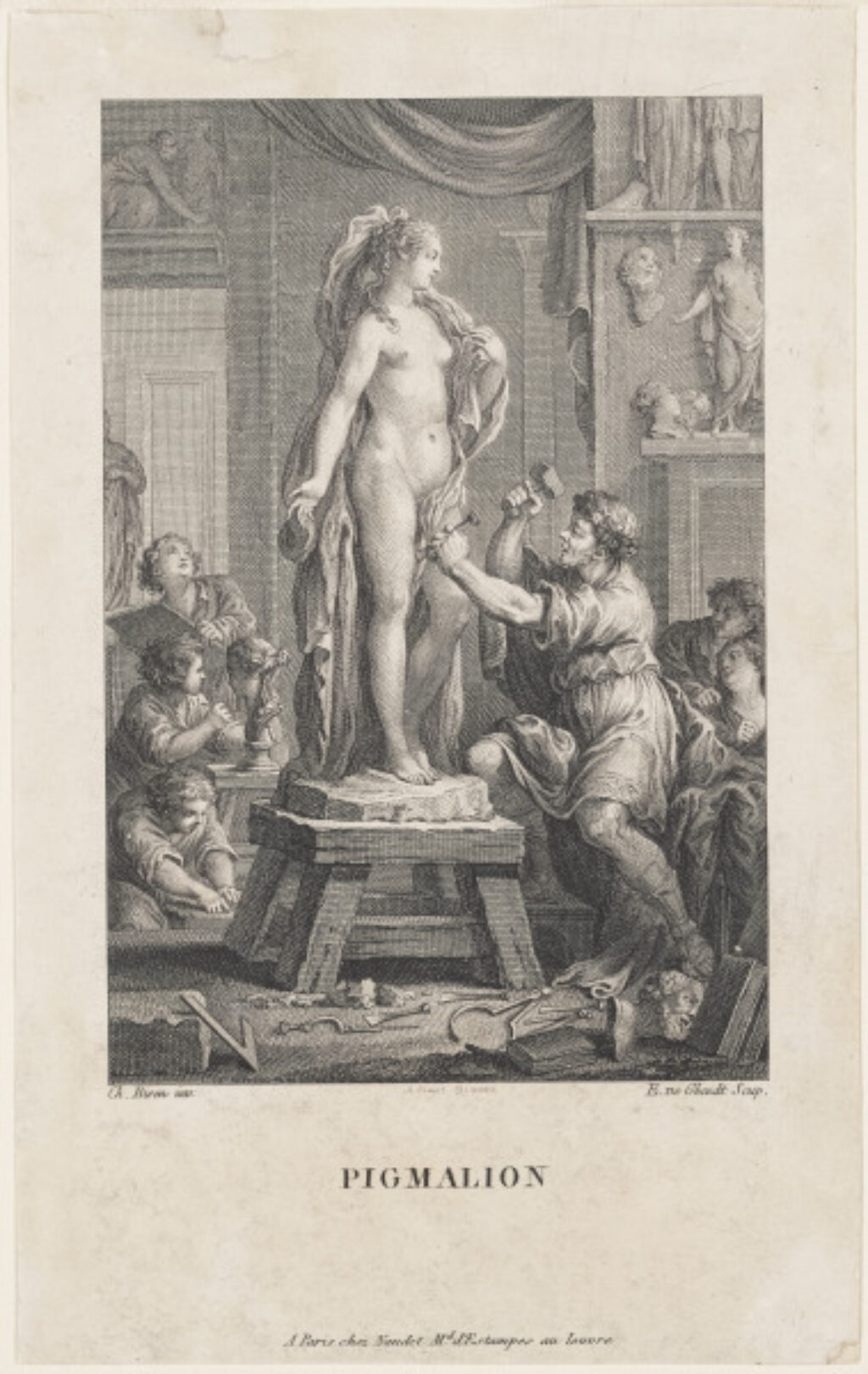
Emmanuel Jean Nepomucène de Ghendt and Charles-Dominique Eisen
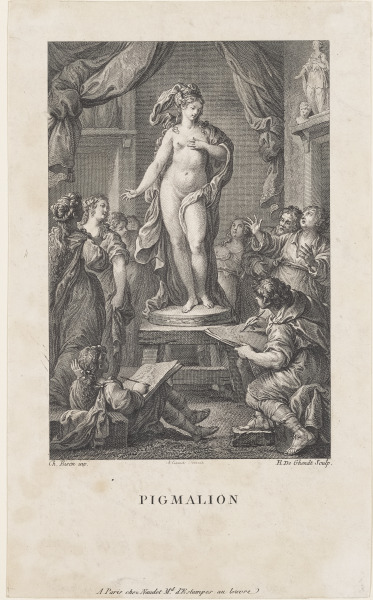
Pygmalion at Work on His Statue of Galatea
1775
Scroll
- Artist: Emmanuel Jean Nepomucène de Ghendt
- Artist: Charles-Dominique Eisen
Pygmalion at Work on His Statue of Galatea
1775
Physical Qualities
Etching and engraving, Sheet: 196 × 122 mm. (7 11/16 × 4 13/16 in.)
Image: 143 × 95 mm. (5 5/8 × 3 3/4 in.)
Credit Line
Garrett Collection
Object Number
1946.112.1919
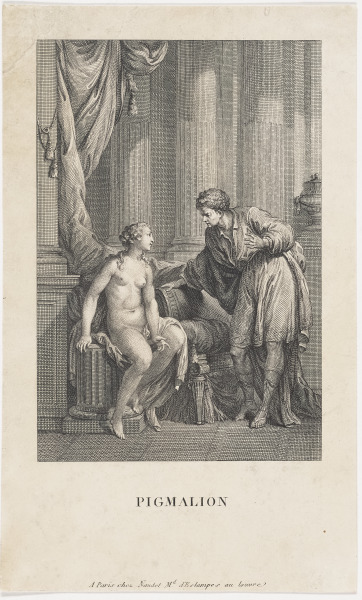
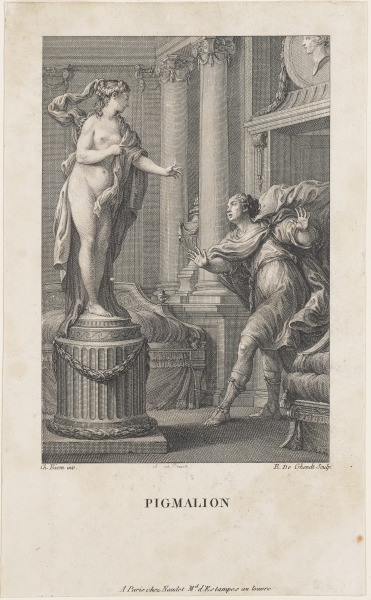
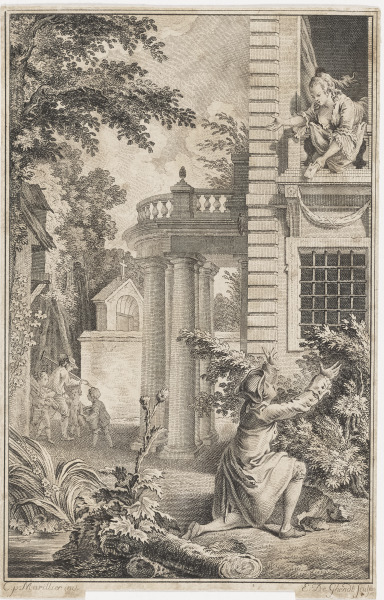
According to the Roman poet Ovid, the sculptor Pygmalion created a statue of a woman so beautiful that he fell desperately in love with her. Venus, goddess of love, heard Pygmalion’s pleas and transformed his creation into a woman named Galatea.
Emmanuel de Ghendt used a series of prints to tell the story of Galatea’s transformation, something more difficult to achieve in a single, sculpted work. Employing changes in viewpoint and pose— note, for example, the shifting placement of the statue’s arms—
de Ghendt allows the viewer to experience Galatea’s metamorphosis and share in the astonishment of her creator, Pygmalion. The myth of Pygmalion and Galatea appealed to artists because it plays with the power of artistic illusion. The classical tradition, revived during the Renaissance, perceived art as a rival to life, able to equal or even better the beauty of the natural world.
T. Harrison Garrett, Baltimore, purchased 1885 (Lugt supp. 2435b); James L. Claghorn, Philadelphia (lugt supp. 555c).
The Baltimore Museum of Art, "In the Artist's Studio: Works on Paper from the Collection," Sept 15, 2005 - Feb 27, 2005.
Elizabeth Rodini et al., BMA, "Printed Sculpture/Sculpted Prints," 14 November 2007 - 23 March 2008, no. 12-14, p. 8, ill. p. 7.
Elizabeth Rodini et al., BMA, "Printed Sculpture/Sculpted Prints," 14 November 2007 - 23 March 2008, no. 12-14, p. 8, ill. p. 7.
Signed: One
Inscribed: lower left in plate: "Ch. Eisen inv."; lower center in plate: "Aliamet Direcxit/ PIGMALION / "A Paris chez Naudet Md. d'Estampes au louvre"; lower right in plate: "E. DeGhendt Sculp."
Markings: CM: Claghorn
Artist
Emmanuel Jean Nepomucène de Ghendt
1737–1814
French, born Flanders, 1738-1815
Meet Emmanuel Jean Nepomucène de Ghendt