Andrea Andreani and Giambologna [Giovanni da Bologna]
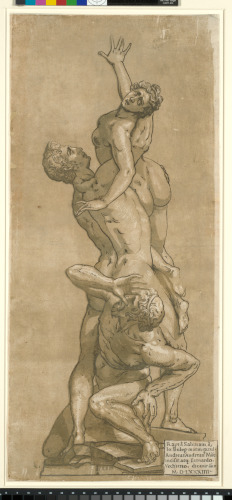
Rape of the Sabine Women
1583
Scroll
Physical Qualities
Color woodcut, Sheet: 454 x 206 mm. (17 7/8 x 8 1/8 in.)
Credit Line
Garrett Collection
Object Number
1946.112.8590
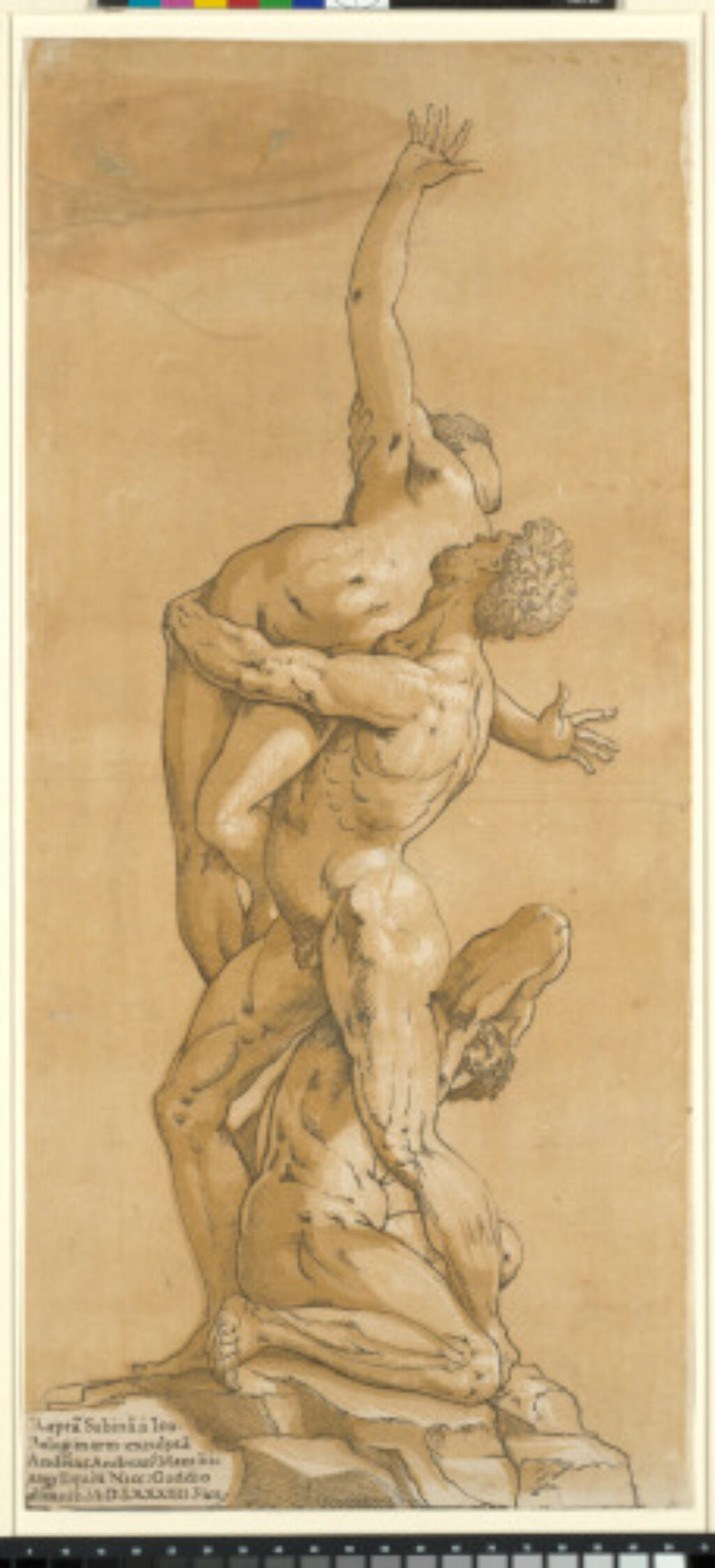
One of the principal challenges printmakers faced in representing sculpture was capturing the effects of viewing in the round. Giambologna’s Rape of a Sabine Woman (see photo) was particularly famous for its swirling, serpentine composition. Andrea Andreani used multiple prints (this is one from a series of three) to suggest the experience of moving around Giambologna’s work and taking it in from a variety of angles.
Andreani also addressed the problem of conveying the weight and sheen of marble on paper. He found a solution in the chiaroscuro woodcut, a technique that produces nuanced colors through the use of multiple wooden blocks inked in different tones.
The Rape of the Sabine Women is a tale of abduction, rather than rape as we understand the word today. The legend came from early Roman history, and recounted an episode in which a group of Roman men, in need of wives, carried off women from the rival Sabine tribe with the intention of marrying them.
Elizabeth Rodini et al., BMA, "Printed Sculpture/Sculpted Prints," 14 November 2007 - 23 March 2008, no. 23, p. 8, ill. p. 5.
Signed: from three blocks
Inscribed: lower left in block: "Rapta Sabins a Ioa: Bolog: marm: exculpta / Andreas Andrean Mant. ici: / atqz Equiti Nice: Gaddio / dicauit. M. D. LXXXIIII, Flor."
Markings: CM: Claghorn on mount


Artist
Giambologna [Giovanni da Bologna]
1528–1607
Flemish, active in Italy, 1529-1608
Meet Giambologna [Giovanni da Bologna]