
Roof Tile End Decorated with a Face
100
Scroll
Roof Tile End Decorated with a Face
100
Physical Qualities
Gray earthenware, 3 3/4 x 3 7/8 x 1 1/8 in. (9.5 x 9.8 x 2.9 cm.)
Credit Line
Gift of Mrs. Thomas Stran
Object Number
1947.119
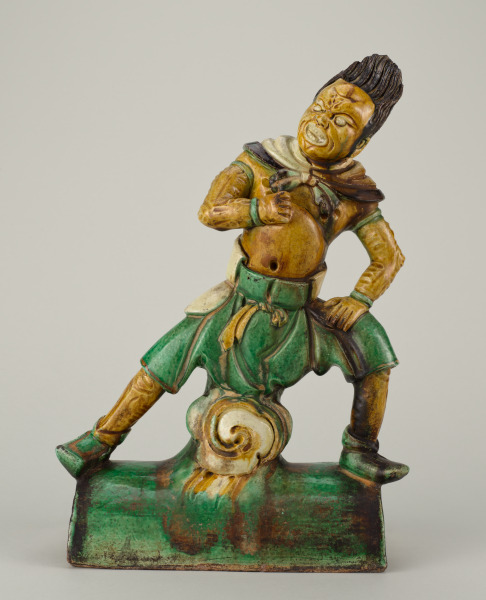
China's distinctive tubular roof tiles were in use as early as the Shang dynasty (c. 16-11th century B.C.). The overlapping sections of fired clay utilized a readily-available material and proved an effective barrier against inclement weather. The lowest tiles were fitted with round ends that sealed the unfinished edge at the eave. The ends were commonly decorated with symbolic motifs - scary monster-faces and auspicious characters, such as long life - which protected the occupants, and simultaneously conveyed their hopes and fears.
The Baltimore Museum of Art by gift, 1947; Caroline (Mrs. Thomas P.) Stran, Baltimore