Andy Warhol
Rorschach
1983
Scroll
Andy Warhol
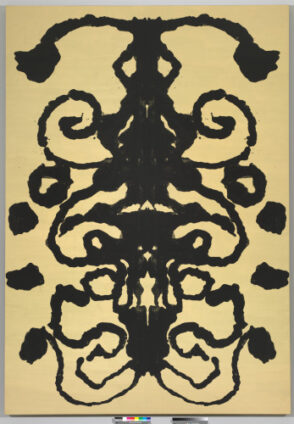
Rorschach
1983
Physical Qualities
Synthetic polymer paint on canvas, 158 x 110 in. (401 x 279.4 cm.)
Credit Line
Purchase with funds provided by Laura R. Burrows, Baltimore; and partial gift of The Andy Warhol Foundation for the Visual Arts, Inc.
Object Number
1994.34
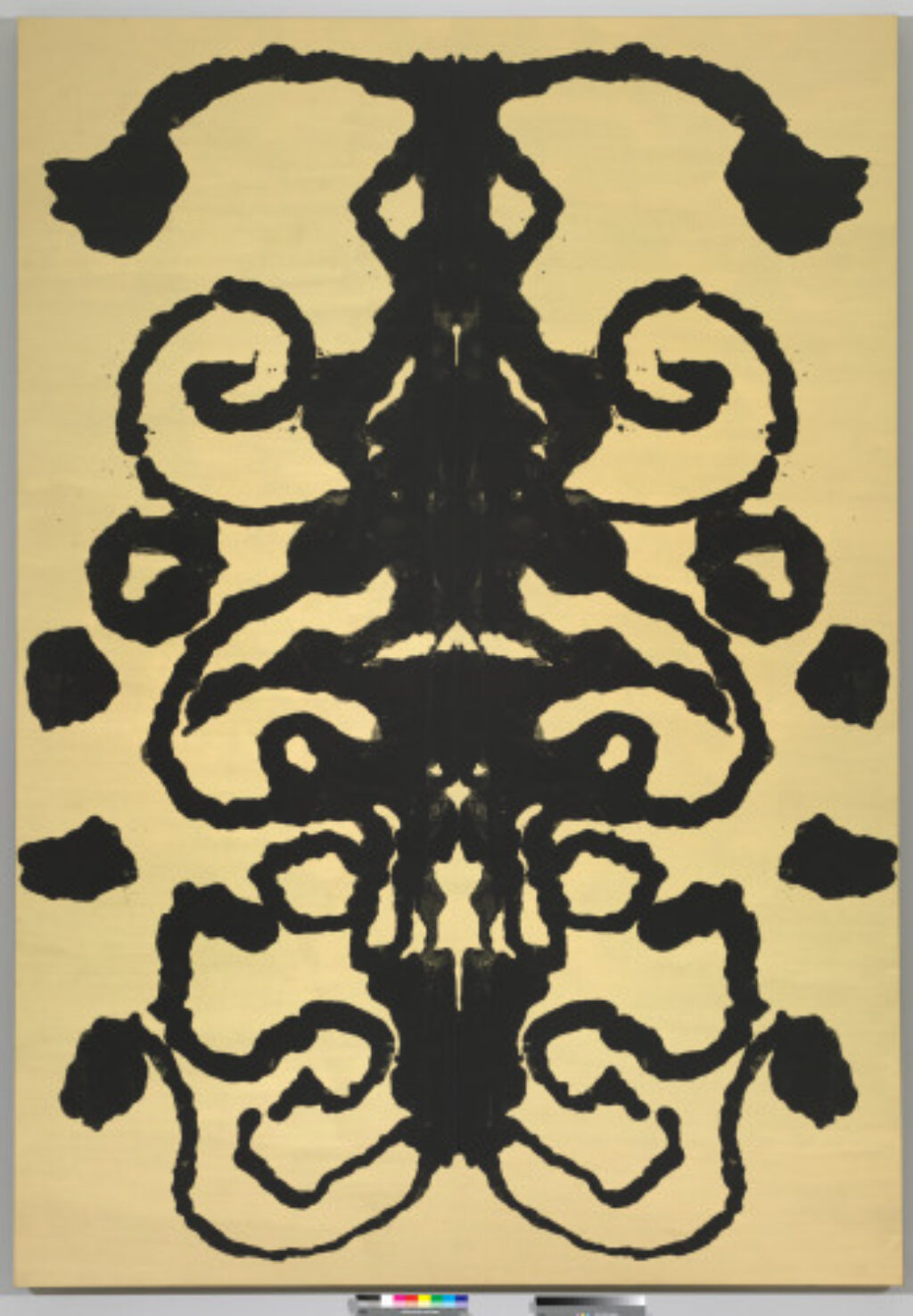
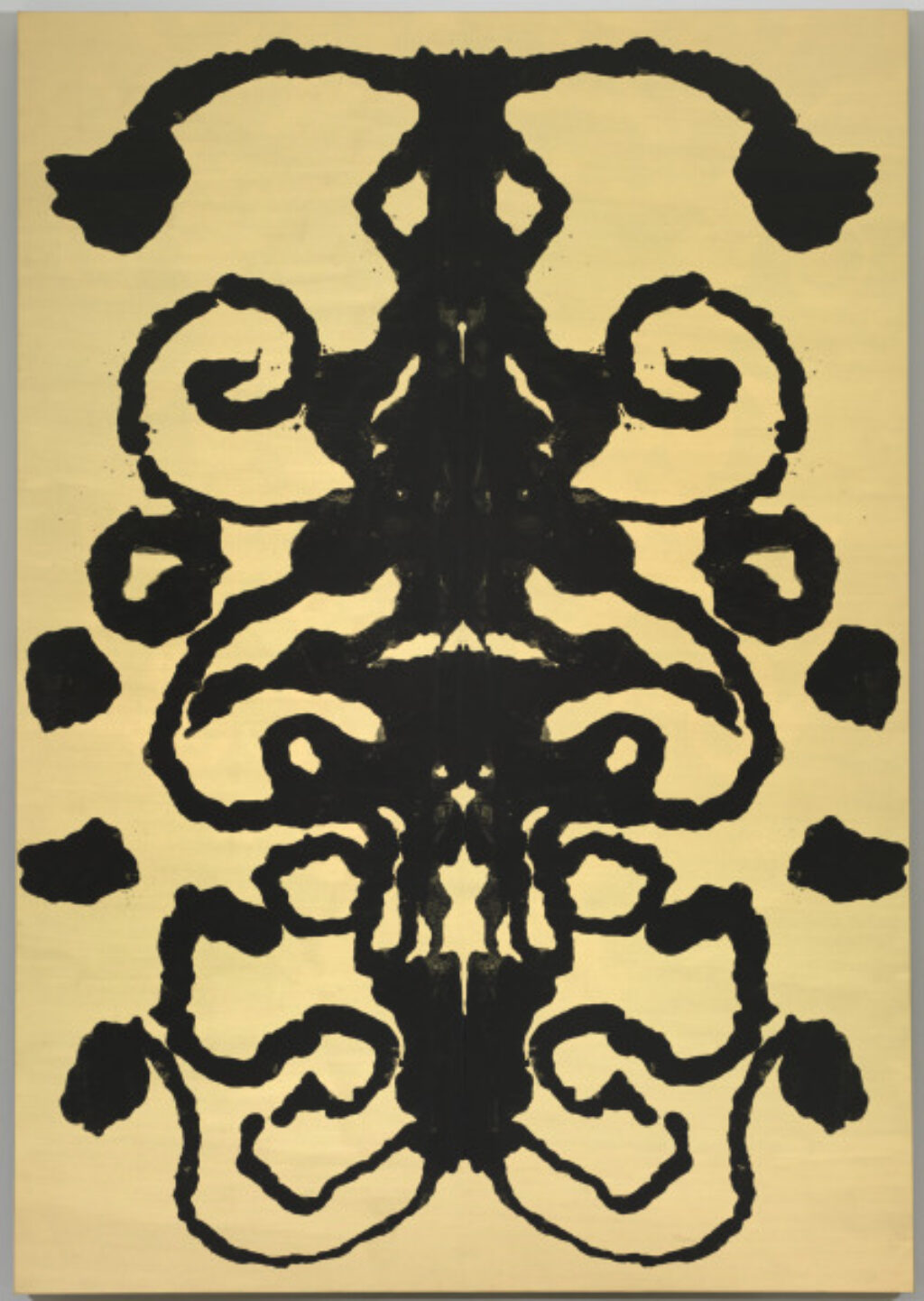
Warhol’s Rorschachs were produced by painting one side of a massive canvas, then folding it in half to create a doubled image through the most elementary of printing techniques deployed on a monumental scale. The paintings evoke a well-known psychological test conceived by Swiss psychiatrist Hermann Rorschach (1884–1922) in which subjects reveal their thoughts as they respond to pictures of undefined symmetrical forms. Warhol’s images, however, were not copies of those developed by the psychiatrist. Instead, they were based on small inkblot studies that one of his assistants produced according to the artist’s instructions. When Warhol was told that a standard set of Rorschach cards could be acquired, he expressed disappointment that he had not known early enough to simply copy those pre-existing pictures for his own art. As in the case of Warhol’s Camouflage paintings, the Rorschachs fall in between the categories of abstraction and representation. While they appear to be nonfigurative, they also reference objects with known functions.
'Andy Warhol Abstract', Kunsthalle Basel, Basel, Switzerland, Sept. 19 - Nov. 14, 1993; Museum of Applied Arts, Vienna, Austria, Dec. 1 - Feb. 13, 1994; Kunsthal Rotterdam, Rotterdam, Netherlands, Feb. 27 - May 1, 1994; Rooseum, Center for Contemporary Art, Malmö, Sweden, May 31 - July 31, 1994 (this painting did not participate in the final venue, IVAM, Centre Julia Gonzalez, Valencia, Spain, Sept. 15 - Nov. 27, 1994).
Joseph D. Ketner II, "Andy Warhol: The Last Decade," Milwaukee Art Museum, September 23, 2009-January 3, 2010; circulated to Museum of Modern Art, Fort Worth, February 15-May 15, 2010; Brooklyn Museum of Art, June 18-September 12, 2010; and The Baltimore Museum of Art, October 17, 2010-January 9, 2011.
Joseph D. Ketner II, "Andy Warhol: The Last Decade," Milwaukee Art Museum, September 23, 2009-January 3, 2010; circulated to Museum of Modern Art, Fort Worth, February 15-May 15, 2010; Brooklyn Museum of Art, June 18-September 12, 2010; and The Baltimore Museum of Art, October 17, 2010-January 9, 2011.
John Dorsey, "BMA acquires 18 Warhols," "The Sun," Baltimore, Maryland, May 5, 1994, pp. 1A, 25A.
Joseph D. Ketner II, "Andy Warhol: The Last Decade," Milwaukee/New York: Milwaukee Art Museum/DelMonico Books, 2009, no. 33, pp. 128-129, ill.
Mark Rosenthal, "Regarding Warhol: Sixty Artists, Fifty Years," New York: Metropolitan Museum of Art, p. 120, ill. p.120.
Inscribed: FRONT: clean; bottom margin, in ink, "PA 75.056'"