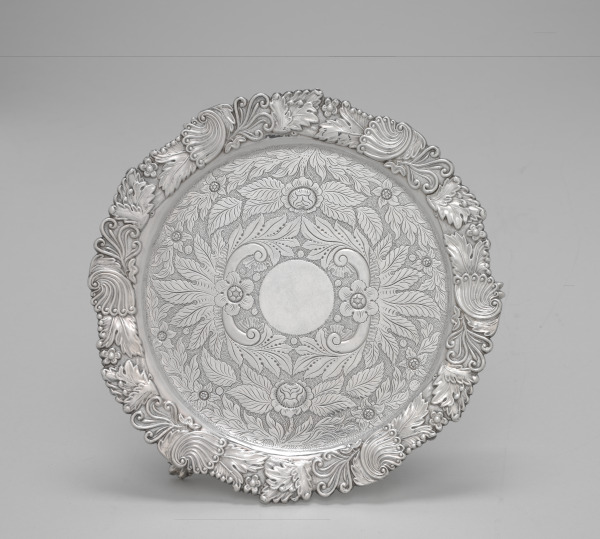
Samuel Kirk
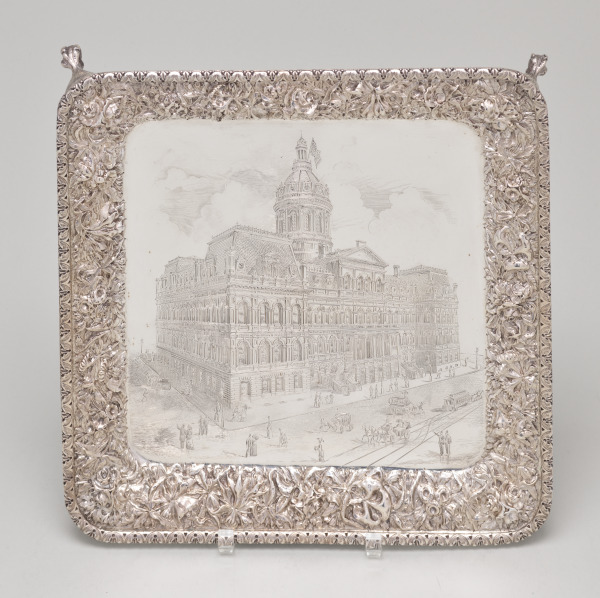
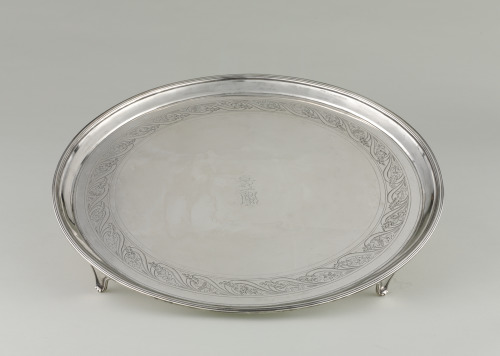
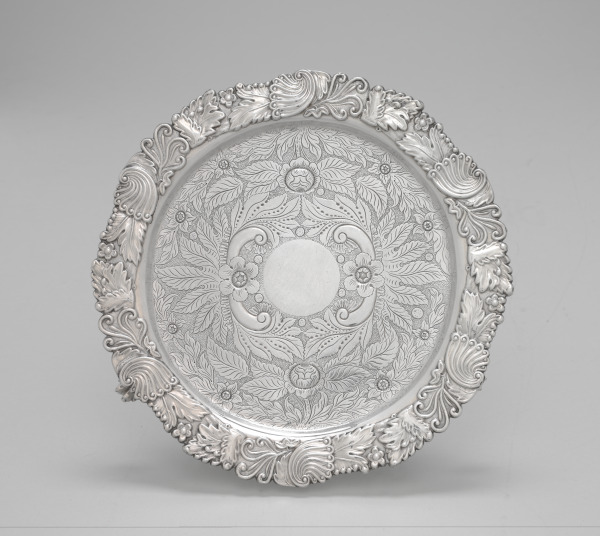
Salver
1823-1826
Scroll
Samuel Kirk
Salver
1823-1826
Physical Qualities
Silver, 8 3/8 × 8 3/8 × 7/8 in. (21.3 × 21.3 × 2.2 cm.)
Credit Line
Gift of Virginia P.B. White, Baltimore
Object Number
1933.54.2
All the furnishings seen here were bequeathed to the Museum in 1949 as part of the Cone Collection. The furniture is mostly late-19th century pastiches crafted in Italy or Spain based on Italian Renaissance forms. The rug is Oriental; the bookcase window panels are Japense silk ohi; Turkish embroideries cover the furniture; and a European altar cloth drapes the mantel. Caribel Cone loved collecting boxes, as evidenced by the two small wooden boxes on the mantel and the Italian brocade box on the bench.
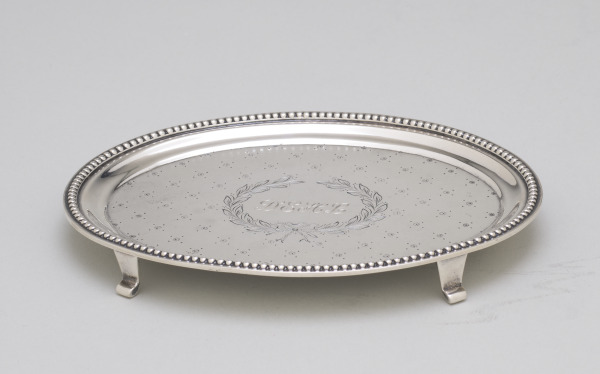
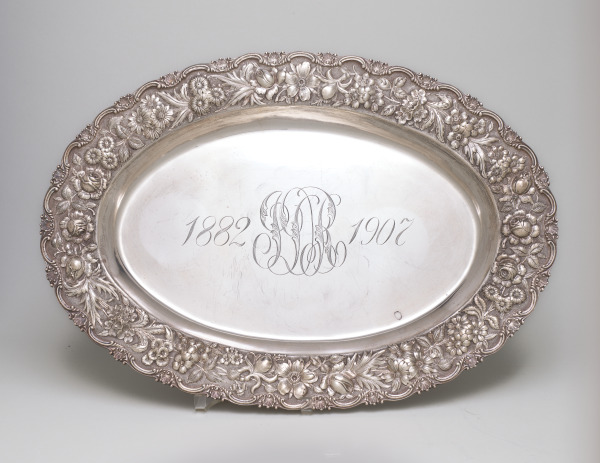
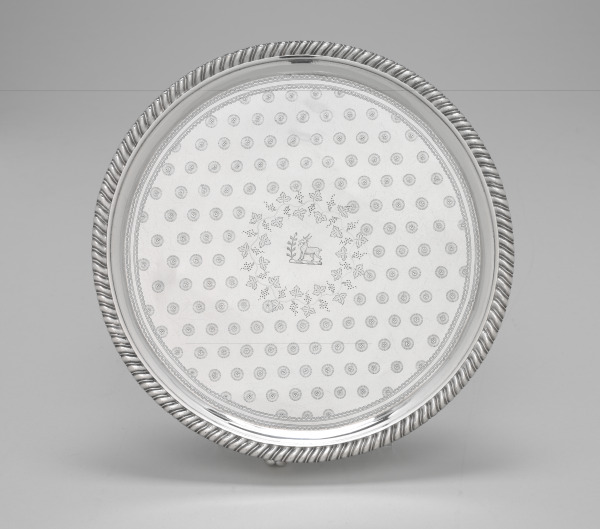
Used for serving food and beverages, the salver takes its name from an old Spanish word ‘salvar’, meaning ‘to save or make safe’ denoting sample food tasted by courtiers to detect efforts to poison a ruler. In the hands of 18th-century silversmiths, it became a refined serving utensil. During the 1730s, English silversmiths began adding scalloped “pie-crust” rims with alternating reverse scrolls and c-curves. A decade later, English cabinetmakers adopted the lively pie-crust edge, applying it to a new furniture form- the tripod tilt-top table. Like silver salvers, tilt-top tables quickly proved popular in colonial America.
Most of the salvers on view in these cases were made in Baltimore. However, there are two English-made salvers with histories of ownership by Maryland families, suggesting that the form was well known here by the mid-18th century. Henry Morris, a London silversmith who specialized in salvers, made the example dating 1746-1747 and engraved it with the Prestwood family arms. Members of that family were living in Maryland and Virginia by the mid 18th-century. The salver made by William and Robert Peaston in London in 1758-1759 bears the Browne arms for Charles Browne of Queen Anne’s County, Maryland. Marylanders continued to add family crests and initials to silver made here.
Baltimore Museum of Art by gift, 1933; Virginia Purviance Bonsal White (1869-1955), Baltimore, MD
AMW Reinstallation 2014
American Wing Rotations 2020
American Wing Rotations 2021
American Wing Rotations 2023
American Wing Rotations 2024
American Wing Rotations 2025
Goldsborough, Jennifer Faulds. "Eighteenth and Nineteenth Century Maryland Silver in the Collection of The Baltimore Museum of Art." Baltimore: The Baltimore Museum of Art, 1975. p. 135, ill., cat. no. 158
Inscribed: underside: etched "2577"
Markings: Mark: Assay marks for 1824-1827 (no Head of Liberty), struck on bottom of each; no maker's mark (?) see cataloger's entry below: On underside: maker's mark, "C" in box/Maryland cres (?)
 On View at the BMA