Thomas H. Warner
Salver
1799-1809
Scroll
Thomas H. Warner
Salver
1799-1809
Physical Qualities
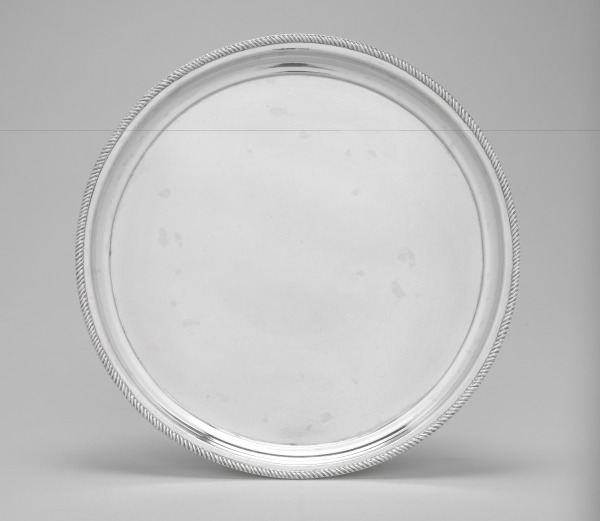
Silver, 18 1/8 × 18 1/8 × 1 1/8 in. (46 × 46 × 2.9 cm.)
Credit Line
Purchased as the gift of Frederica Kolker Saxon, Baltimore, in Honor of her Father
Object Number
2009.195
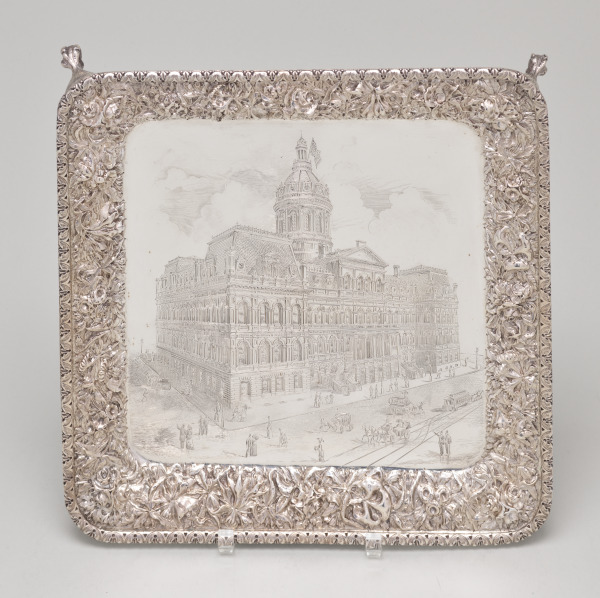
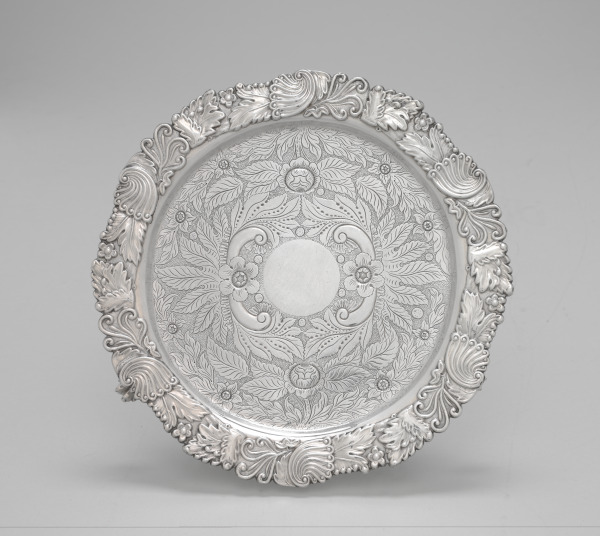
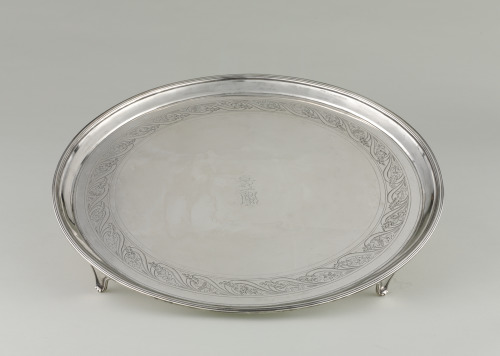
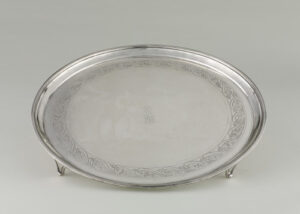
Majestic yet simple, this tray tells multiple tales. First is the story of skillful craftsmanship: Baltimore silversmith Thomas Warner hammered his largest known piece from a single silver ingot. He then added cast and applied elements.
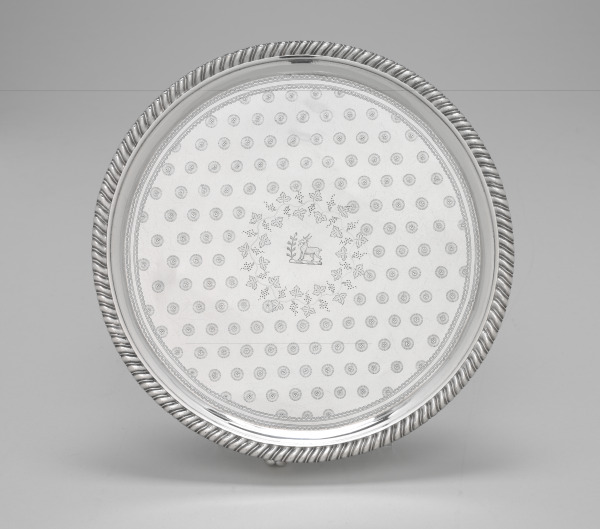
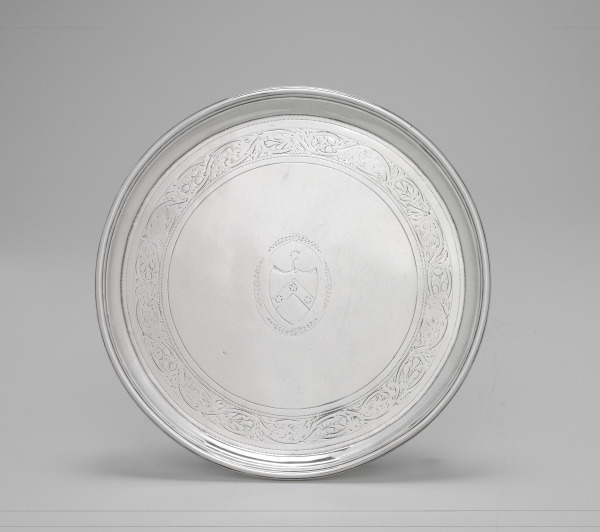
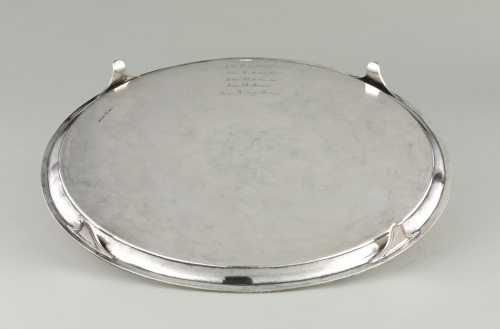
Warner made the tray for Thomas Hollingsworth (1747-1815), a successful Baltimore merchant. Hollingsworth’s name is engraved on the back, but the initials “JBM” with a lion rampant decorate the front. Why? Hollingsworth’s daughter Ann married John Boucher Morris in 1817. Sometime thereafter, Hollingsworth’s initials were erased and changed to Morris’s. The back records four generations named “John B. Morris” so we can’t say who – father, son, grandson or great grandson – made the change.
The tray also spins a tale of political economy. Active in politics, business, and finance, John B. Morris headed the First Bank of Maryland when Andrew Jackson withdrew Treasury deposits from the Second Bank of the United States in 1833, precipitating a financial crisis. The First Bank of Maryland was among those that failed. A public investigation discovered no criminal activities on Morris’s part, but the loss of funds provoked riots against the bank and its officers in 1835. According to family history, the Morris family fled to the country, abandoning their town house next door to the bank. A neighbor’s servant is thought to have hidden the family silver in a pit in nearby stables. Dents in the surface of the tray are still evident.
The tray tells a final tale about Baltimore’s artistic patronage. John B. Morris was one of three local subscribers to John James Audubon’s 'Birds of America', which were shown at the Library Company of Baltimore. But no trace of Morris’s Audubon prints has ever been found. It is thought that they were destroyed in the 1835 riots. The silver tray, but not the prints, survived the mob.
The Baltimore Museum of Art by purchase, 2009; Spencer Marks, Ltd., MA by purchase; Frederica K. Saxon (1933-2025), Baltimore, MD likely by descent; Irving Mason Kolker (1895-1957)
AMW Reinstallation 2014
American Wing Rotations 2020
American Wing Rotations 2021
American Wing Rotations 2022
American Wing Rotations 2023
American Wing Rotations 2024
American Wing Rotations 2025
Baltimore Museum of Art. The Baltimore Museum of Art: Celebrating a Museum. Baltimore: The Baltimore Museum of Art, 2014.
Baltimore Republican, "Bank Riots," August 10, 1835.
Inscribed: Top: cipher and crest of John B. Morris (3rd owner of tray) On underside: "John B. Morris Sr. / John B. Morris Jr. / John B. Morris 3rd / John B. Morris / Anne Willing Morris" "Tho.'s Hollingsworth"
Markings: On underside: "T. Warner", eagle stamp, "STER. G" Etched above and below Maker's marker: "389 + 17 / 190 / 390"
 On View at the BMA