
Gola
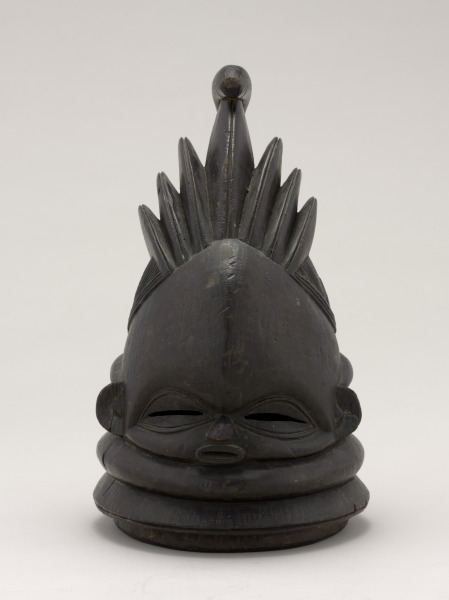
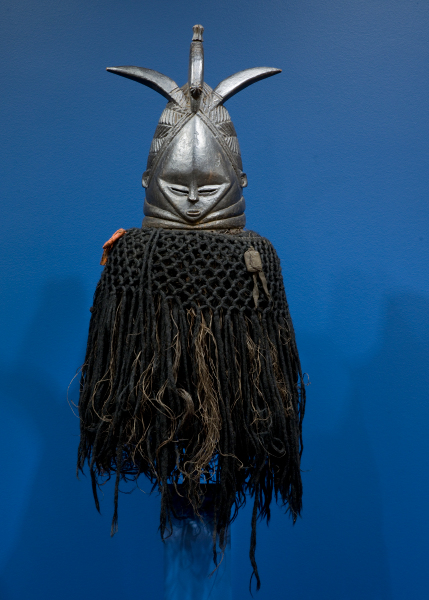
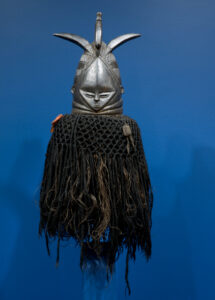
Sande Society Helmet Mask (Zogbe)
Gola, 1900-1932
Scroll
Gola
Sande Society Helmet Mask (Zogbe)
Gola, 1900-1932
Physical Qualities
Wood, wood fiber, yarn, cloth, paper, cowrie shells, 16 1/2 in. (41.9 cm.)
Credit Line
Gift of Philip M. and Michele M. Abrams, Vienna, Virginia
Object Number
1984.212
When a pre-teen girl sees the perfectly coiffed hair, smooth skin, and lustrous sheen of Sande society masks in her village, she knows it is her turn to become a woman. Through Sande, a women’s society, adult women invite older girls to join in a two-month camp outside town, where they will learn proper comportment, songs, and dances, as well as information on sexual education and family relationships. When the girls return to the village accompanied by Sande masqueraders, they are considered young adults. The young women’s intricate hairstyles, glowing skin, and modest behavior, expected of all cultured ladies, echo the ideal beauty of the masks.
The only wooden masks in Africa worn by female performers, Sande masks are also one of the few art forms where women are the primary patrons. Since at least the early 19th century, women in Sierra Leone and Liberia have commissioned these masks as they ascend the ranks of the Sande society. Women may either order a mask directly from an artist or purchase one readymade from an itinerant sculptor, while some masks are described as gifts from the water spirits.
Although all of the masks displayed here were made for the same purpose, their styles vary considerably, from sharp abstract lines to naturalistic curves. This range points to the many aesthetic choices artists have made within an overarching tradition—and the ways different women have defined beauty. Which mask would you choose?
African Reinstallation