Melvin Edwards
Scales of Injustice
2016-2000
Scroll
Melvin Edwards
Scales of Injustice
2016-2000
Physical Qualities
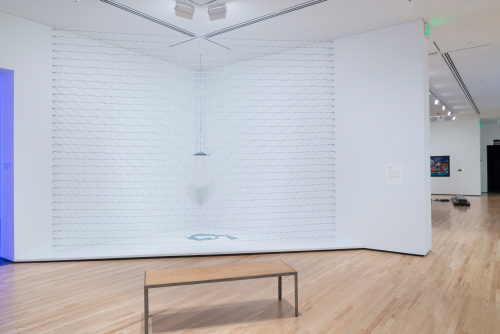
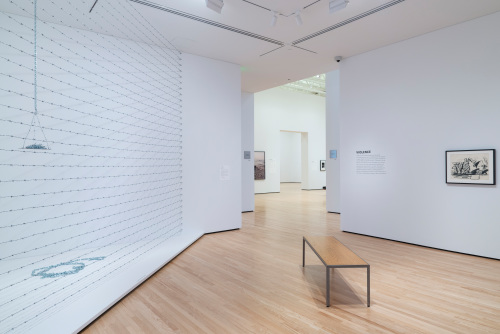
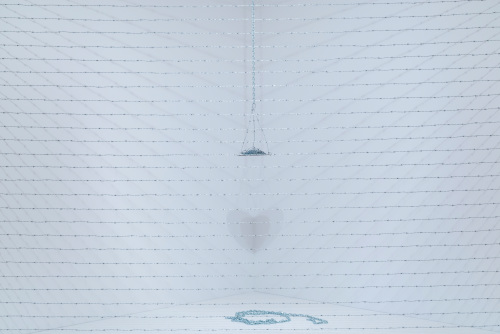
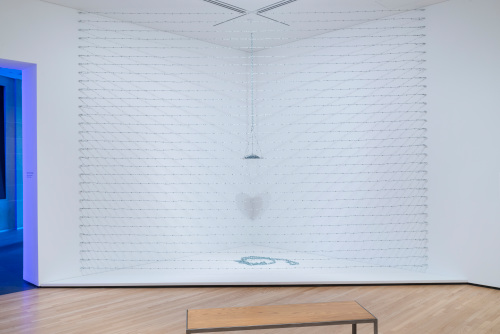
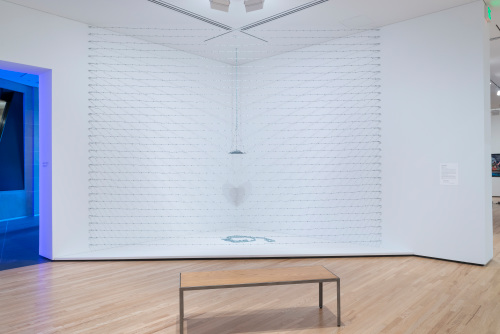
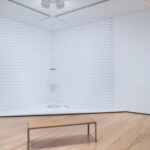
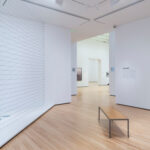
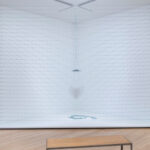
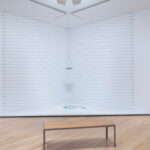
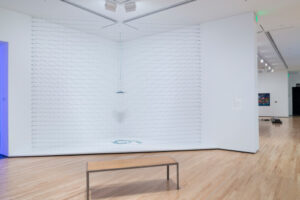
Barbed wire, chain, and steel, Element 1 (area enclosed with barbed wire): 144 × 144 × 203 5/8 in. (365.8 × 365.8 × 517.3 cm.)
Element 2 (min. height of prism ceiling): 144 in. (365.8 cm.); (max. height of prism ceiling): 192 in. (487.7 cm.)
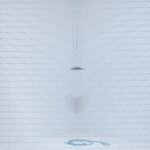
Element 3 (suspended steel platform): 69 × 1/16 × 16 in. 10 lb. (175.3 × 0.2 × 40.6 cm.)
Credit Line
Purchase with exchange funds from the Pearlstone Family Fund and partial gift of The Andy Warhol Foundation for the Visual Arts, Inc.
Object Number
2018.108
In 1970, Melvin Edwards made Corner for Ana, the basis for this sculpture. Named for the artist’s young daughter, the title refers to sending a child to a corner for timeout, “a place for thoughtfulness.” In contrast, the chain and vicious barbed wire evoke brutality—privatizing land, imprisoning people—amidst the struggle for civil rights.
Edwards remade that earlier work in response to recent violence against immigrants, in particular the death of Pateh Sabally, a 22-year-old Gambian refugee who drowned in the Grand Canal of Venice on January 21, 2017. Onlookers taunted the young migrant, filmed his struggles, and offered no help.
How long is a chain?
How long is a change?
How heavy is a chain?
How heavy is a change?
—Melvin Edwards, 1970
Every Day: Selections from the Collection
Explore the Collection Further