
Pomo
Seed-Beater
Pomo, 1900-1932
Scroll

Pomo
Seed-Beater
Pomo, 1900-1932
Physical Qualities
Hazel twigs, willow, redbud bark, 4 1/4 × 9 in. (10.8 × 22.9 cm.)
Credit Line
Gift of Mrs. Harry B. Dillehunt, Jr., in Memory of her Husband
Object Number
1978.60.12
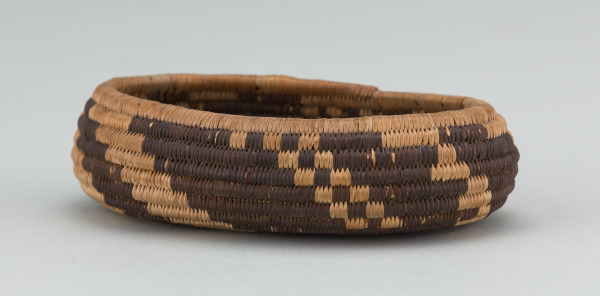
Seeds, berries, nuts, roots and fruits, as well as gamebirds, animals and fish, were important Pomo foods. Basketry tools for hunting, gathering and preparing foods included traps, containers, and seed-beaters used to gather seeds into a deep seed-gathering basket. Although basketry was primarily women's art, Pomo men also could weave. This seed-beater was created using an openwork diagonal twining technique.
Field photo:
Smithsonian Institution Negative # 75-14715
The Baltimore Museum of Art by gift 1978 transferred from extended loan, 1945-1978; Mrs. Harry B. Dillehunt Jr., Baltimore, by survivorship, 1978; Harry B. Dillehunt Jr., Baltimore, by 1945
Katzenberg, D. S. "And eagles sweep across the sky": Indian textiles of the North American West. Baltimore: Baltimore Museum of Art, 1977, no. 102, p. 106, ill.
Kroeber, A.L., "Handbook of the Indians of California," New York: Dover Publications, 1976, cat. 29 and 50, fig. 2 and 5.