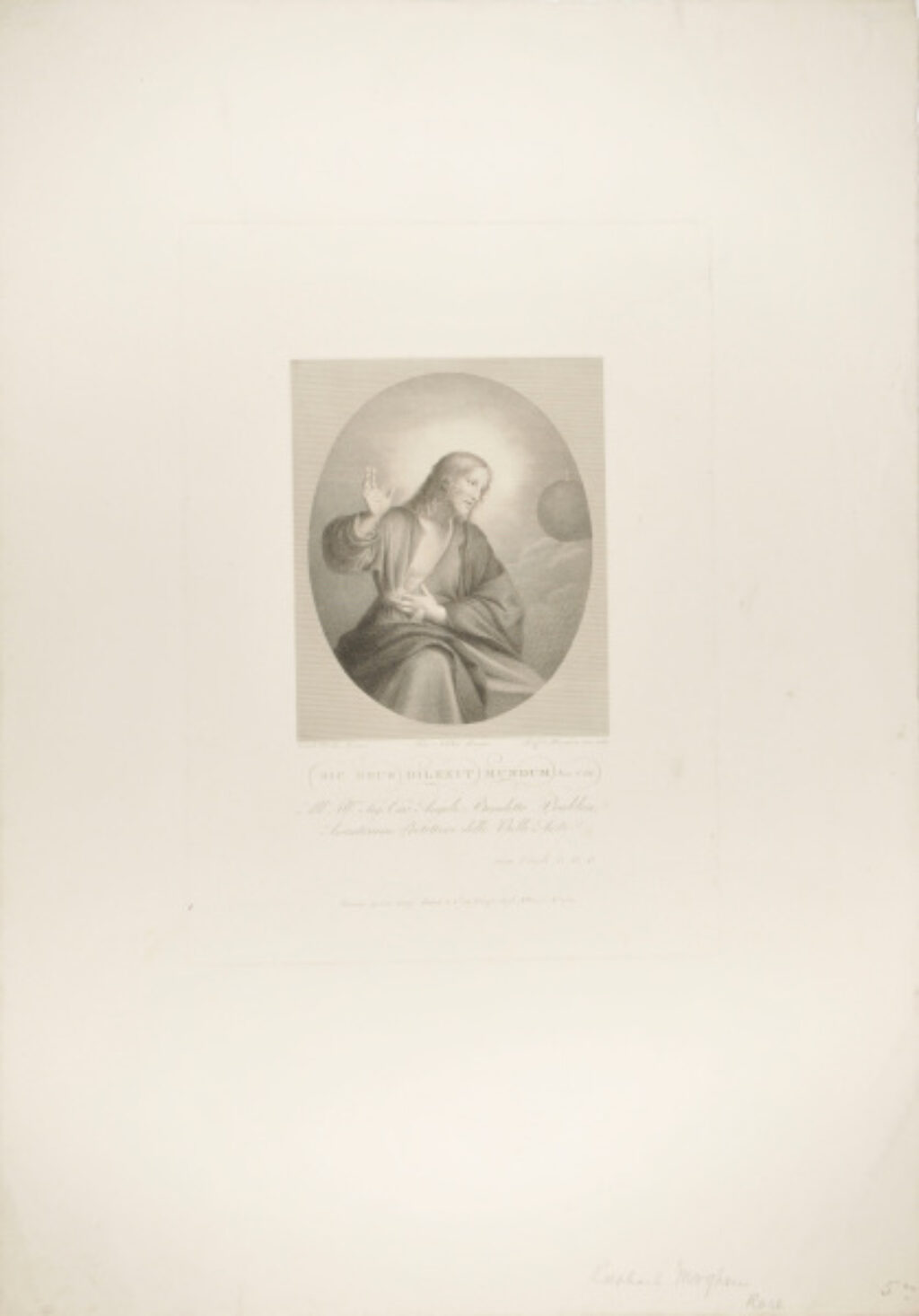
Raphael Morghen, Carlo Dolci, and others
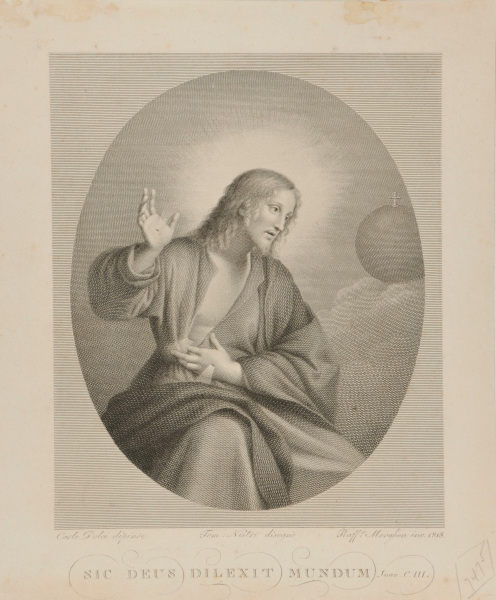
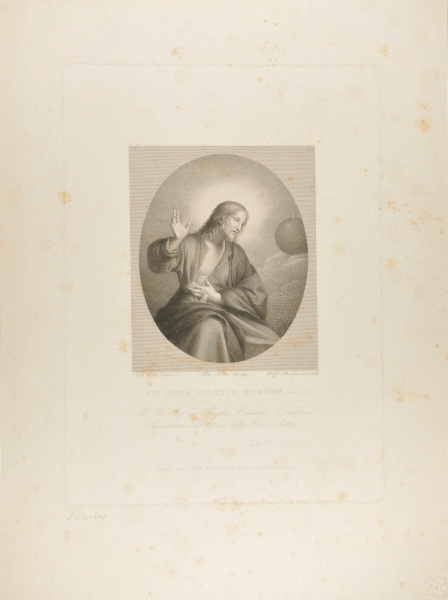
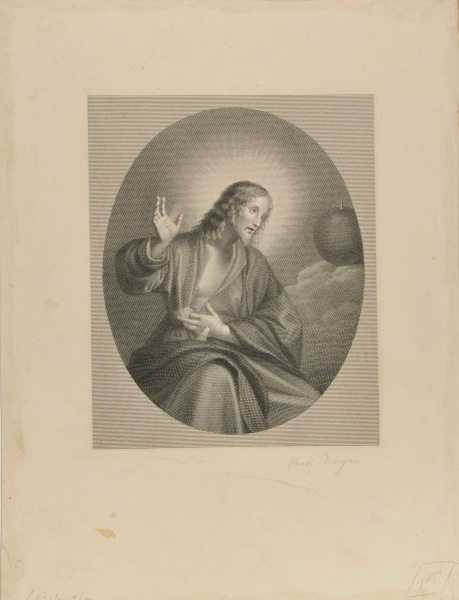
Sic Deus Dilexit Mundum
1817-1832
Scroll
- Artist: Raphael Morghen
- Artist: Carlo Dolci
- Artist: Tommaso Nistri
- Printer: Luigi Bardi
Sic Deus Dilexit Mundum
1817-1832
Physical Qualities
Engraving, Sheet: 546 × 384 mm. (21 1/2 × 15 1/8 in.)
Plate: 309 × 223 mm. (12 3/16 × 8 3/4 in.)
Image: 160 × 131 mm. (6 5/16 × 5 3/16 in.)
Credit Line
Garrett Collection
Object Number
1984.81.1944
Printed after 1833, thanks to dated watermark.
The Baltimore Museum of Art by gift, 1946; T. Harrison Garrett (L. 2435b), by purchase; James L. Claghorn (?) (L. 555c) by purchase.
Signed: 1
Inscribed: RECTO: Inscribed in plate "Carlo Dolci dipinse/Tom. Nistri disegno/Raff.o Morghen inc. 1818/SIC DEUS DILEXIT MUNDUM Joan C.III/All'Illmo Sigr Cavre Angelo Benedetto Poublon/Amantissimo Prottetore delle Belle Arti/Luigi Bardi D.D.D./Firenze presso Luigi Bardi e Co. in Borgo degl'Albizzi No. 460"; in graphite below plate "Raphael Morghen/Rare/5.00" VERSO: In graphite "H/ aa"
Markings: WM: The letters "RIANO" and the numbers" 1833", Briquet undescribed.