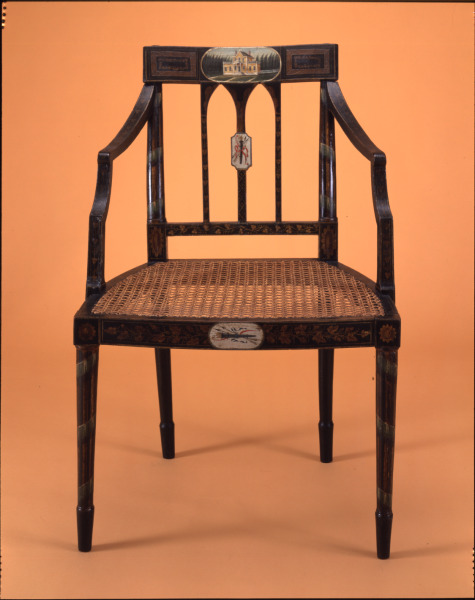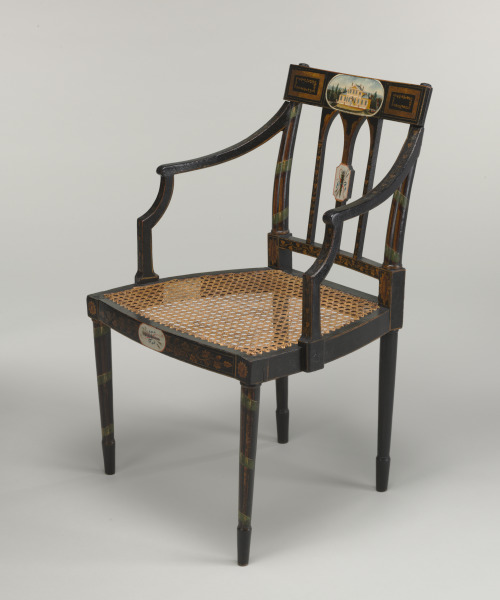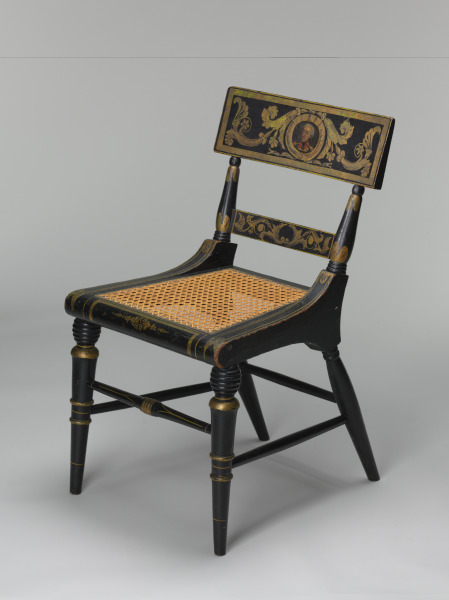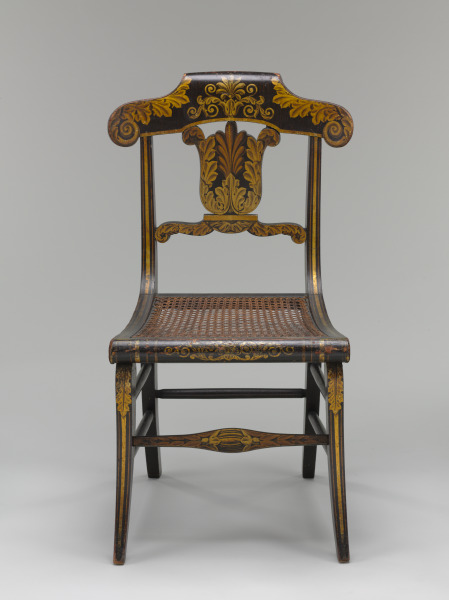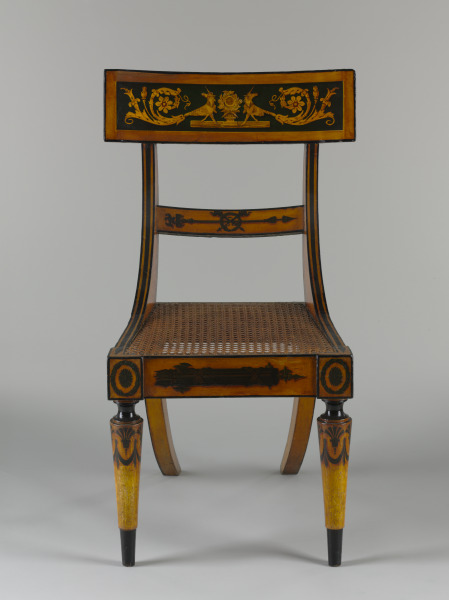
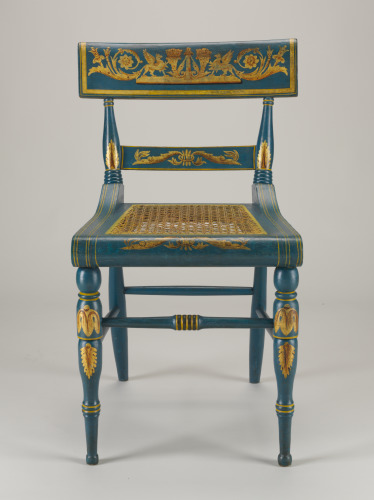
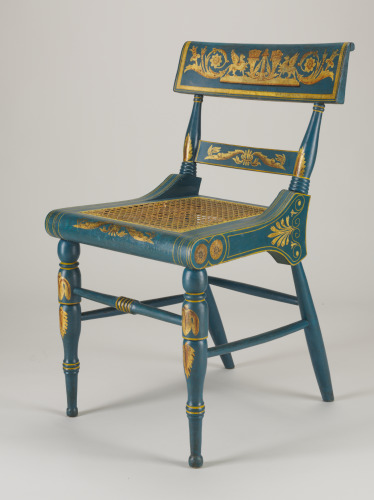
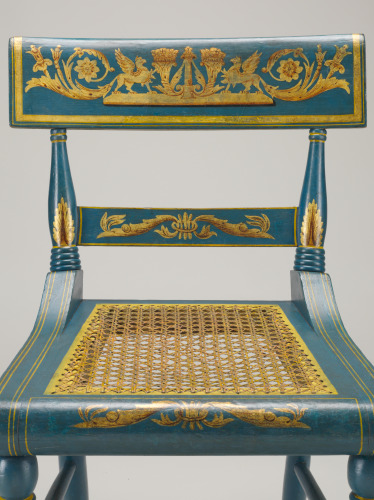
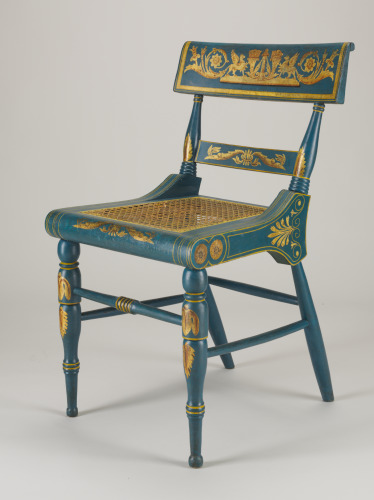
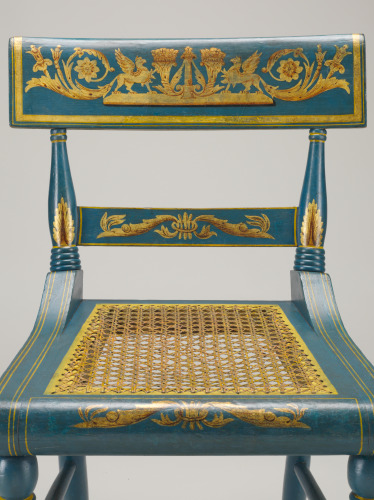
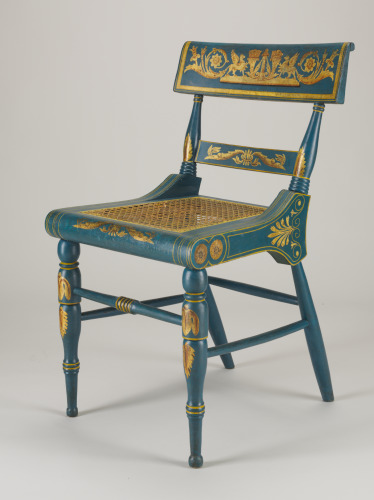
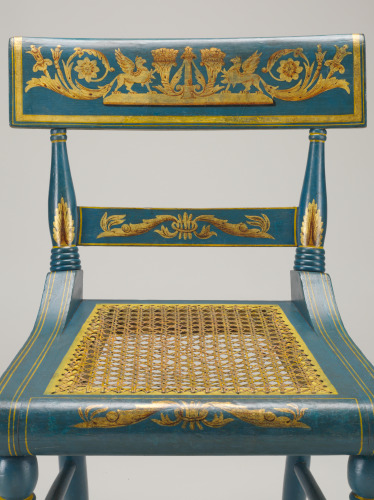
John and Hugh Finlay
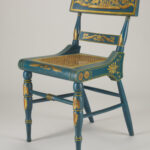
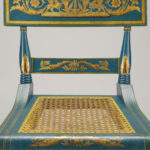
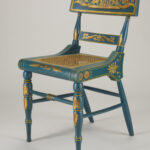
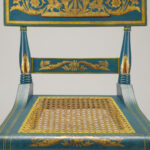
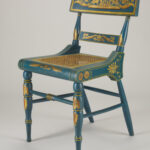
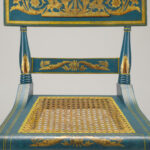
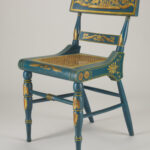
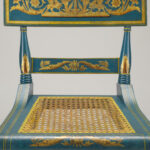
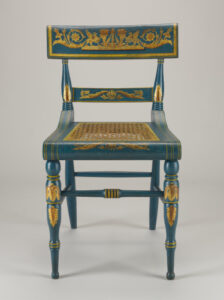
Side Chair
1819-1829
Scroll
John and Hugh Finlay
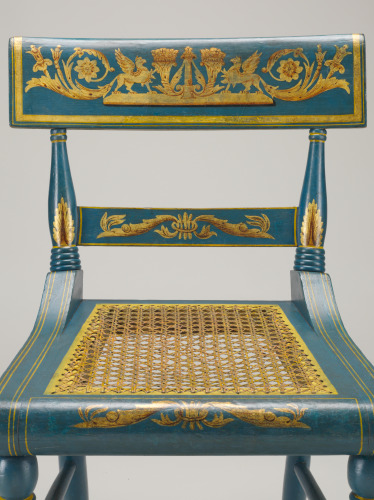
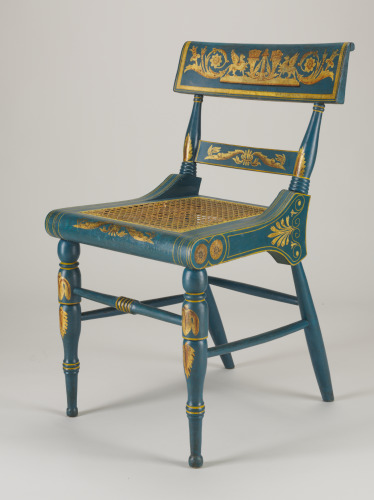
Side Chair
1819-1829
Physical Qualities
Wood, cane, paint and gilt decoration, 32-3/8 x 19-5/8 x 22 in. (82.2 x 49.8 x 55.9 cm.)
Credit Line
Gift of Stiles Tuttle Colwill, Lutherville, Maryland
Object Number
2007.349
By 1820, there were 25 unidentified women—almost equal to the number of men—employed at the Finlay furniture factory in Baltimore. When a free, female furniture maker arrived at the factory on Gay Street in downtown Baltimore, she joined an assembly
line of free, enslaved, or indentured artists of both African and European descent. Each person specialized in areas such as turning or shaping wood (often men), painting ornamentation (likely women), weaving cane seats (likely women), or packaging shipments (likely men) for local and international clients. When she left the factory, she
was surrounded by furniture factories and showrooms, including furniture businesses owned, not just operated, by women.
The Baltimore Museum of Art by gift, 2007; The Baltimore Museum of Art on extended loan, 1997-2007; sold in late 1970s from the estate of Garnett Beatrice Hutchins; from her parents, William Herbert Hutchins (1860-1905) and Laura Hutchins Hutchins (1855-1937); from his parents, James Alfred Hutchins (1826-1888) and Caroline Lawrey Herring Hutchins (1834-1920); from his parents, William Given Hutchins (1800-1872) [the son of James Hutchins (1765-18180] and Sarah Anderson (1799-1830) (who married in 1825)
Extended Loans IN
American Wing Rotations 2024
American Wing Rotations 2025
 On View at the BMA