
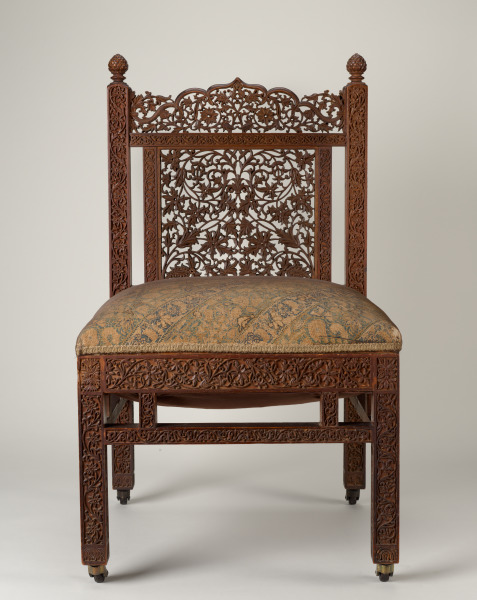
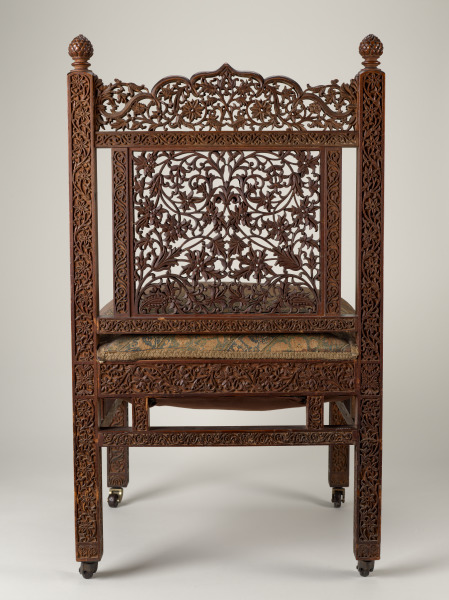
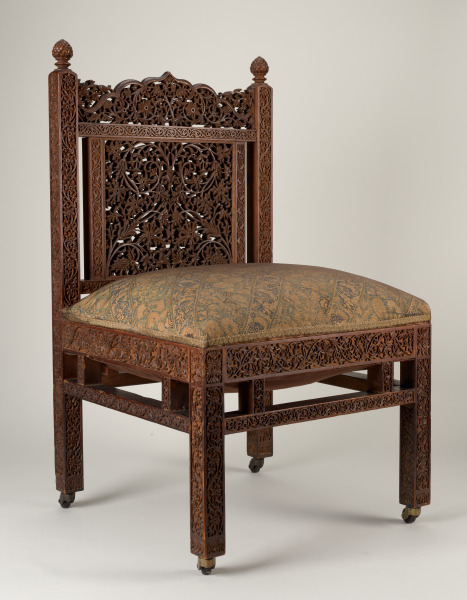
Lockwood de Forest and Ahmedabad Wood Carving Company
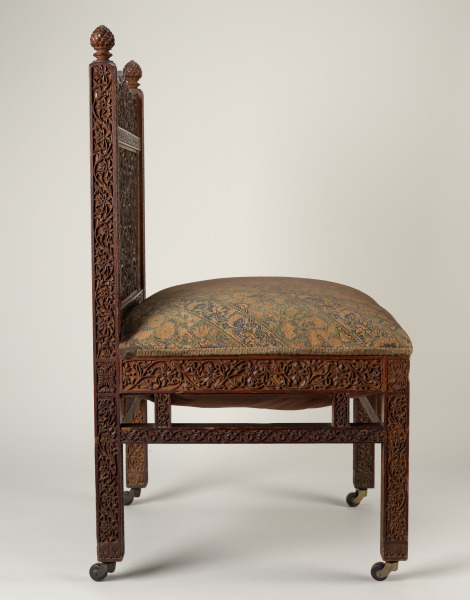
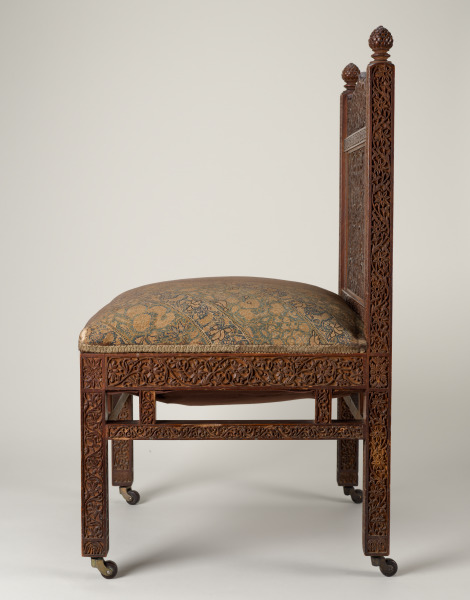
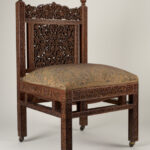
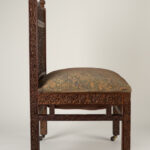
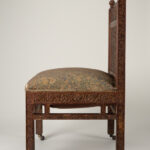
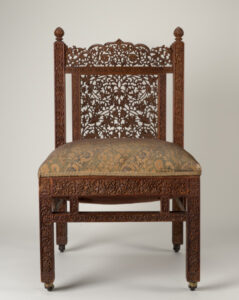
Slipper Chair
1881-1885
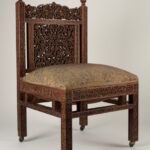
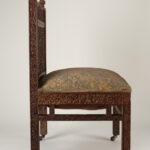
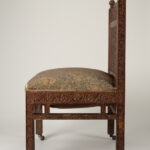
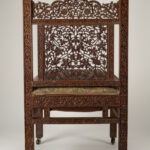
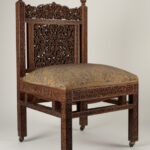
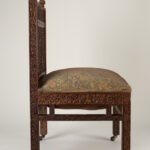
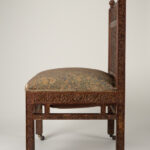
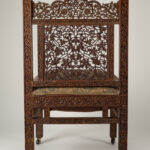
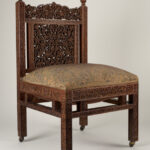
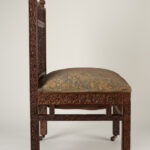
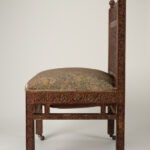
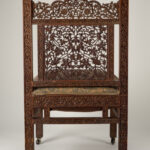
Scroll
Physical Qualities
Teak wood, original cotton and silk upholstery, metal springs, brass and rubber casters, iron nails, replacement fabric, burlap., 32 1/2 x 18 3/8 x 18 3/8 in. (82.6 x 46.7 x 46.7 cm.)
Credit Line
Purchase with exchange funds from Gift of Blanche Adler, and Bequest of Alice Worthington Ball
Object Number
1988.1359
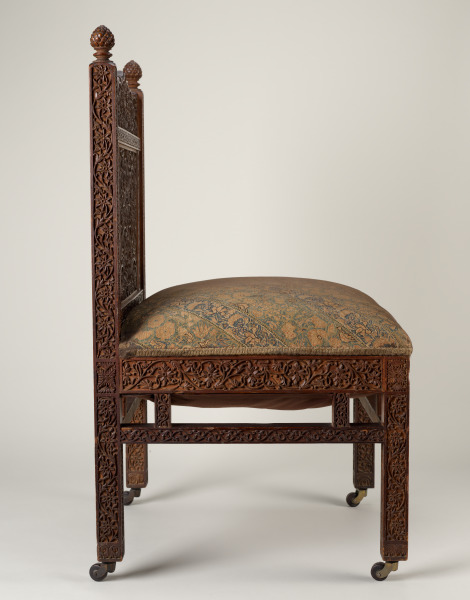
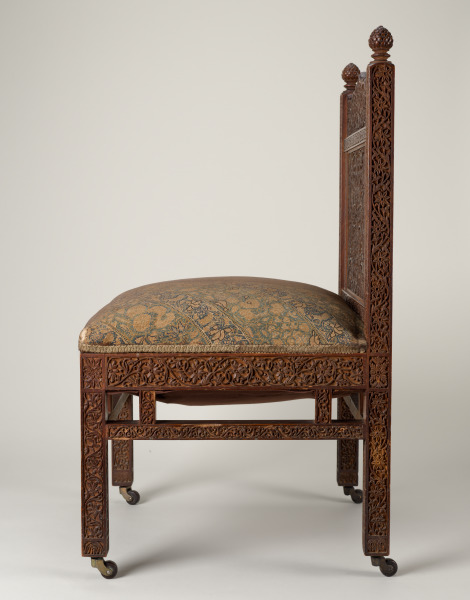
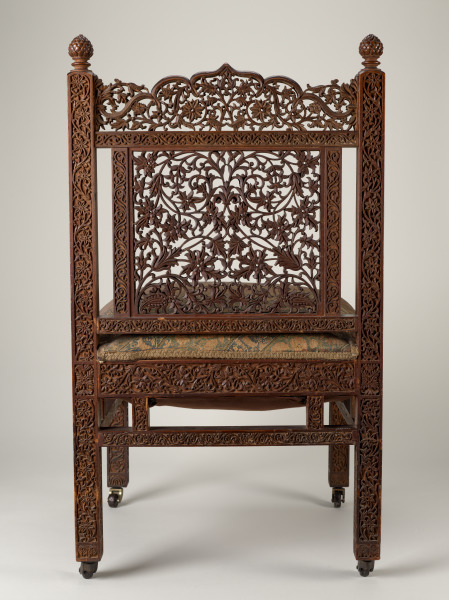
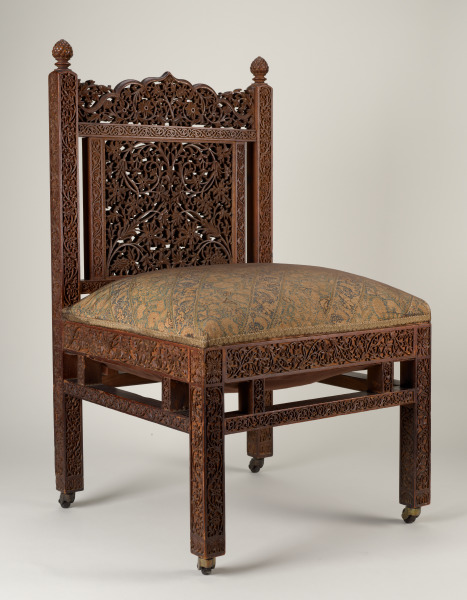
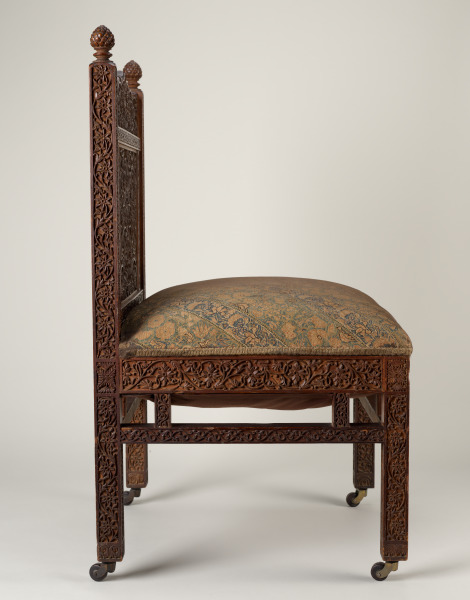
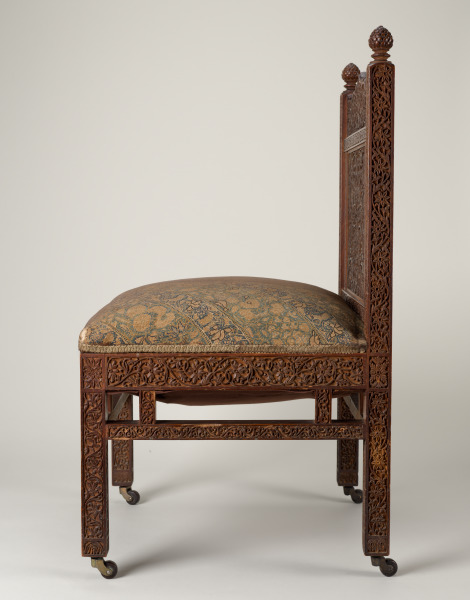
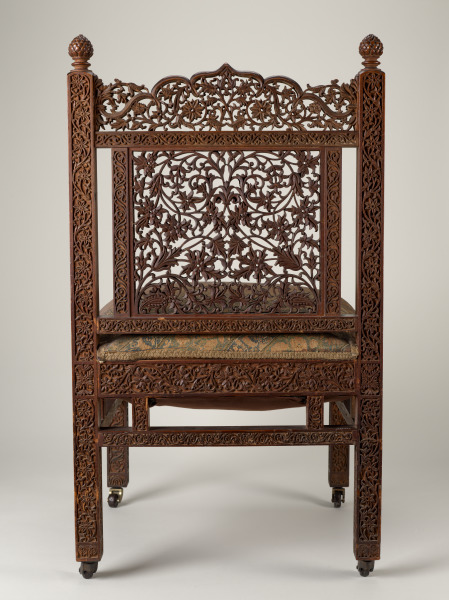
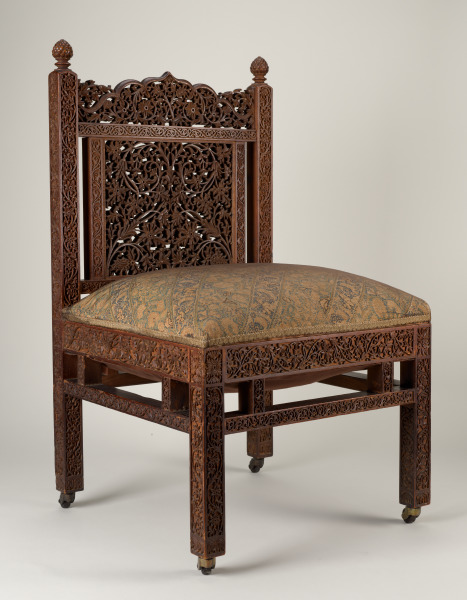
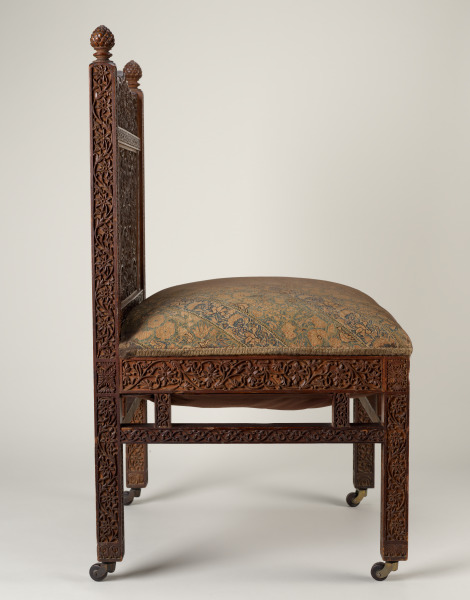
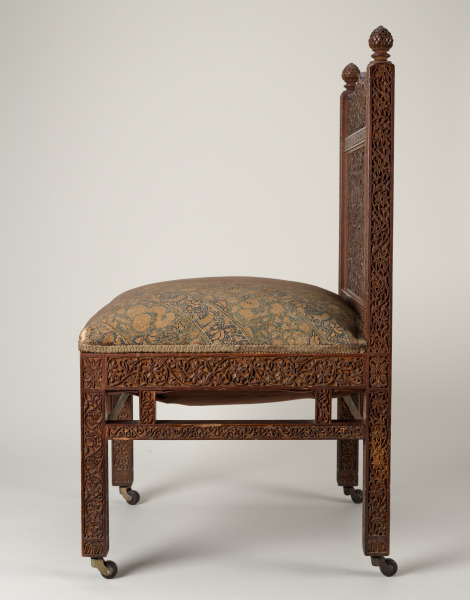
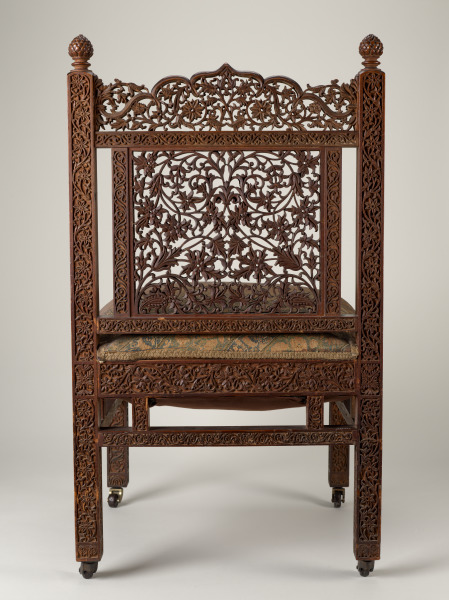
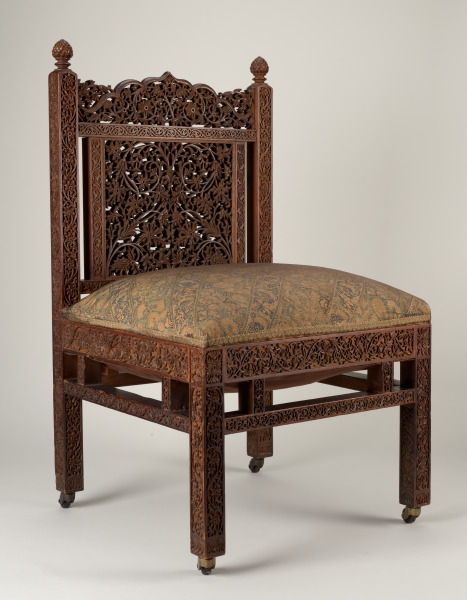
The unfurling vines and blossoming flowers covering this chair frame were carved by mistri, professional wood and stone craftsmen working in Ahmedabad, India. The compositional play of incision, curve, and cutout is a style taught by father to son in the Gujarat region. In 1880, the New York interior designer Lockwood de Forest met prominent Indian entrepreneur and philanthropist Muggunbhai Hutheesing (d. 1889) in Ahmedabad, and together they established the Ahmedabad Woodcarving Company to preserve pre-Colonial Indian craftsmanship and export work to the American market. De Forest incorporated furniture, paneling, and architectural elements by mistri makers in his commissions to decorate entryways, parlors, and bedrooms of wealthy Americans.
This chair, whose upholstery is original and also made in Ahmedabad, sat in the living room of Mary Elizabeth Garrett, businesswoman and art patron, at 101 West Monument Street in Baltimore, a townhome, now demolished, that became the first location of The Baltimore Museum of Art.
-Brittany Luberda, American Wing Collection Rotation March 2021
Baltimore Museum of Art by purchase, 1988; Margot Johnson, New York
AMW Reinstallation 2014
American Wing Rotations 2020
American Wing Rotations 2021
American Wing Rotations 2022
American Wing Rotations 2023
American Wing Rotations 2024
American Wing Rotations 2025
"Candace Wheeler, The Art and Enterprise of American Design, 1875-1900," Metropolitan Museum of Art, pp. 110-111, no. 12. The entry notes that the Side Chair (no. 12) is upholstered with a geometric-patterned and richly embroidered fabric
also made in Ahmedabad. The author identifies a suite of chairs purchased by Mary Elizabeth Garrett for her home in Baltimore; two surviving chairs, numbered 30 and 32, are owned by Bryn Mawr College, while the Metropolitan chair (no. 12) is marked 36.
Roberta A. Mayer, "The Aesthetics of Lockwood de Forest," "Winterthur Portfolio," Vol. 31, No. 1, Spring 1996, The Henry Francis du Pont Winterthur Museum, Inc., pp. 1-22.
Mitchell Owens, "An Eastern Fantasia, Asleep for a Century," New York Times, August 24, 2000, D1, D8.
also made in Ahmedabad. The author identifies a suite of chairs purchased by Mary Elizabeth Garrett for her home in Baltimore; two surviving chairs, numbered 30 and 32, are owned by Bryn Mawr College, while the Metropolitan chair (no. 12) is marked 36.
Roberta A. Mayer, "The Aesthetics of Lockwood de Forest," "Winterthur Portfolio," Vol. 31, No. 1, Spring 1996, The Henry Francis du Pont Winterthur Museum, Inc., pp. 1-22.
Mitchell Owens, "An Eastern Fantasia, Asleep for a Century," New York Times, August 24, 2000, D1, D8.
Inscribed: Underside of stretcher stamped, "N 27"
Markings: Casters marked, "Goodyear Rubber Co."
Manufacturer
Ahmedabad Wood Carving Company
1880–1909
Ahmedabad, Gujarat, India 1881-c. 1910
Meet Ahmedabad →
 On View at the BMA
Explore the Collection Further