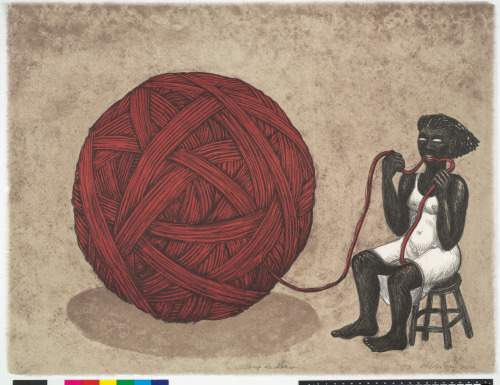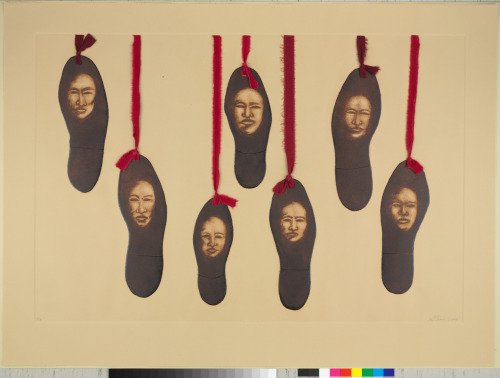

Alison Saar and Vinalhaven Press
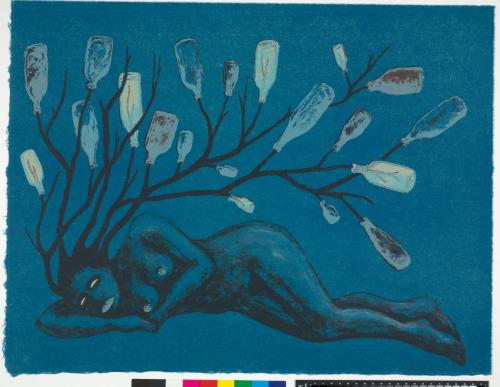
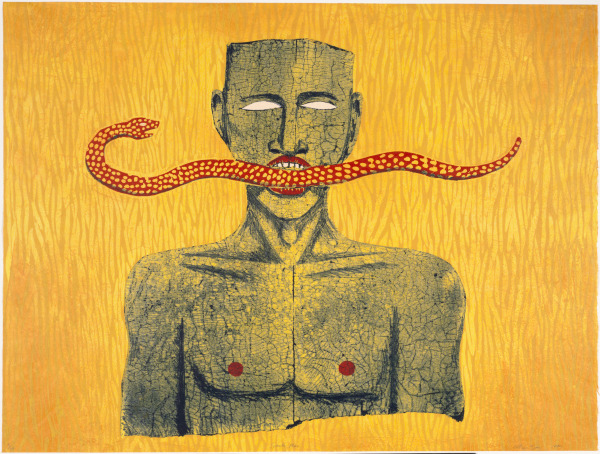
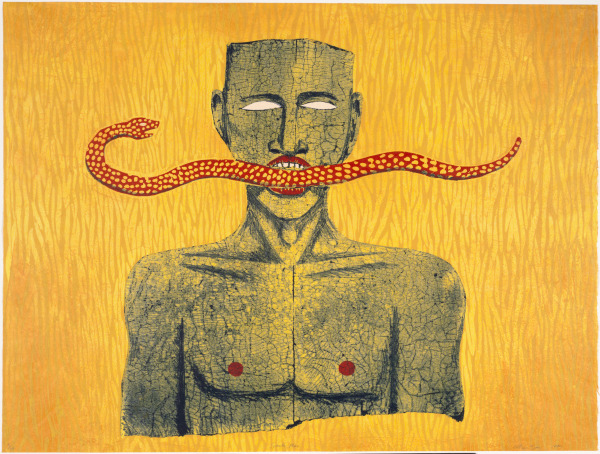
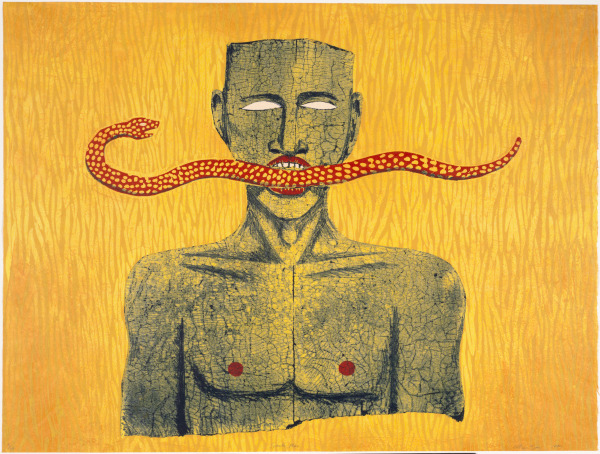
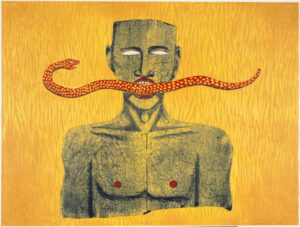
Snake Man
1993
Scroll
Physical Qualities
Color woodcut and lithograph, Sheet: 712 x 947 mm. (28 1/16 x 37 5/16 in.)
Credit Line
Print & Drawing Society Fund, with proceeds derived from the 1995 Contemporary Print Fair
Object Number
1995.45
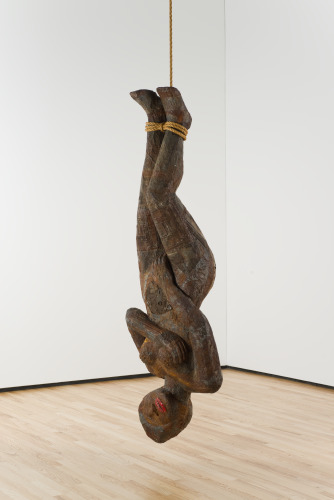
Throughout her career, Alison Saar has turned to the human figure to broach issues of race, gender, and culture. By titling this pendant figure Strange Fruit, a reference to the haunting anti-lynching song recorded by Billie Holiday (1915–1959) in 1939, Saar knowingly evokes powerful feelings: Southern trees bear a strange fruit, Blood on the leaves and blood at the root, Black bodies swinging in the southern breeze,
Strange fruit hanging from the poplar trees. However, according to the artist, the work is not strictly about America’s deplorable history of the execution of blacks by white
mobs. It also expresses Saar’s perception of the dire cultural effects of a modern-day metaphorical lynching of women of color that has played out through the lack of positive representations in fashion magazines and other popular media. Saar produces work immersed in traditions as varied as European art, non-Western art, and folk art. With Strange Fruit, she draws on these rich influences to portray a woman who appears exceedingly vulnerable, yet retains a forceful presence, all the while evoking the
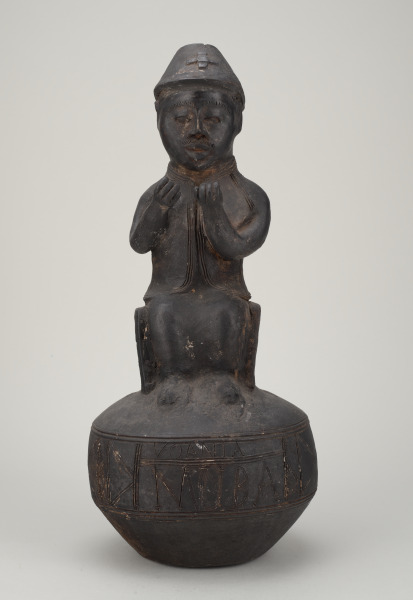
legendary Holiday’s hairstyle and make-up. The “skin” is made of rusted tin ceiling panels that take on a new beauty with a pattern suggestive of African ritual scarification. Just as the belly of a traditional Congolese sculpture may contain medicinal substances, the keyhole at this figure’s navel suggests that a source of healing may lie within her. In addition, the ambiguous pose, resembling the central figure of Botticelli’s The Birth of Venus (c. 1485), could be interpreted as a gesture of modesty or an act to draw attention to female sexuality.
Gallant, Aprile and David P. Becker. "In Print: Contemporary Artists at the Vinalhaven Press," exh cat, Portland Museum of Art, Portland ME, 1997, fig 31.
Inscribed: FACE: (graphite), LL, '9/20'; C, 'Snake Man'; R, 'Alison Saar 1994'.