Max Weber
Spiral Rhythm
1914
Scroll
Max Weber
Spiral Rhythm
1914
Physical Qualities
Plaster, 6 x 4 1/4 x 4 3/8 in. (15.2 x 10.8 x 11.1 cm)
Credit Line
Gift of Dr. Nathan Davis, Baltimore, in Honor of Mr. and Mrs. Nathan J. Miller
Object Number
2003.221
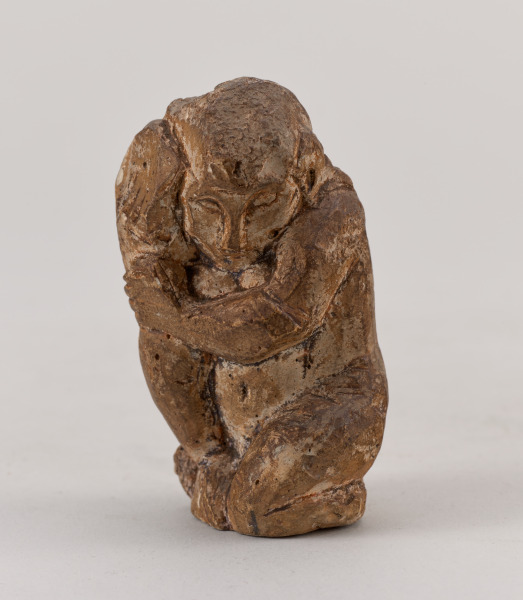
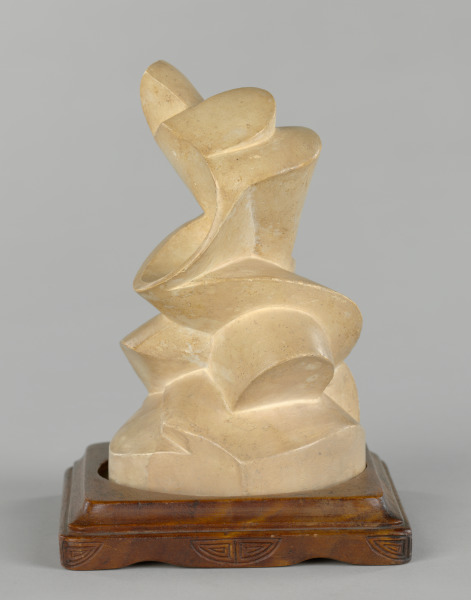
Max Weber was accomplished as a sculptor as well as a painter. He pioneered the first non-objective abstract sculpture ever made in the United States with pieces such as Spiral Rhythm. Yet sculpture remained rare in Weber’s work – only about thirty examples are known, and half of those were executed in 1915, the year he made Spiral Rhythm. That same year Arthur D. Chapman photographed Weber in a contemplative pose, holding Spiral Rhythm almost as if it were a newborn child. Chapman’s platinum print is a testament to Weber’s engagement with this new, three-dimensional exploration of abstraction. Years later, Weber wrote that he had taken up sculpture “to work out problems of form.” Spiral Rhythm remained a favorite. Weber eventually had it cast in bronze at a much larger scale than the original plaster. An example of the bronze version is in the collection of the Hirschhorn Museum, Washington, D.C.
The Baltimore Museum of Art by partial and promised gift, 2003; from Nathan Davis; Mr. and Mrs. Aaron Davis, acquired from the artist
The Persistent Figure in Modern Sculpture
Max Weber: Bringing Paris to New York
AMW Reinstallation 2014
American Wing Rotations 2020
American Wing Rotations 2021
"Max Weber," American Artists Group, Inc., Monograph Number 4, New York, NY, 1954.
Tarbell, Roberta, "Vanguard American Sculpture, 1913-1939," Rutgers University, Art Gallery, 1979, plate 21, p. 22.
Percy North, "Max Weber," High Museum of Art, Atlanta, GA, 1991, p. 72, b&w ill.
Inscribed: Exhibition Label on bottom of sculpture reads, "California Palace of the Legion of Honor [cut off] / San Francisco 21 / Exhibition: Max Weber / Artist: same / Title: Spiral Rhythum [misspelled?] / Reg. No. 724.49 Date in: 6-6-49 / Owner: Lent in memory of Linda R. MIller" There appears to be the edge of an incised marked peeking out from the bottom of the label on the base.
Explore the Collection Further