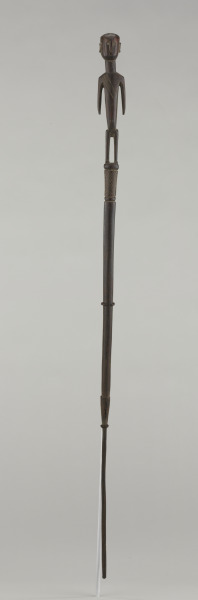
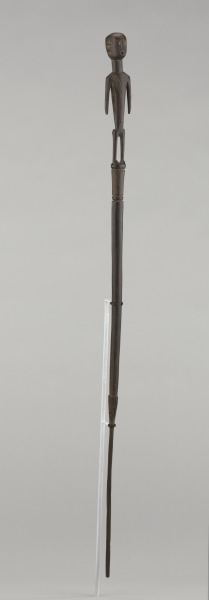
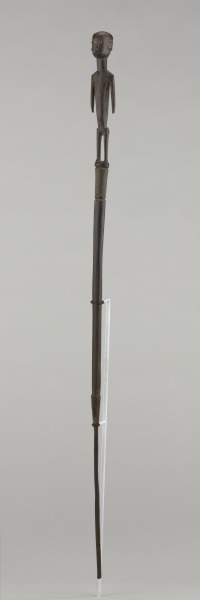
Nyamwezi
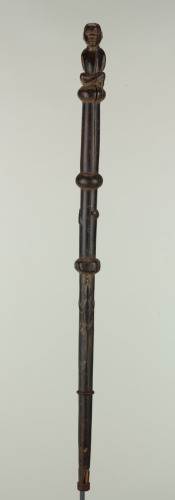
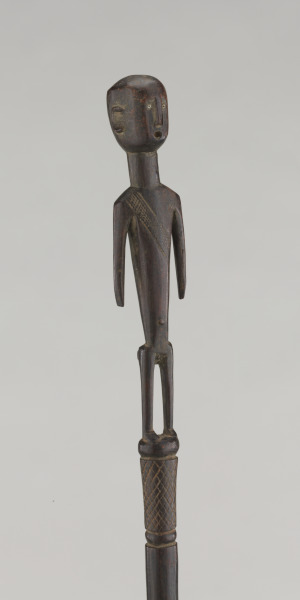
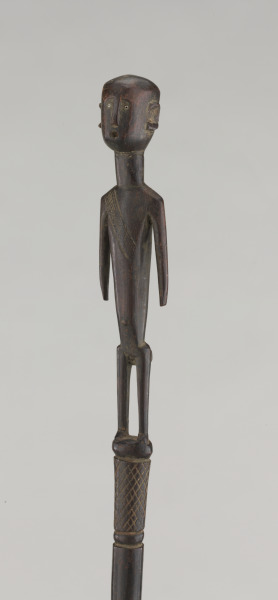
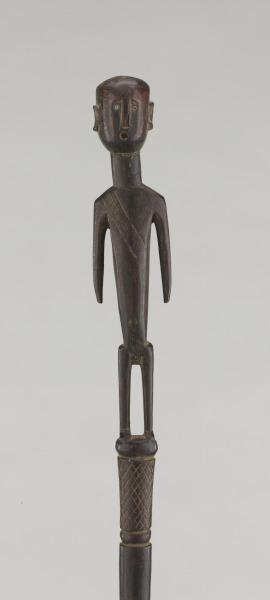
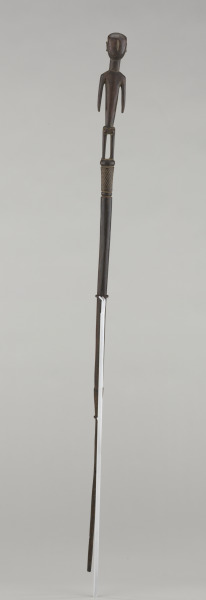
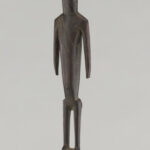
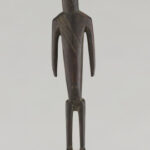
Staff
Nyamwezi, 1932-1966
Scroll
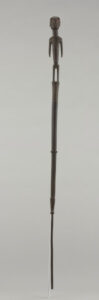
Nyamwezi
Staff
Nyamwezi, 1932-1966
Physical Qualities
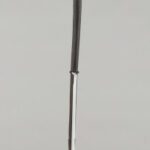
Wood, iron, glass beads, 50 x 2 3/8 in. (127 x 6 cm.)
Credit Line
Gift of Gilbert and Jean Jackson, Potomac, Maryland
Object Number
2009.213
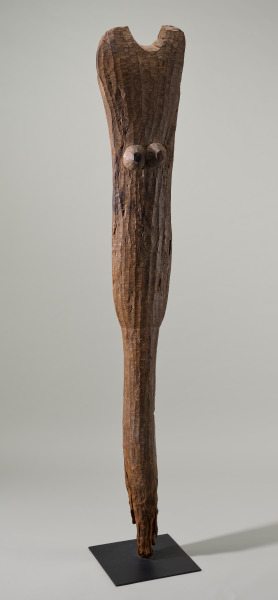
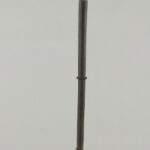
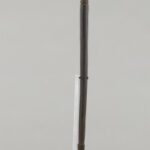
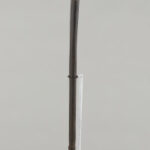
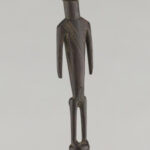
African royal officials, chiefs, elders, ritual specialists, and other leaders hold staffs
that distinguish them as persons of rank when appearing in public. Although staffs
may appear to be functional objects like walking sticks or clubs, their primary purpose
is symbolic. Female imagery on men’s staffs suggests interdependency between the
genders and matrilineal lines of descent. The materials from which a staff is made also
signify status and influence. Rare and exotic materials such as brass tacks and telephone
wire add textural interest as well as convey a leader’s access to foreign goods. Gold leaf
and iron assert that the staff holder’s roots and power are drawn from native earth.
The Baltimore Museum of Art by gift, 2009; Gilbert and Jean Jackson, Potomac, MD
Hand Held: Personal Arts from Africa