





Unknown

Tan of Summer Ro Silk with Main Motif of Dianthus

1900

Scroll

Unknown

Tan of Summer Ro Silk with Main Motif of Dianthus

1900

Physical Qualities Silk, 14 x 180 in. (35.6 x 457.2 cm.)
Credit Line Gift of Martha Custis Peter, Baltimore
Object Number 2008.42
A standard width of Japanese kimono silk (ro) weave intended for use in summer kimono and informal obi. It was patterned using a stenciling technique in which stencils and a paste with inflused dyes were used to print directly on the fabric (kata yuzen). The design consists of a black ground with large white flower shaped reserves within which are yellow and orange dianthus or pinks (nadeshiko), yellow iris, grey or blue iris, gabion (basket with rocks put in to water with strong current rear the shore to mitigate erosion), chinese bell flower (kikyo), and rippled water motifs.
The Baltimore Museum of Art by gift, 2008; Martha Custis Peter, Baltimore

Maker

Unknown
Explore the Collection Further

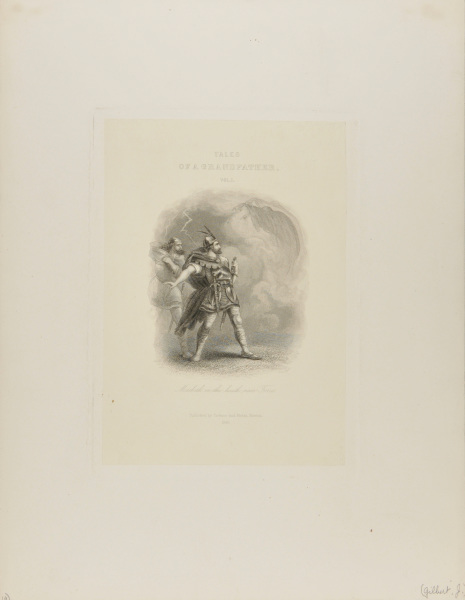
Unknown, Sir John Gilbert, and others
Macbeth on the Heath Near Forres
1860
Honoré Daumier
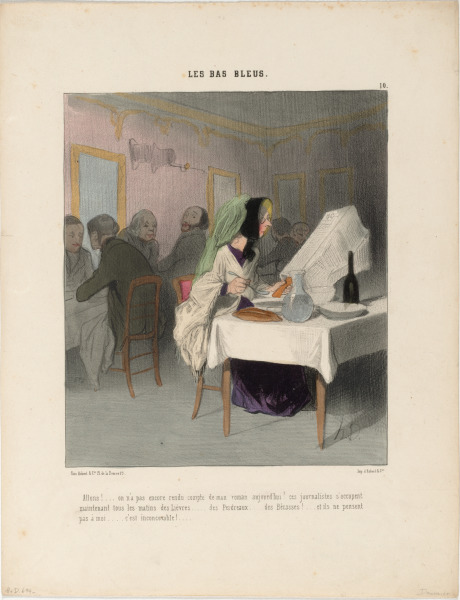
La Présidente Criant à Tue-Tête - Mesdames! ... vous violez formellement l'article 3 de notre réglement... lequel porte que les académiciennes ne parleront jamais plus de cinq à la fois!... je vous rappelle toutes à l'ordre... et au silence!..... puisque ma sonnette est impuissante.... je lève la séance et je mets mon chapeau!... jettez maintenant tant que vous voudrez vos bonnets par dessus les moulins!..
1843
Unknown
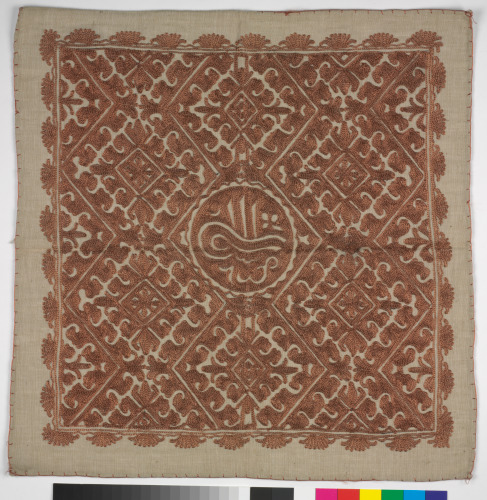
Embroidered Square with Tughra
1900–1932
Honoré Daumier
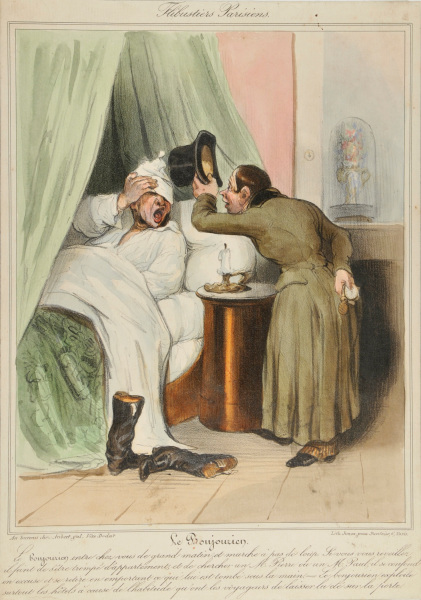
Le Bonjourien. Le bonjourien entre chez vous de grand matin et marche à pas de loup. Si vous vous réveillez il feint de s'être trompé d'appartement, et de chercher un M. Pierre ou un M. Paul; il se confond en excuse et se retire en emportant ce qui lui est tombé sous la main. - Le bonjourien exploite surtout les hôtels à cause de l'habitude qu'on les voyageurs de laisser la clé sur la porte.
1834
Giovanni Battista Piranesi
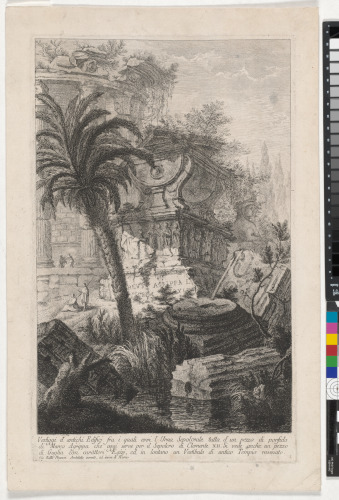
Vestiggi d'antichi Edifici fra i quali evvi l'Urna Sepolcrale tutta d'un pezzo di porfido di Marco Agrippa che oggi serve per il Sepolcro di Clemente XII (Remains of Ancient Buildings Among Which Stands the Sepulchral Urn of Marcus Agrippa Made Entirely o
1742