Fijian
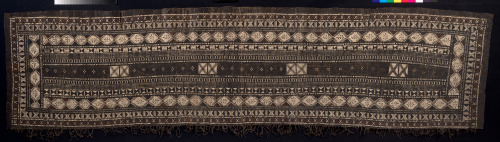
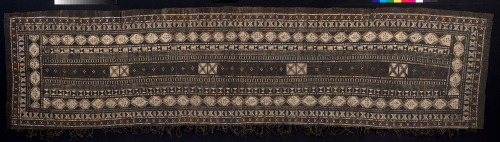
Tapa Cloth (Masi)
Fijian, 1900-1932
Scroll
Fijian
Tapa Cloth (Masi)
Fijian, 1900-1932
Physical Qualities
Bark, pigment, 104 1/2 x 28 13/16 in. (265.5 x 73.2 cm.) including fringe
Credit Line
Gift of Mabel Stewart, Baltimore
Object Number
1987.159
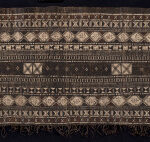
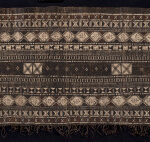
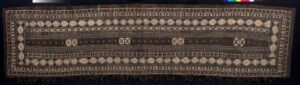
Bark cloth is a woman's art. It is made from the carefully prepared bark of the paper mulberry tree, which is soaked, dried, and pounded into a supple, soft cloth. Known in Fiji as masi, bark cloth was highly valued and made a lavish gift for important occassions. This example has the highly detailed, densely realized designs that distinguish the better masi. The patterns are hand-painted with natural dyes over a stencil. Decorative rather than symbolic, the designs are meant to add to the beauty and value of the cloth. The long, thin shape is typical of masi, which had a vareity of uses but was most often worn ceremonially by people of chiefly rank.
The Baltimore Museum of Art by gift 1987; Mabel Stewart in 1946 Fiji
The Matter of Bark Cloth
"The Baltimore Museum of Art: Celebrating a Museum. Baltimore".The Baltimore Museum of Art. Baltimore MD. 2014.
Küchler, Susanne & Graeme Were. 2010. “The Social World of Cloth in the Pacific Islands,” in Berg Encyclopedia of World Dress and Fashion, Vol. 7, 381-385.
Ewins, Rod. Staying Fijian: Vatulele Island barkcloth and social identity. University of Hawai'i Press, 2009.
Neich, Roger and Mick Predergrast. 1997. Pacific Tapa. Honolulu: University of Hawai‘i Press.
Page, Maud. "Paperskin: An introduction." Paperskin: Barkcloth across the Pacific (2009): 10-21.
Ewins, Rod. Staying Fijian: Vatulele Island barkcloth and social identity. University of Hawai'i Press, 2009.
Neich, Roger and Mick Predergrast. 1997. Pacific Tapa. Honolulu: University of Hawai‘i Press.
Page, Maud. "Paperskin: An introduction." Paperskin: Barkcloth across the Pacific (2009): 10-21.