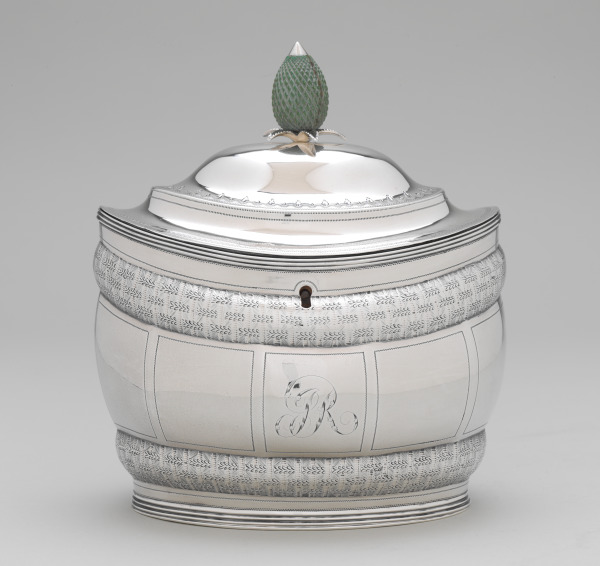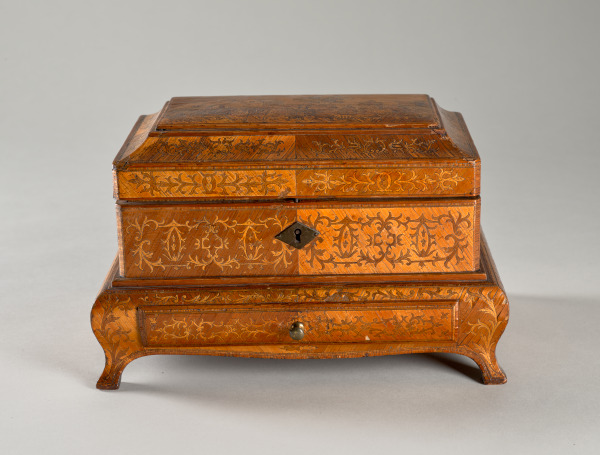
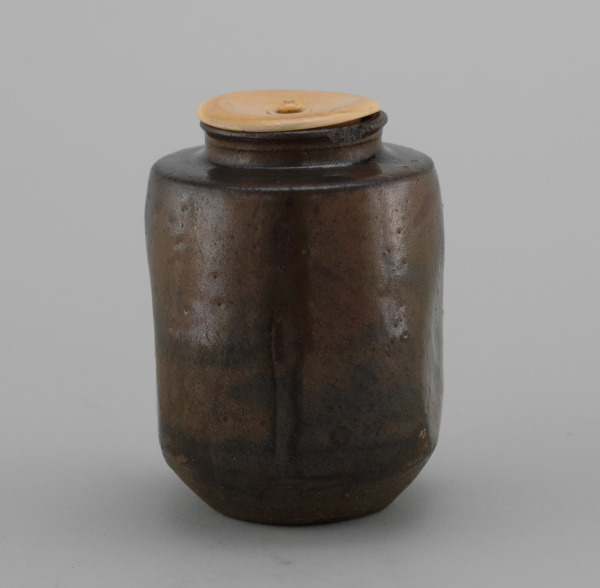
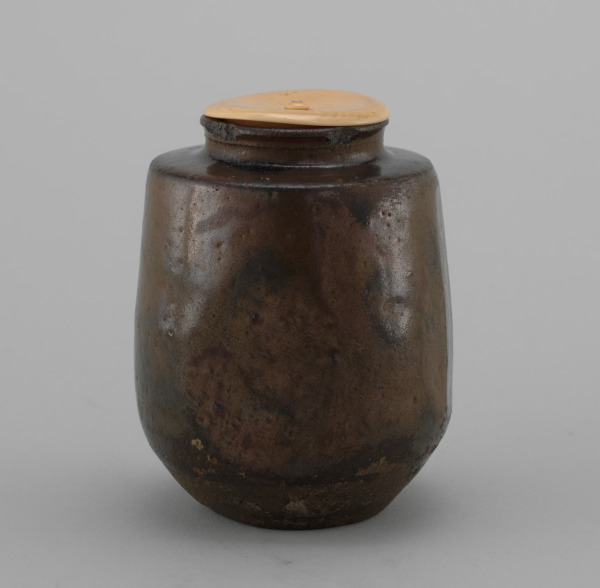
Tea Caddy (chaire) - Image 1
Tea Caddy (chaire) - Image 2
Tea Caddy (chaire) - Image 3
Tea Caddy (chaire) - Image 4

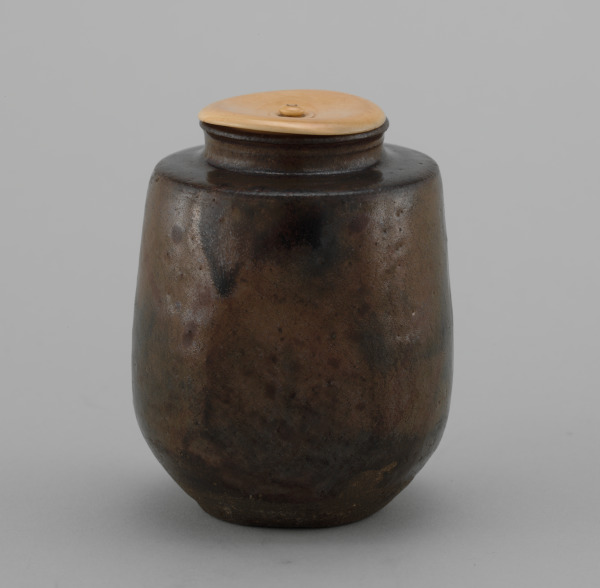
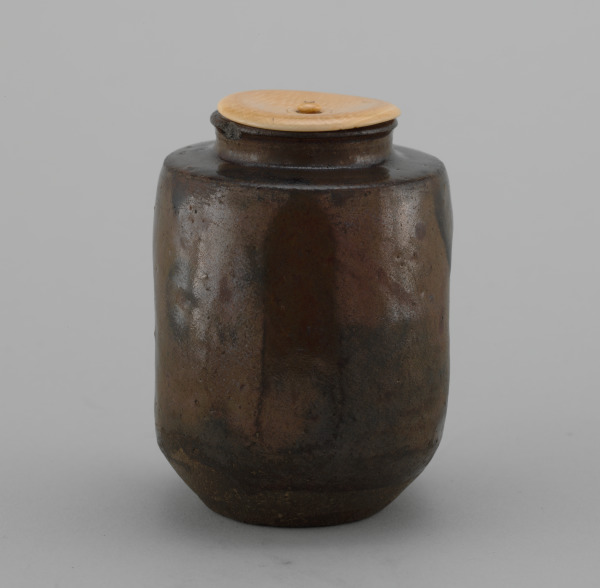
Tea Caddy (chaire)

1600-1632
Thumbnail 1
Thumbnail 2
Thumbnail 3
Thumbnail 4
Scroll

Tea Caddy (chaire)

1600-1632
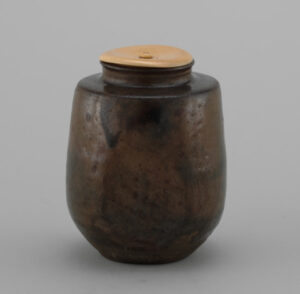
Physical Qualities Stoneware with dark brown glaze, ivory cover
Credit Line The Cone Collection, formed by Dr. Claribel Cone and Miss Etta Cone of Baltimore, Maryland
Object Number 1950.2012.1
Until the late 16th century, Japan imported tea wares from China and Korea. Seto kilns were the first to make acceptable copies of the imports with high-iron, Chinese-style dark brown glazes. Small jars such as this one were used to store powdered green tea.
The Baltimore Museum of Art by bequest, 1949; Etta Cone, Baltimore; Claribel or Etta Cone, Baltimore; probably purchased in Japan in 1907 on Cone Family trip
Across East Asia: China's Cultural & Artistic Legacy

Asian Gallery Rotations 2021

Asian Gallery Rotations 2022

Asian Gallery Rotations 2023
Explore the Collection Further

Samuel Kirk & Son and J. E. Caldwell & Co.
Tea Caddy
1884–1894
Lincoln & Reed
Tea Caddy
1846
American Market Tea Caddy Decorated with Flower Basket in Landscape
1779–1799
Tea Caddy (chaire)
1566–1699
Worcester Porcelain Company, First (Dr. Wall) Period (later Royal Worcester Spode Limited)
Covered Tea Caddy
1764
Peter Bateman, Ann Bateman, and others
Tea Caddy
1802–1803
Unidentified
Nanking Tea Caddy
1799
Worcester Porcelain Company, First (Dr. Wall) Period (later Royal Worcester Spode Limited)
Covered Tea Caddy
1750–1782
Prisoners of War
Tea Caddy
1793–1816
Dutch Market Tea Caddy Decorated with European Figures and Dog
1729–1738
Tea Caddy Spoon
1800–1801
Tea Caddy
1783–1784