The Tame Elephant

Wenceslaus Hollar

The Tame Elephant

1628
Scroll

Wenceslaus Hollar

The Tame Elephant

1628

Physical Qualities Etching, Sheet (Trimmed within platemark): 245 × 282 mm. (9 5/8 × 11 1/8 in.) Mount: 358 × 459 mm. (14 1/8 × 18 1/16 in.)
Credit Line Garrett Collection
Object Number 1946.112.2386
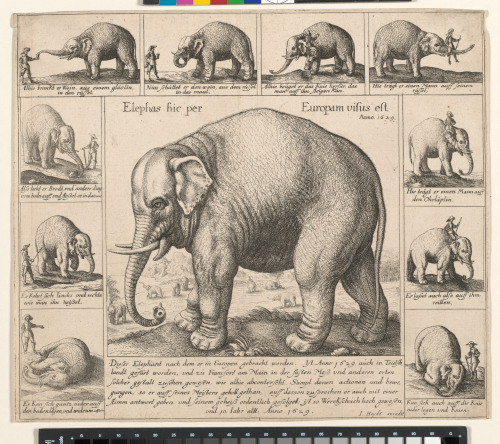
In the 16th and 17th centuries, many artists strived for scientific accuracy. But what happened when they were asked to draw an animal they had never seen? Wenceslaus Hollar was commissioned to make this printed advertisement for the arrival of Asian elephant Don Diego to Frankfurt am Main, Germany, in 1629. Having never seen an elephant firsthand, he adapted images of an Asian elephant drawn from life 68 years earlier by Gerard van Groeningen (active c. 1561–1576) in Belgium. Similarly, Adriaen Collaert never participated in an elephant hunt. The elephants’ scale and the sparse trees in this fictional attack resemble a European boar hunt more than an African savannah or an Asian rainforest, elephants’ natural habitats.
Earth as Medium: Extracting Art from Nature

Cone Wing Rotations 2025

Inscribed: Recto: in image, top of central image, in plate "Elephas hic per Europam visus est / Anno 1629"; below central image, in plate "Dieser Elephant nach dem in Europen gebracht worden [...] 10 Jahre alt. Anno 1629. I. Heyde excudit"; below top left image, in plate, "Alhietrinkt der Wein. aus einem Glaslein, / in den rüssel"; below top image second from the left, in plate "Nun schüttet er den wein, aus dem rüssel, / in das maul."; below image third from left, in plate "Alsi beuget er das Knie herfür, das / man auff ihn Steigen kan."; below top right image, in plate "Hie trägt er einen Mann auff seinem / rüssel"; below image second from the top on left, in plate "Also hebt er Brodt und andere ding / vom bodn auff, und Stossel es in das Maul"; below image third from the top on left "Er Kehrt scuh lincks und rechts / wie man ihn heiꞵet."; below image bottom left, in plate "Er Kan sich gantz nieder auff den boden legen und widrum auffstehn."; below image second from the top on the right "Hie trägt er einem Mann auff / den Ohrläplin."; below image third from the top on the right "Er lasset auch also auff ihm / reitten."; below image bottom right "Kan sich auch auff die Knie / nieder legen und Knien" Verso: lower right, in graphite in diamond "6328"

Markings: WM: unidentified oval-shaped (upside-down) watermark with a crest of the Austrian Habsburgs in the center (divided between diagonal lines on one side and tripartite division into three horizontal strips on the other) and a double headed eagle in the bottom quadrant also with a crown and cross-topped-orb atop; CM: Claghorn
Artist

Wenceslaus Hollar

1606–1676

Bohemian, 1607-1677
Meet Wenceslaus →

Explore the Collection Further

Wenceslaus Hollar, Claudine Stella, and others
Christ's Entry into Jerusalem
1664–1674
Auguste Lançon, Alfred Salmon, and others
Elephant de l'Inde
1878
Wenceslaus Hollar, Claudine Stella, and others
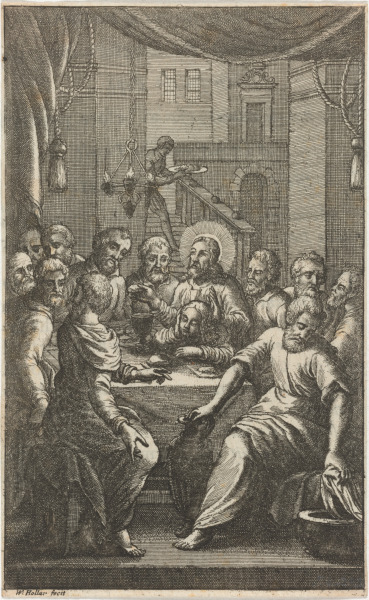
The Last Supper
1664–1674
Barry Moser, Mark Twain, and others
Miss Sophia's Testament
1984
Wenceslaus Hollar and Jan Brueghel the Younger
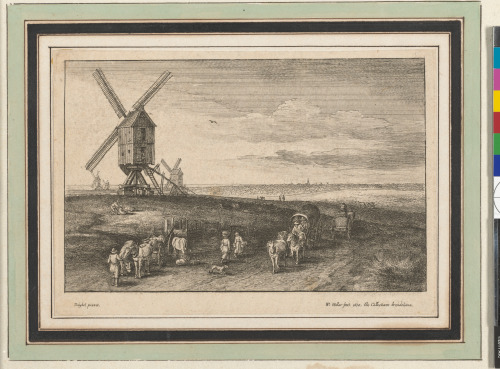
The Four Windmills
1649
Naga
Head Blanket (Larkauchee) or Elephant Cloth
1949–1955
Unknown Artist and Wenceslaus Hollar
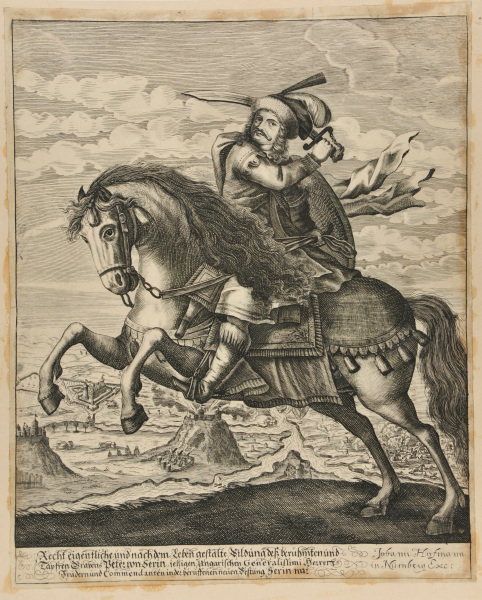
Peter von Serin, Hungarian General
2000–1887
Elephant
1874–1914
Wenceslaus Hollar and Joseph Heintz II
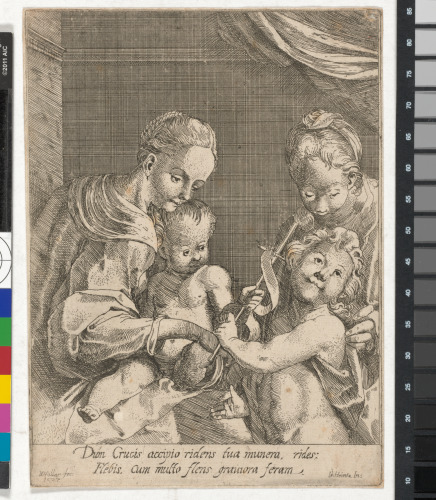
The Virgin and Child, with St. Elizabeth and St. John
1626
Antoine-Louis Barye
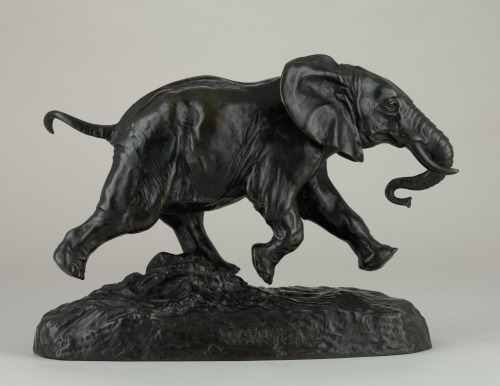
Senegalese Elephant
1873
Wenceslaus Hollar
Diversae insectorum aligerorum
1640–1650
Elad Lassry
Two Elephants
2009