Qi Baishi
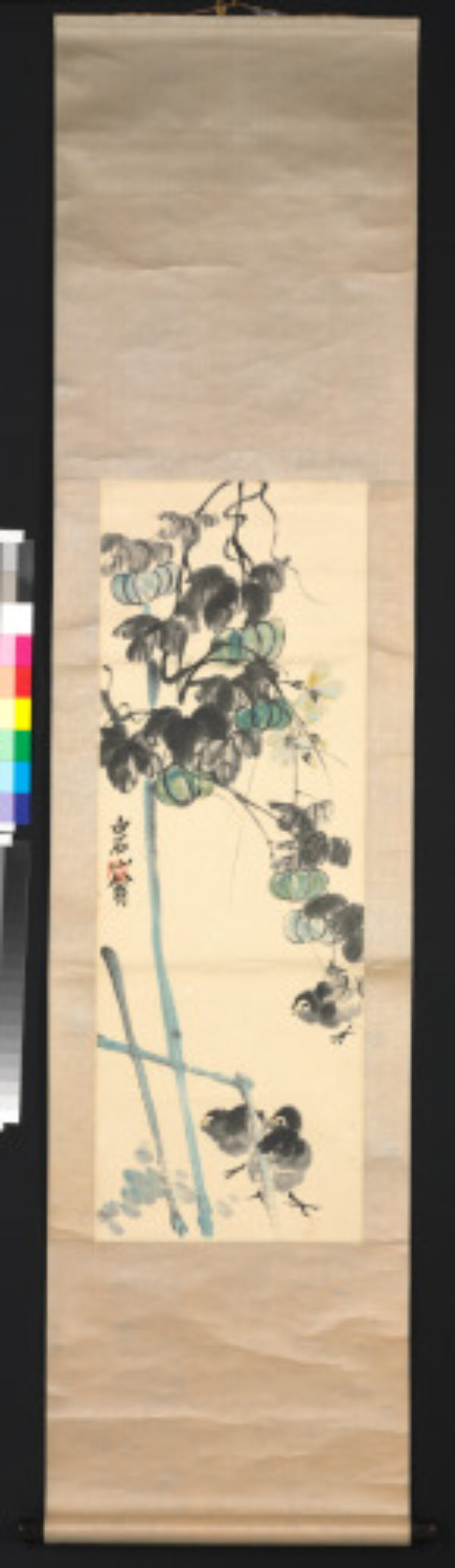
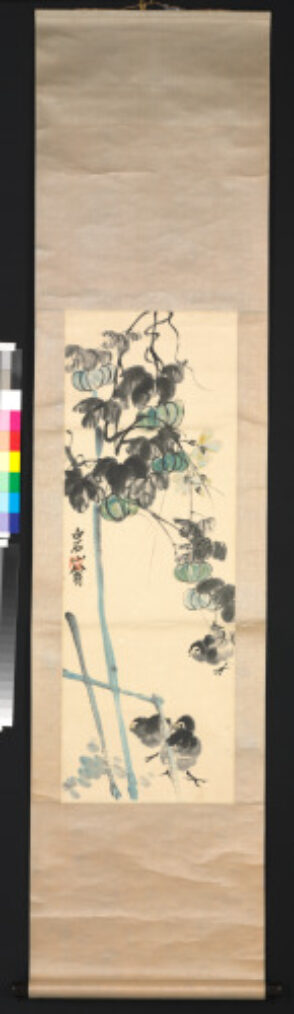
Three Chicks and Melon Tree
1937-1947
Scroll
Qi Baishi
Three Chicks and Melon Tree
1937-1947
Physical Qualities
Ink and color on paper
, 37 1/2 x 13 in. (95.3 x 33 cm.)
Credit Line
Gift of Kai-Yun Chiu, Baltimore, in Honor of her Parents, Chung-Wei Chiu and Shu-Tsing Chiu
Object Number
2009.154
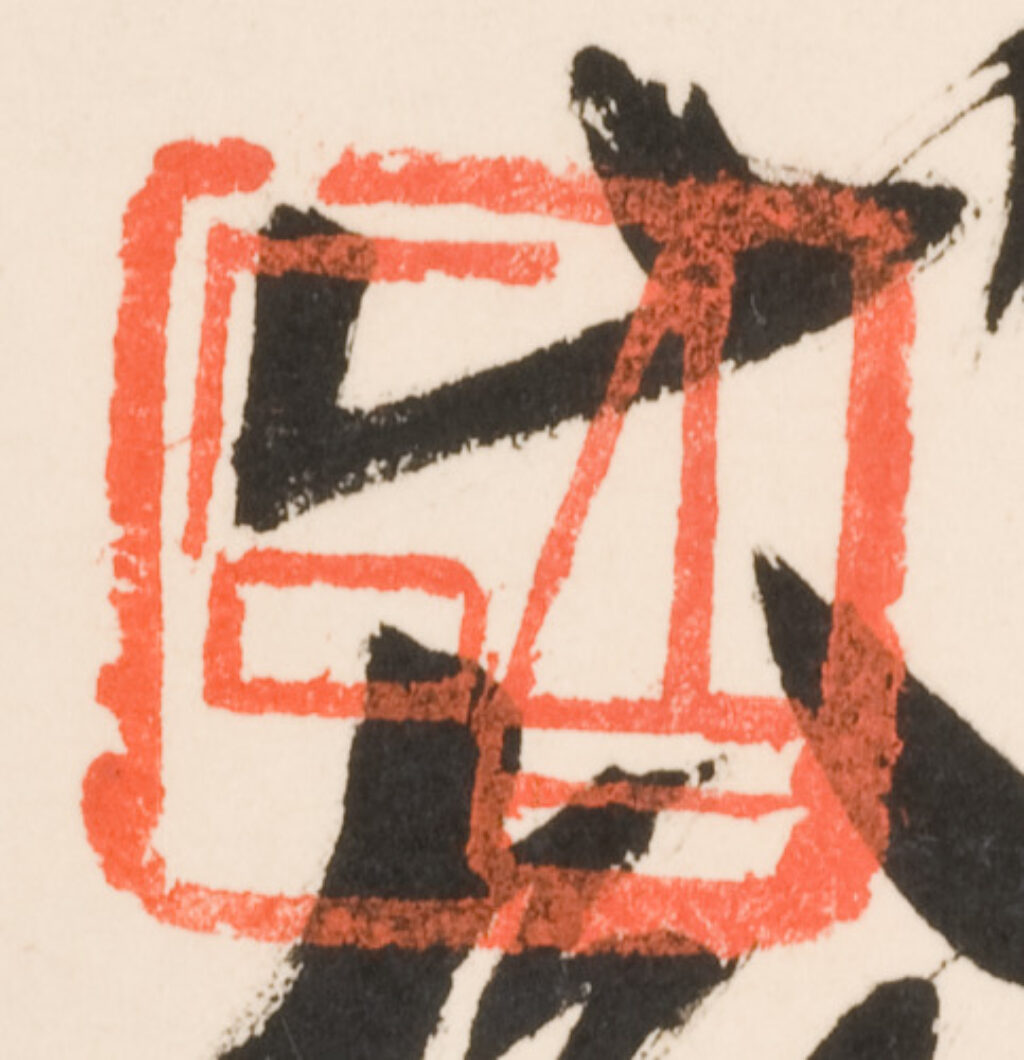
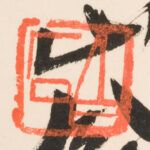
Qi Baishi, like Chung-Wei Chiu, was born into a peasant family in Hunan province. He received little formal education, and worked as a herd boy. At age 20 he began to study painting. From 1902 to 1909, Qi traveled around China establishing friendships, studying and copying the work of important artists, working as a scribe, and carving seals (see detail below). In 1927, he became a professor at Beijing University Art Academy and remained in Beijing throughout the Sino-Japanese War. Despite misgivings about the communist takeover in 1949, Qi obtained great fame and respect, and became Chairman of the Chinese Artists’ Association in 1953.
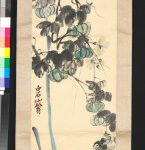
Qi Baishi is one of China’s greatest 20th-century bird-and-flower artists. Unlike painters of the classical tradition who valued nature primarily for its symbolism, Qi only painted subjects that he experienced first-hand, retaining a direct connection to his life in rural Hunan. Chickens were a part of Qi’s household. Here three chicks scrabble beneath a vine heavy with melons. This work shows several of the artist’s signature techniques: freehand painting (stems), “boneless painting” (flower petals), splashed ink (leaves), and color.
The Baltimore Museum of Art by gift, 2009; Kai-Yun Chiu, Baltimore, by descent; Chung-Wei Chiu and Shu-tsing Chiu, Taiwan
Frances Klapthor, "BMA Past/Future: Guyton/Chiu; Two Collections of Chinese Art," BMA, August 18, 2010-
Inscribed: Signature and seal on left edge of painting, "Baishi, old man living in mountains".