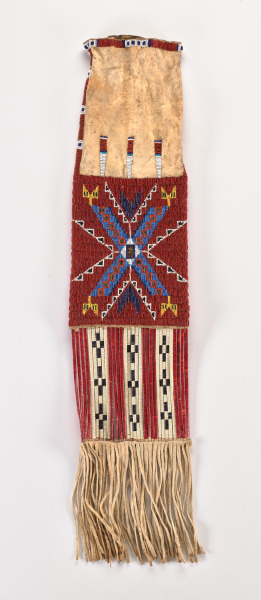
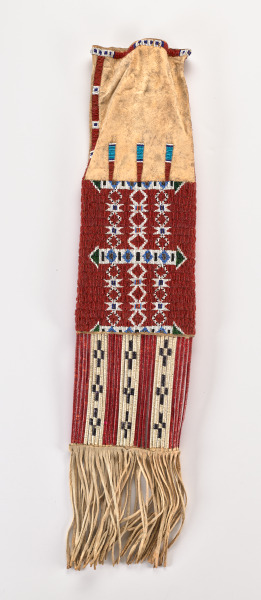
Lakota (Sioux)
Tobacco Bag
Lakota (Sioux), 1894-1904
Scroll
Lakota (Sioux)
Tobacco Bag
Lakota (Sioux), 1894-1904
Physical Qualities
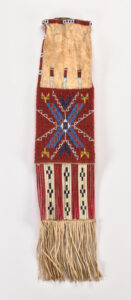
Hide, glass and metal beads, porcupine quills, 33 1/2 × 7 1/2 x 1 3/4 in. (85.1 × 19.1 x 4.4 cm)
Credit Line
Gift of Mrs. Richard W. Case, Sparks, Maryland
Object Number
1985.128
Unidentified Lakota (Sioux) Artist
Tobacco Bag
c. 1900
The Dakotas, United States
Hide, glass and metal beads, porcupine quills
Gift of Mrs. Richard W. Case, Sparks, Maryland, BMA 1985.128
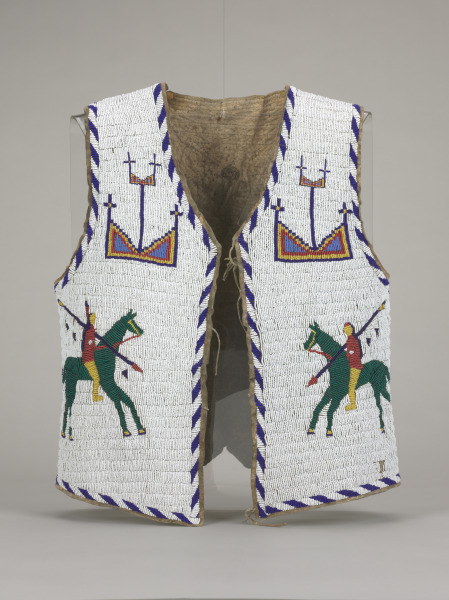
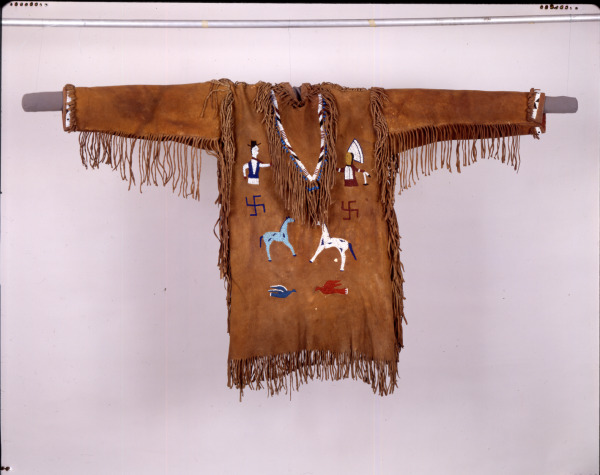
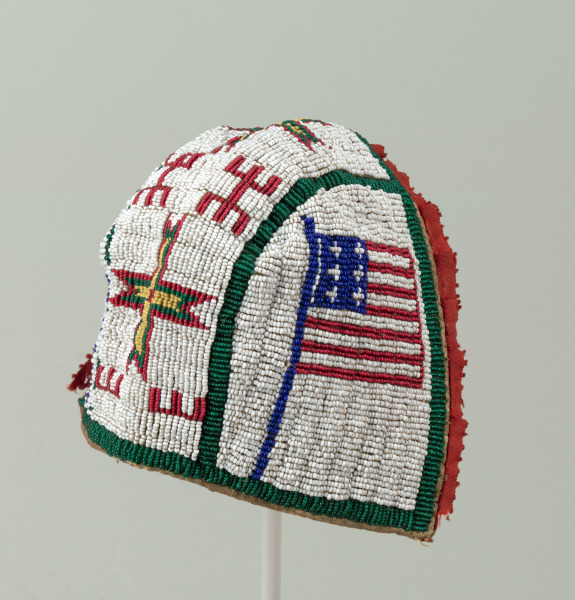
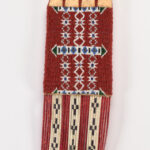
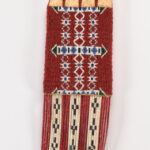
Artists of the Lakota tribe made bags such as these to hold a čhaŋnúŋpa (tobacco pipe), reflecting the revered status of both tobacco and the čhaŋnúŋpa in Native communities from the Great Plains. This region—ancestral homeland to many tribes, including the Lakota—spans east to west from the area between the Mississippi River and the Rocky Mountains and north to south from central Canada to southern Texas. When not in ceremonial use, a čhaŋnúŋpa is stored in a bag expertly crafted by beadworkers with care and knowledge. Indigenous artists from the Plains first gained access to the brilliantly colored seed beads used to make these bags in the mid-19th century through trade with white settlers. Artists who had specialized in porcupine quillworking techniques for centuries embraced the new medium with enthusiasm. A common joke during that period teases that Lakota women would fully bead anything that stayed still.
For White Hawk, these bags illustrate a connection between the designs and colors in her own works and those found in the works of her ancestors. She notes that some of these beads, such as the “greasy” (semi-translucent) green, yellow, and turquoise ones, are incredibly rare. These artists used precious and coveted cut metallic beads to highlight the center of their designs with immaculate attention to detail and a striking palette.
Elise Boulanger, Preoccupied: Indigenizing the Museum, Dyani White Hawk: Bodies of Water, April 21, 2024.
Ralph Case (father-in-law- of donor) collected beginning probably in early 30s, perhaps earlier. Acted as attorney for the Sioux nation in suit against U.S. Government from 1932 to 1966. Was born on a Sioux reservation (c. 1880s/90s); son of a frontier sheriff. (Information from donor, 1984)
Preoccupied: Dyani White Hawk
"American Indian Art Magazine," vol. II, no. 2, Spring 1986, advertisement p. 15.