
Unknown Artist
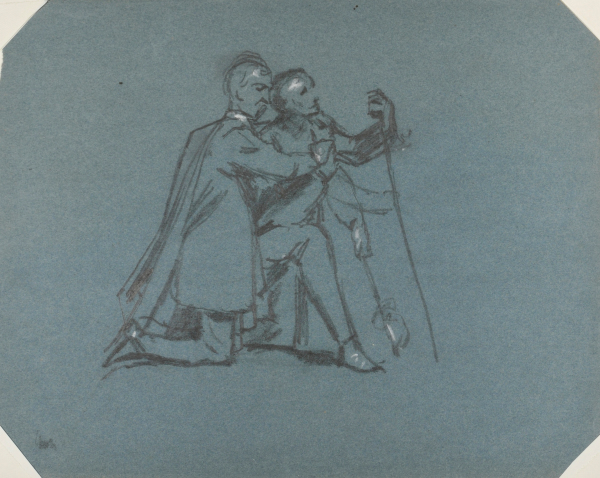
Tomb Figure of Kneeling Knight
1600-1624
Scroll
Unknown Artist
Tomb Figure of Kneeling Knight
1600-1624
Physical Qualities
Alabaster, 26 in. (66 cm.)
Credit Line
Gift of Saidie A. May
Object Number
1941.388
Baltimore Museum of Art by gift, 1941; Saidie A. May, New York, NY, by purchase, 1941 (?).
Jacobs Reinstallation 2026
The World of Shakespeare, 1564-1616: an exhibition organized by the Virginia Museum of Fine Arts and the Detroit Institute of Arts (Richmond: Virginia Museum of Fine Arts & Detroit Institute of Arts: 1964), cat. no. 114, reproduced on p. 68.
Saidie A. May Collection (Baltimore: The Baltimore Museum of Art, 1972), 30.
Juan de Montejo (Spanish, died 1601), Unidentified artist, Spanish, Tomb Effigy of Alonso de Mera (died May 22. 1553), Kneeling Knight, 1592-1594, Spain, 152.4 x 63.5 x 77.5 cm, 491.7 kg (60 x 25 x 30 1/2 in., 1084 lb.). Boston, Museum of Fine Arts. 1939 Purchase Fund, 44.813.
Alabaster
Cheetham, Francis. Alabaster Images of Medieval England (Rochester NY: Association for Cultural Exchange: Boydell Press, 2003).
Harris, Anne. “From Stone to Statue: The Geology and Art of English Alabaster Panels” in Reassessing Alabaster Sculpture in Medieval England, ed. Jessica Brantley, Stephen Perkinson, and Elizabeth C. Teviotdale Medieval Institute Publications/De Gruyter (2020).
Lipinska, Alexandra. “Alabastrum, id est, corpus hominis.” In Alabaster in the Low Countries Sculpture: A cultural history.
Murat, Zuleika, ed. English Alabaster Carvings and their Cultural Contexts (Suffolk, 2019).
Reassessing Alabaster Sculpture in Medieval England, ed. Jessica Brantley, Stephen Perkinson, and Elizabeth C. Teviotdale (De Gruyter, 2020).
Woods, Kim. Cut in Alabaster: a Material of Sculpture and its European Traditions 1330-1530 (London: Harvey Miller Publishers, 2018).
Funerary Sculpture
Binski, Paul. Medieval Death: Ritual and Representation (London: British Museum Press, 1996, Chapter 2, 70-122).
Barker, Jessica. “Invention and Commemoration in Fourteenth-Century England: A Monumental “Family Tree” at the Collegiate Church of St. Martin, Lowthorpe.” Gesta 56, no. 1 (2017): 105-128.
Cohen, Kathleen. Metamorphosis of a Death Symbol: the Transi Tomb in the Late Middle Ages and the Renaissance (California Studies in the History of Art vol. XV. Berkeley: Univ. of California Press, 1973).
Dressler, Rachel. “Cross-Legged Knights and Signification in Medieval Tomb Sculpture.” Studies in Iconography 21 (2000): 91-121.
——————. Of Armor and Men in Medieval England: the Chivalric Rhetoric of Three English Knights’ Effigies (Burlington, VT: Ashgate, 2004).
Jugie, Sophie. The Mourners: Tomb Sculpture from the Court of Burgundy (New Haven: Yale University Press, 2010).
Roberts, Marion. “The Tomb of Giles de Bridport in Salisbury Cathedral.” The Art Bulletin 65:4 (Dec. 1983): 559-586.
Saul, Nigel. Death, Art, and Memory in Medieval England: The Cobbham Family and their Monuments, 1300-1500 (New York: Oxford University Press, 2001).
Alabaster
Cheetham, Francis. Alabaster Images of Medieval England (Rochester NY: Association for Cultural Exchange: Boydell Press, 2003).
Harris, Anne. “From Stone to Statue: The Geology and Art of English Alabaster Panels” in Reassessing Alabaster Sculpture in Medieval England, ed. Jessica Brantley, Stephen Perkinson, and Elizabeth C. Teviotdale Medieval Institute Publications/De Gruyter (2020).
Lipinska, Alexandra. “Alabastrum, id est, corpus hominis.” In Alabaster in the Low Countries Sculpture: A cultural history.
Murat, Zuleika, ed. English Alabaster Carvings and their Cultural Contexts (Suffolk, 2019).
Reassessing Alabaster Sculpture in Medieval England, ed. Jessica Brantley, Stephen Perkinson, and Elizabeth C. Teviotdale (De Gruyter, 2020).
Woods, Kim. Cut in Alabaster: a Material of Sculpture and its European Traditions 1330-1530 (London: Harvey Miller Publishers, 2018).
Funerary Sculpture
Binski, Paul. Medieval Death: Ritual and Representation (London: British Museum Press, 1996, Chapter 2, 70-122).
Barker, Jessica. “Invention and Commemoration in Fourteenth-Century England: A Monumental “Family Tree” at the Collegiate Church of St. Martin, Lowthorpe.” Gesta 56, no. 1 (2017): 105-128.
Cohen, Kathleen. Metamorphosis of a Death Symbol: the Transi Tomb in the Late Middle Ages and the Renaissance (California Studies in the History of Art vol. XV. Berkeley: Univ. of California Press, 1973).
Dressler, Rachel. “Cross-Legged Knights and Signification in Medieval Tomb Sculpture.” Studies in Iconography 21 (2000): 91-121.
——————. Of Armor and Men in Medieval England: the Chivalric Rhetoric of Three English Knights’ Effigies (Burlington, VT: Ashgate, 2004).
Jugie, Sophie. The Mourners: Tomb Sculpture from the Court of Burgundy (New Haven: Yale University Press, 2010).
Roberts, Marion. “The Tomb of Giles de Bridport in Salisbury Cathedral.” The Art Bulletin 65:4 (Dec. 1983): 559-586.
Saul, Nigel. Death, Art, and Memory in Medieval England: The Cobbham Family and their Monuments, 1300-1500 (New York: Oxford University Press, 2001).
Artist
Unknown Artist
2000-01-01 00:00:00–2000-01-01 00:00:00