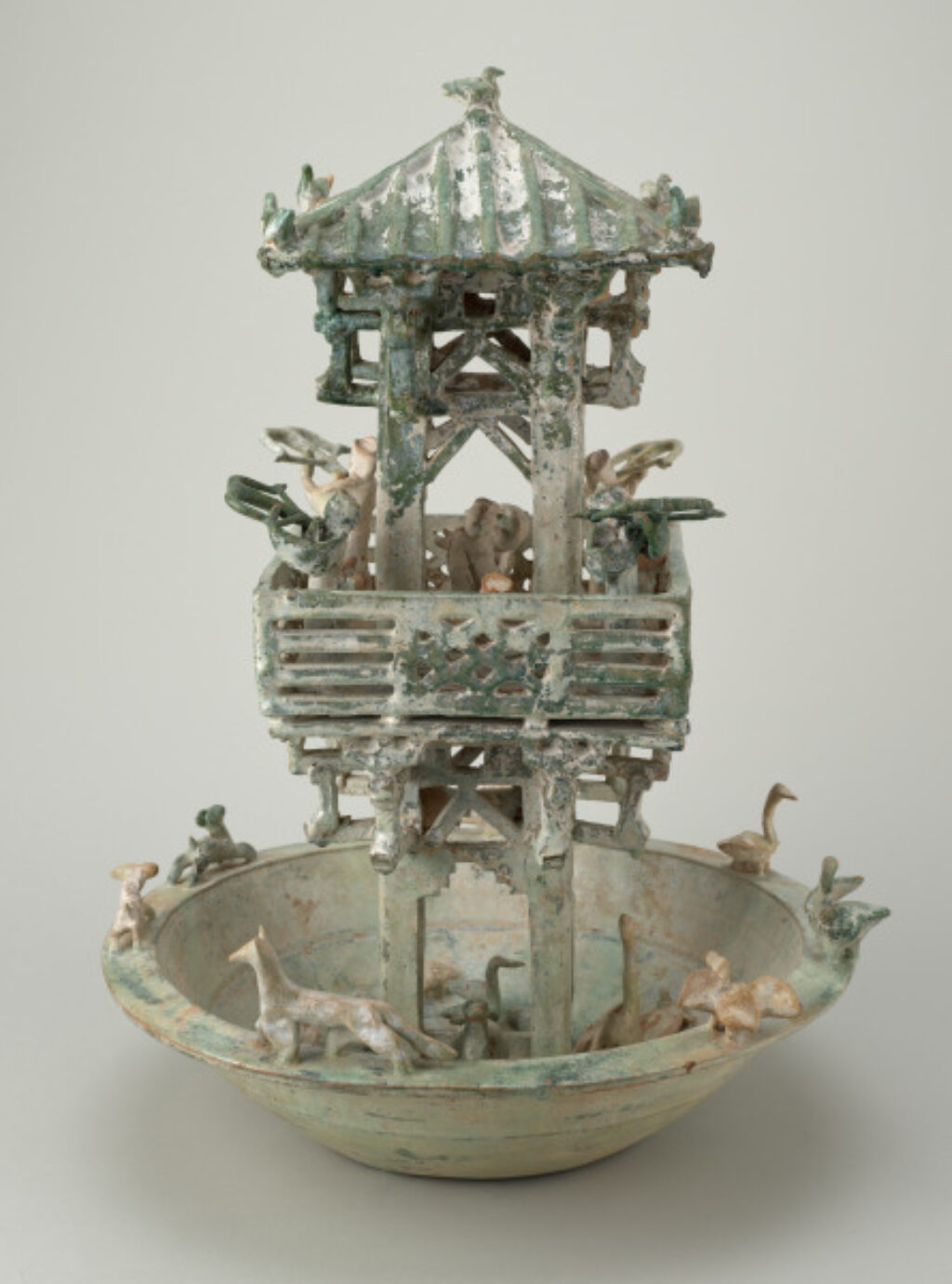
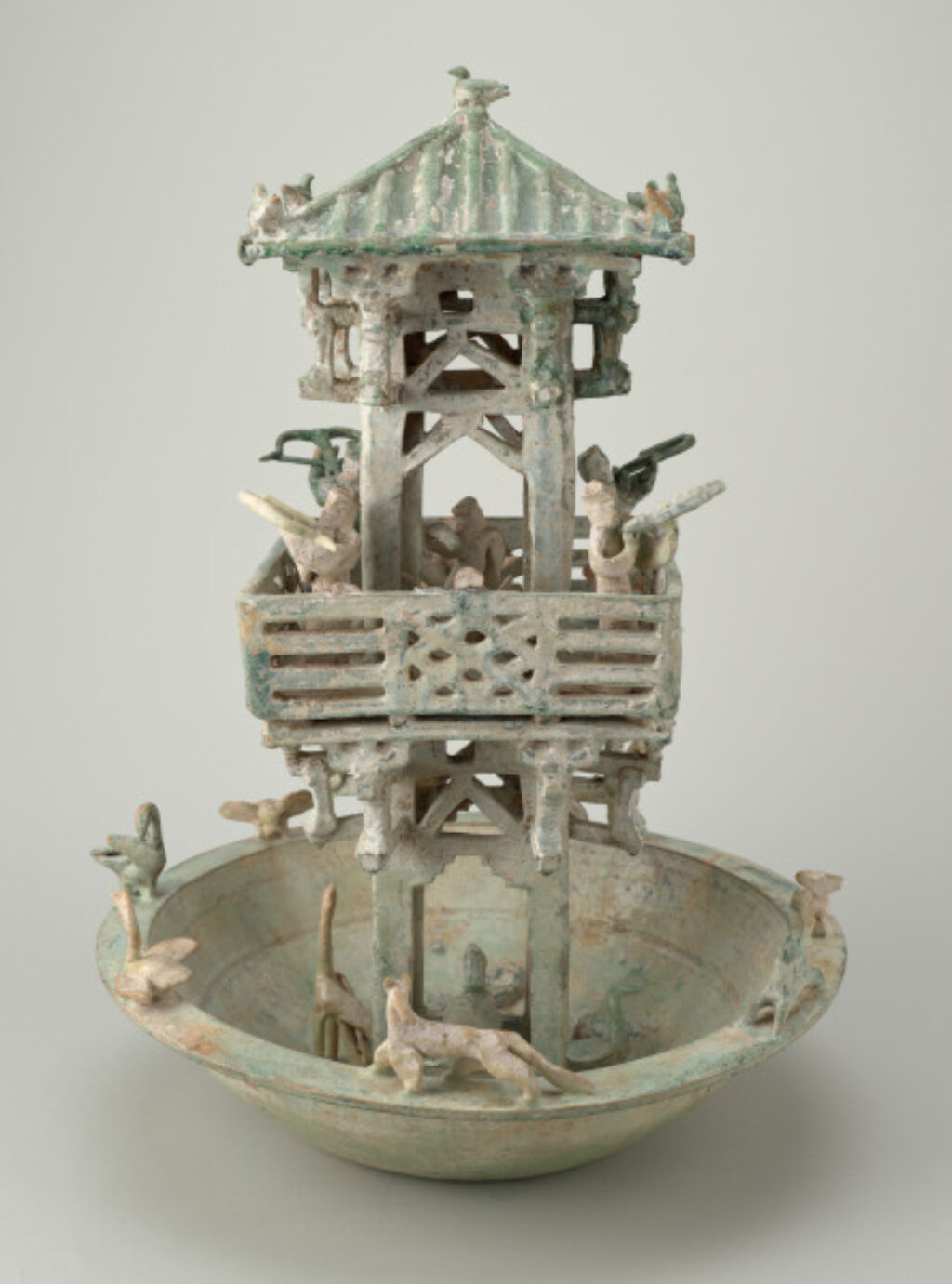
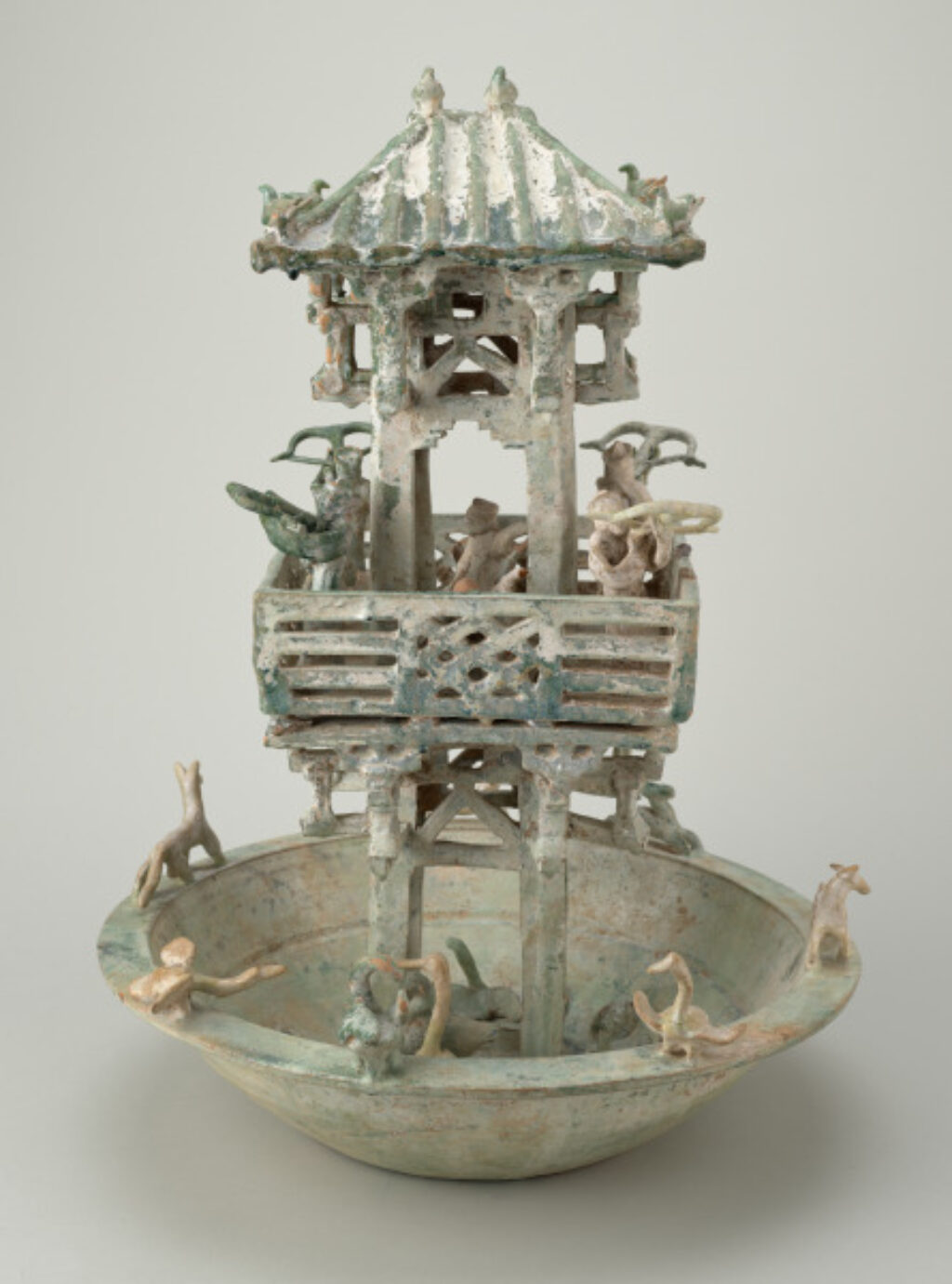
Tower Surrounded by a Moat
1st-2nd century
Scroll
Tower Surrounded by a Moat
1st-2nd century
Physical Qualities
Earthenware with green lead glaze, 22 1/2 x 17 x 16 5/8 in. (57.2 x 43.2 x 42.2 cm.)
Credit Line
Purchase with exchange funds from Julius Levy Memorial Fund
Object Number
1988.640
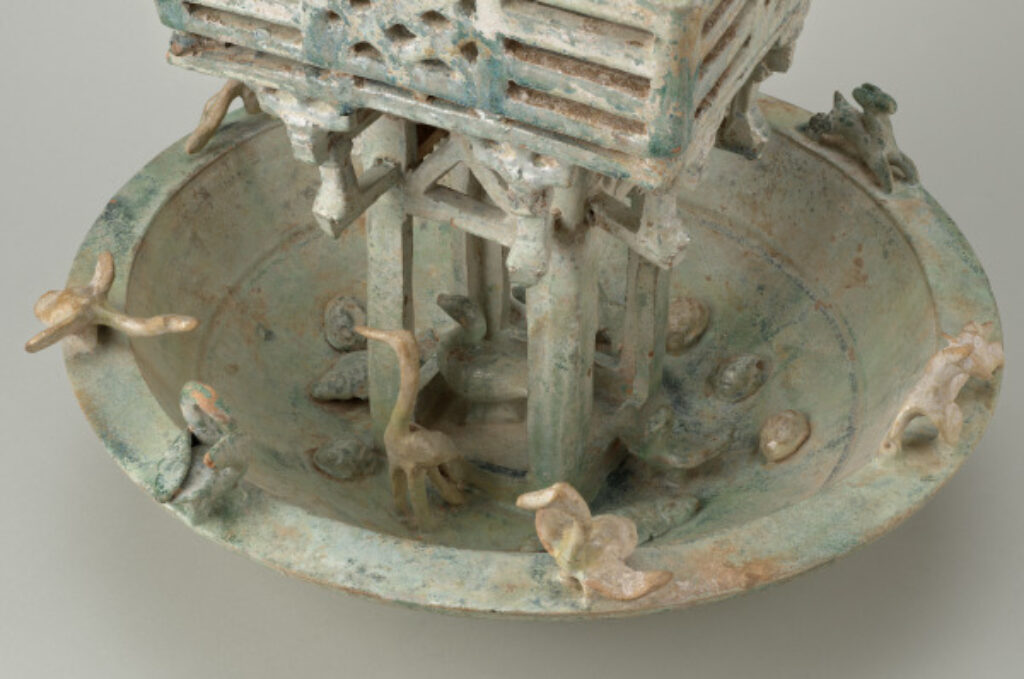
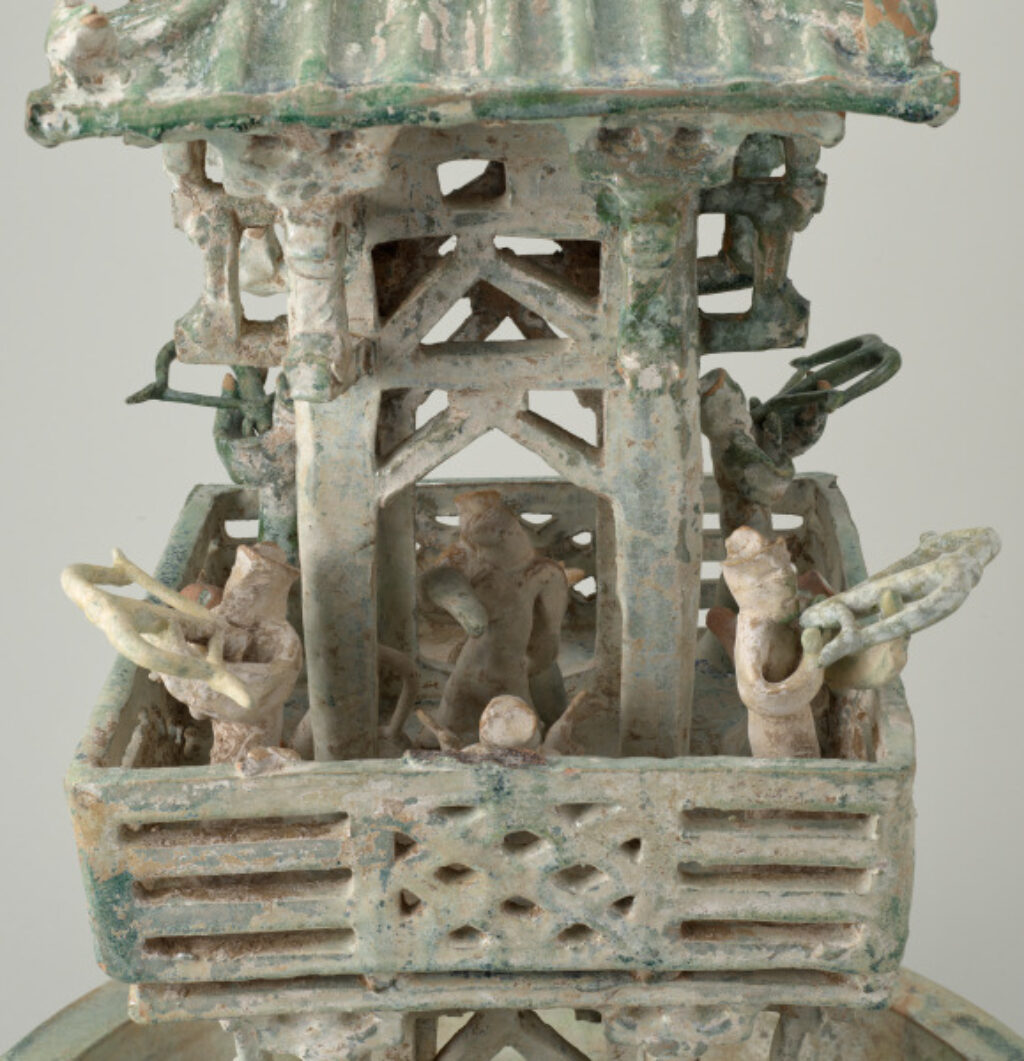
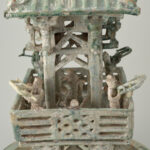
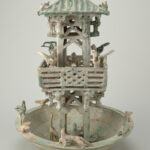
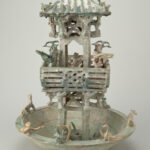
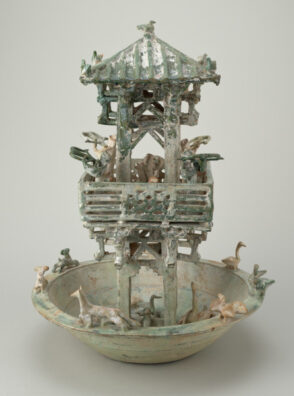
This tower was made for burial in a tomb. Stilts support a single platform with a tile roof above a moat or pool in the form of a bronze basin. There are nine figures in the tower, among them a long-sleeved dancer performing at the center of the platform surrounded by four clapping figures. An archer with a drawn crossbow stands at each corner. The presence of the six birds on the roof indicates the gathering of spirits, and abundant fish in a moat are an equally auspicious sign.
The place of people in the natural world has been deeply important in China. Rituals directed toward mountains, rivers, woods, birds, and animals as well as careful observation of these natural elements guided action or position in the world. Towers, which were associated with mountains, were among Han dynasty (206 BCE–220 CE) structures used to communicate with immortals who inhabited mountainous regions.
The Baltimore Museum of Art by purchase, 1988; Christie's, New York
Christie's, New York, Sale 6720, 12/1/1988 sale, lot 169, pp. 88-89.
Frances Klapthor, The Baltimore Museum of Art, "Chinese Mortuary Ceramics from the Collection," December 2008-December 2009.
Frances Klapthor, The Baltimore Museum of Art, "Chinese Mortuary Ceramics from the Collection," December 2008-December 2009.
Frances Klapthor, Chinese Ceramics, Baltimore: BMA, 1993, no. 4, p. 14, ill. p. 15.
 On View at the BMA
Explore the Collection Further