

Physical Qualities
Engraving, Sheet (cut within platemark): 225 x 136 mm. (8 7/8 x 5 3/8 in.)
Credit Line
Garrett Collection
Object Number
1946.112.3424
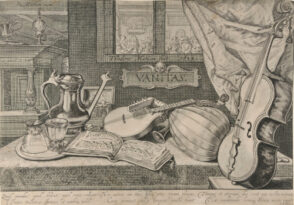
The Latin word, Vanitas, seen prominently on a plaque in the center of this engraving, refers to the vanity of all earthly things and formed a distinct category of still life representation mainly in northern Europe during the post Renaissance era. A wide range of objects were included in these compositions, reminding the viewer of the fragility and the transitory nature of earthly life. Here, musical instruments, a box overflowing with coins and jewelry, vessels for drink, and through the window, festive partygoers are all symbolic elements used to convey the somber message.
Matham, a painter and printmaker, produced portraits, mythological subjects, and still lifes working mainly in Amsterdam and The Hague.
Sona Johnston, BMA organized, "The Art of Still Life from The Baltimore Museum of Art;" circulated to The Academy Art Museum, Easton, August 3 - October 6, 2007; and Mitchell Gallery, St. John's College, Annapolis, August 25, 2010 - October 10, 2010.
Inscribed: Recto: in plate, at upper left: "Iac. Matham excud. / Cum privil. sa. Cae. Matis."; in plate, at center: "Theodorus Matham fecit. 1622. / VANITAS"; in plate, across bottom: "Quid mundus.' quid deliciae.' quid vana voluptas.' Non aurum nec ebur, cibus, et [superscript] potus organa, plausus, Tempus et aeternum duo sunt quae nostra vocantur, / Faetor, tristitiae, fumus et umbra, nihil Cum pereant celeri tempore juncta beant. Haec meditanda homini; Caetera mortis erupt. / I.A.Banniu"
Markings: CM: Claghorn; Garrett WM: crowned shield containing lion rampant and a small tower.