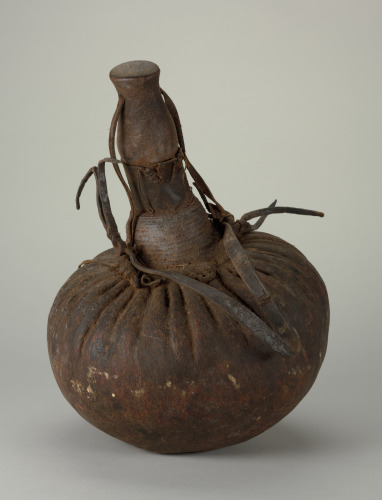
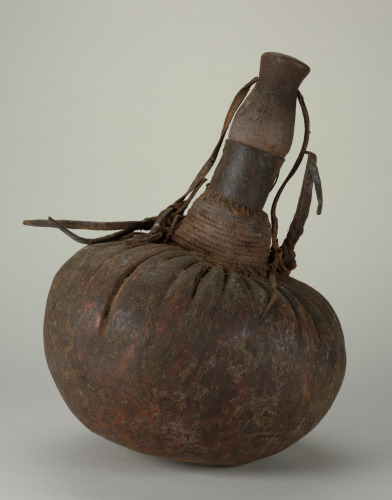
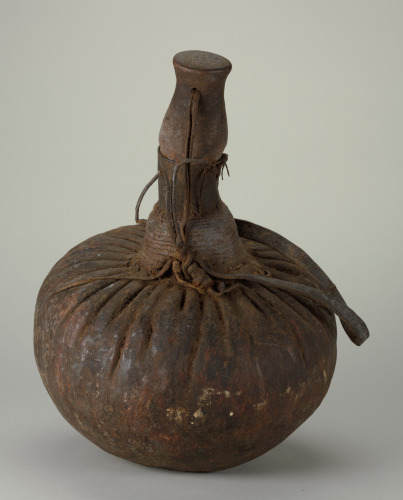
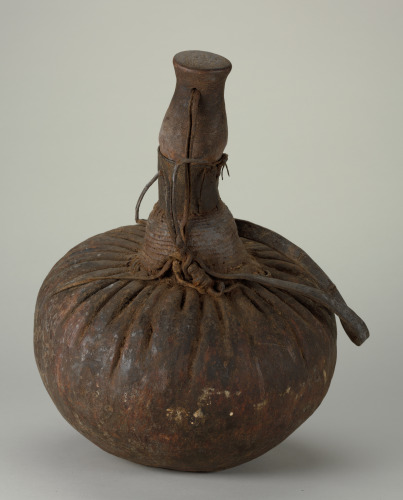
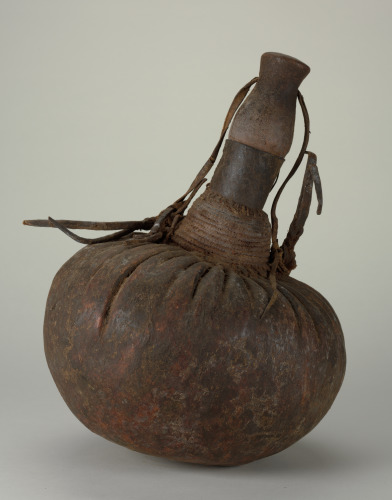
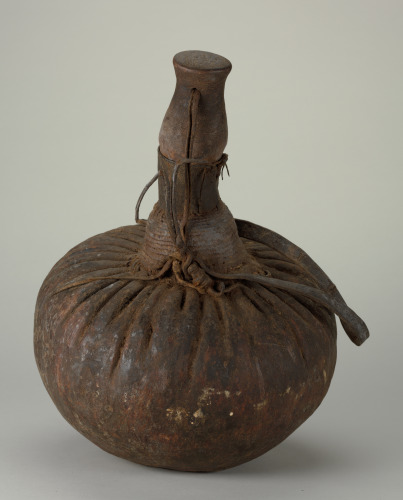
Turkana
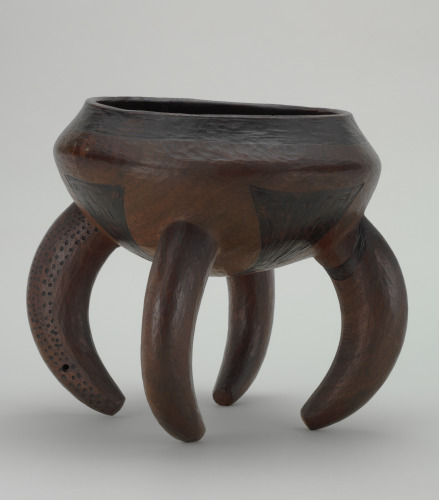
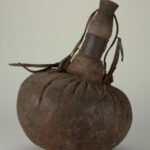
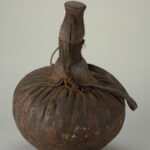
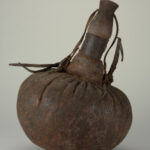
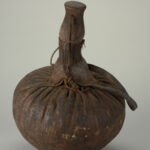
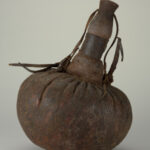
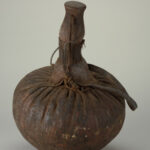
Vessel (Akutam)
Turkana, 1933-1966
Scroll
Turkana
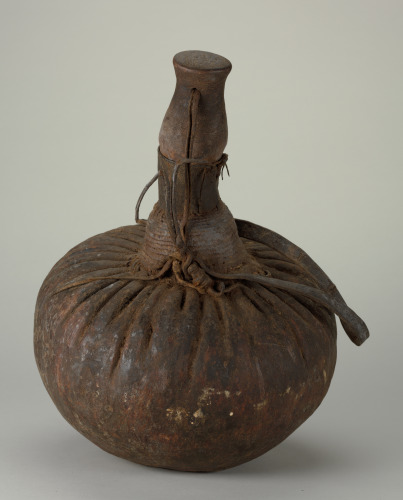
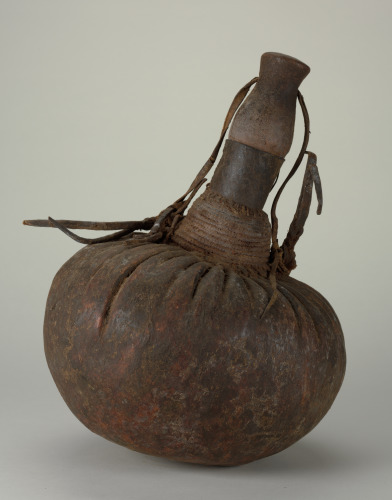
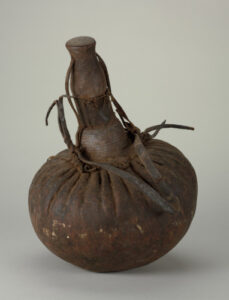
Vessel (Akutam)
Turkana, 1933-1966
Physical Qualities
Camel hide, leather, wood, 16 9/16 × 12 5/8 in. (42 × 32 cm.)
Credit Line
Gift of Nancy and Robert H. Nooter, Washington, D.C.
Object Number
1994.273
Form, rather than vibrant color, takes center stage in the art produced by Samburu, Somali, and Turkana herders. Defined by a stark, monochromatic color palette, art from northern Kenya and western Somalia emphasizes the beauty of clearly delineated space. Take, for instance, the Samburu milk vessel
(lkantirr). Carved from wood and dyed a deep brown, the structure is divided into rounded, rectangular sections by bands of light brown animal hide. Although the carrying strap seems to necessitate this geometric division, the symmetry of the sections speaks to an aesthetic attraction toward monochromatic, subdivided space. Notably different from the multi-colored, complex designs found on Maasai beadwork to the south, this method of highlighting spatial planes through subtle contrasts of similar color represents an older form of pastoralist artmaking, one that pre-dates the arrival of Europeans. While Maasai art was transformed by the import of glass beads and other goods, the northern, more
remote areas of inland, east Africa interacted far less frequently with colonizing peoples and their manufactured products. As a result of this mutual avoidance, artists from these areas continued to make art that reflected their hot, dry, and largely monochromatic environment.
Design for Mobile Living: Art from Eastern Africa
Fedders, Andrew and Cynthia Salvadori. Turkana Pastoral Craftsmen. Nairobi, Kenya: Transafrica Book Distributors in association with East African Literature Bureau, 1977. Note: no page numbers, but see sections “Pastoral craftsmen” and “Their utensils”; also features images of similar vessels
Sieber, Roy. African Furniture and Household Objects. New York: American Federation of the Arts, 1980, pp. 172-3.
Donovan, Alan. ”Turkana Functional Art.” African Arts vol. 21, no. 3 (May, 1998): pp. 46-47, fig. 7. http://www.jstor.org/stable/3336442
Sieber, Roy. African Furniture and Household Objects. New York: American Federation of the Arts, 1980, pp. 172-3.
Donovan, Alan. ”Turkana Functional Art.” African Arts vol. 21, no. 3 (May, 1998): pp. 46-47, fig. 7. http://www.jstor.org/stable/3336442