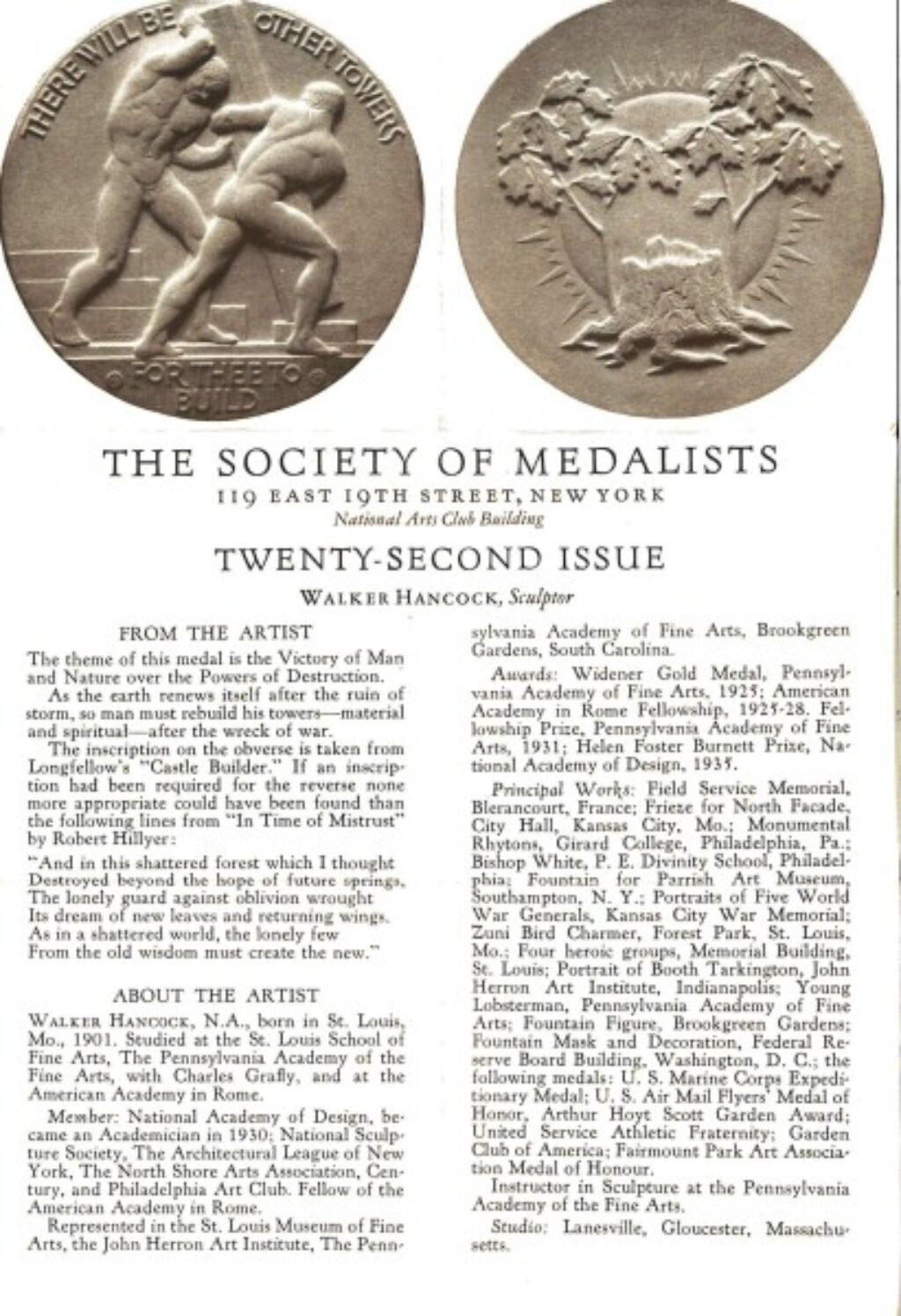
“Victory of Man and Nature Over the Powers of Destruction” Medal

Walker Kirtland Hancock

“Victory of Man and Nature Over the Powers of Destruction” Medal

1939

Scroll
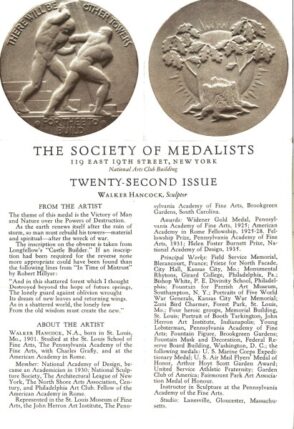
Walker Kirtland Hancock

“Victory of Man and Nature Over the Powers of Destruction” Medal

1939

Physical Qualities Bronze, 3/16 x 2 7/8 in. (0.5 x 7.3 cm)
Credit Line Bequest of Blanche Adler
Object Number 1941.152c

Inscribed: Obverse: "There Will Be Other Towers / For Thee to / Build / (c) / HANCOCK / 1940"

Artist

Walker Kirtland Hancock

1900–1997

American, 1901 - 1998
Meet Walker Kirtland Hancock

Explore the Collection Further

Walker Kirtland Hancock and Medallic Art Company
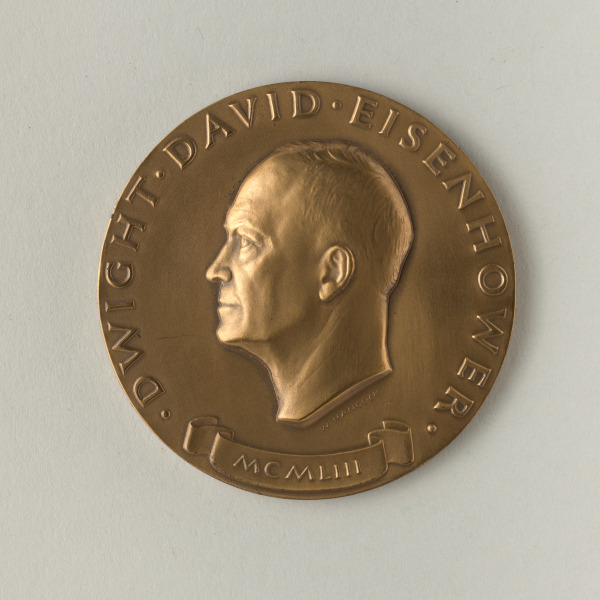
"Dwight David Eisenhower" Medal
1952
Claude Leon Mascaux
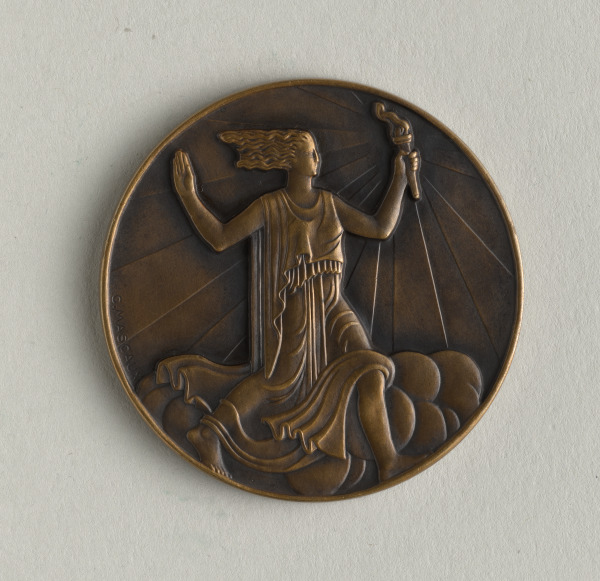
"Woman with Torch or Civilization" Medal
1923
Walker Kirtland Hancock
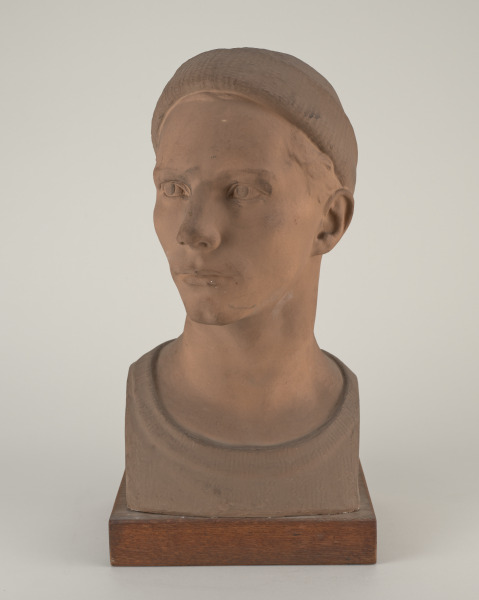
Youth
1938
Carl Paul Jennewein and Philadelphia Mint
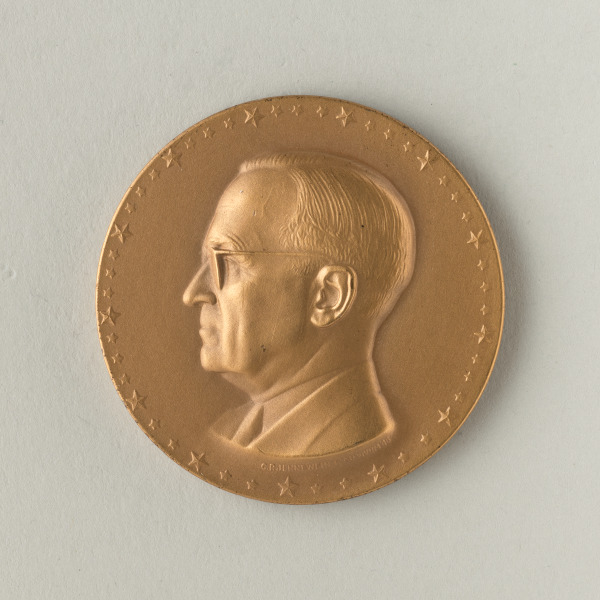
"Harry S. Truman Inaugural" Medal
1948
Thomas Jeavons and William Clarkson Stanfield
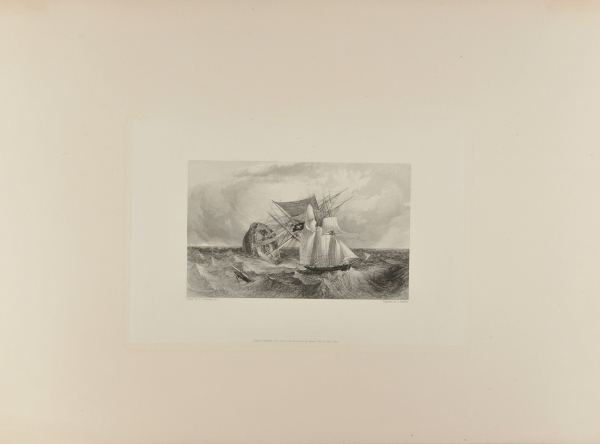
Destruction of the Indiaman
1834
Thomas Cole
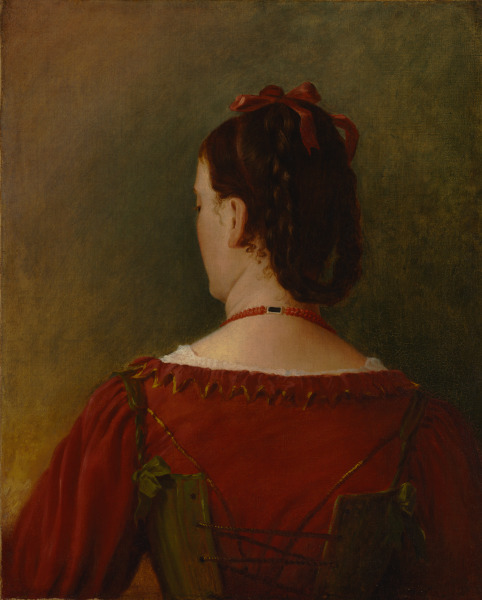
Head of a Roman Woman, from Nature
1831
Chester Beach
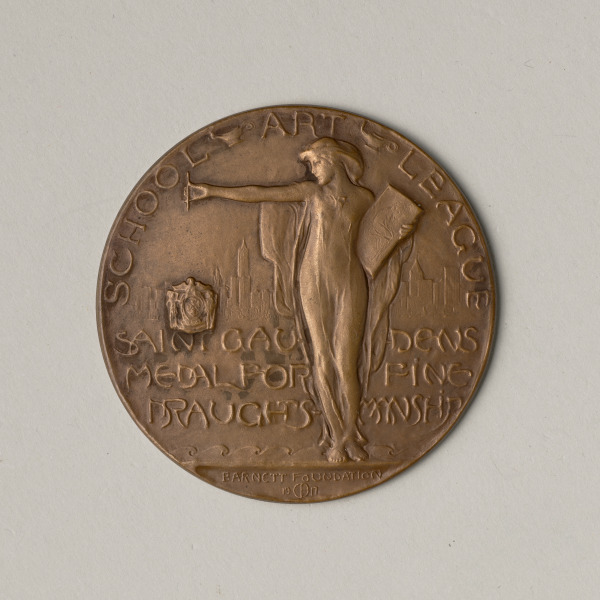
"School Art League, Saint Gaudens for Fine Draftsmanship" Medal
1910
Victor D. Brenner and Daniel Chester French
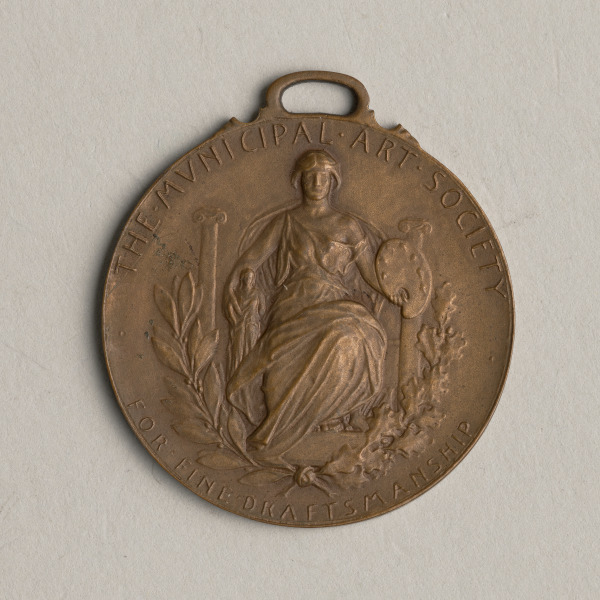
"The Municipal Art Society for Fine Draftsmanship" Medal
1914
Susanna Maria Von Sandrart, Jean Lepautre, and others
Large Vase with a Medallion Portrait of a Woman
1677
Honoré Daumier
L'Huitre. (Vous m’éveillerez à l’heure du diner.) Grosse, grasse, épaisse, dodue, goulue, ne s’éveillant que pour prendre sa nourriture, et ne s’endormant que pour la digérer l’huitre ne mange pas pour vivre : elle vit pour manger. Son appareil Locomoteur et industriel est nul. Elle végète sur place, et ne manifeste son existence que par l’exactitude, le nombre et la qualité de ses repas. Toute son énergie vitale est dans son estomac. C’est ce qu’on peut appeler un animal de loisir, sa seule mission sur terre paraît être en effet de consommer sans travailler, tandis que d’autres travaillent sans consommer. Elle s’acquitte parfaitement de cette mission providentielle. – (Lacépède - Histoire naturelle)
1836