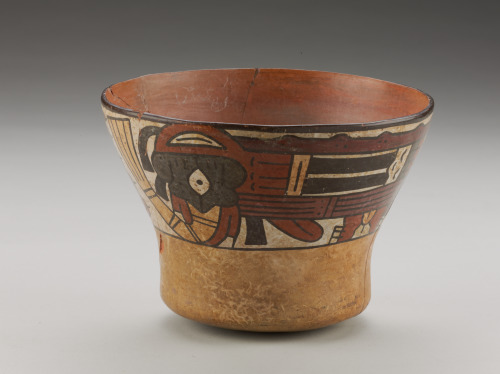
Nasca
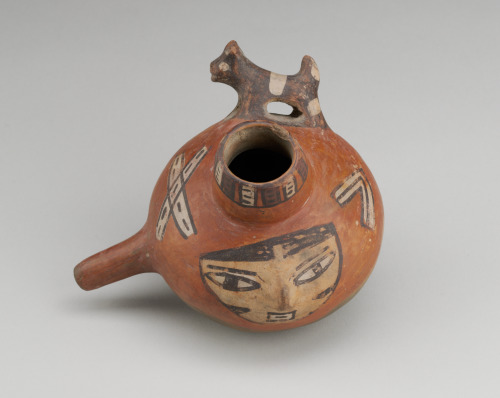
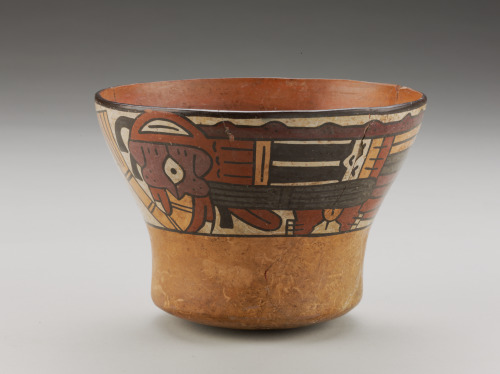
Waisted Vessel
Nasca, 425-600
Scroll
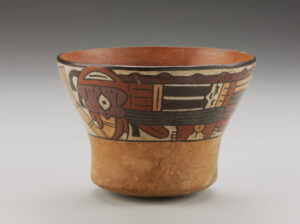
Nasca
Waisted Vessel
Nasca, 425-600
Physical Qualities
Ceramic, polychrome slip, 4 1/4 x 5 13/16 in. (10.8 x 14.8 cm.)
Credit Line
Gift of Dr. George G. Graham, Alexander S. Graham, and Carol Lee Graham
Object Number
2003.193
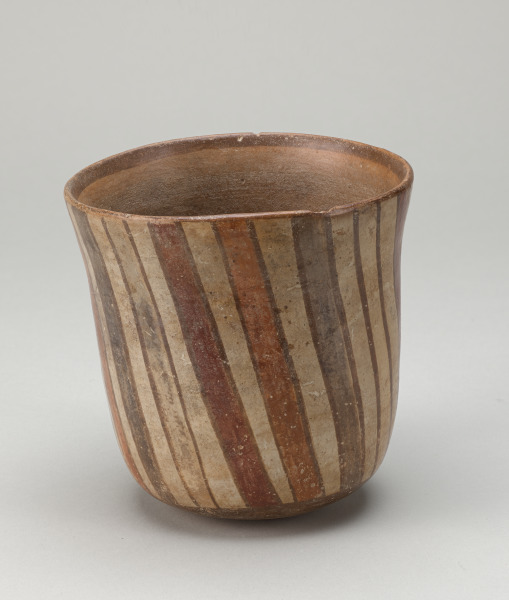
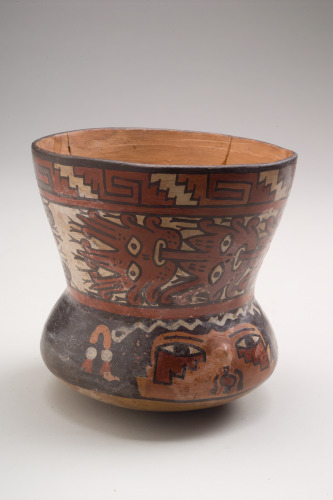
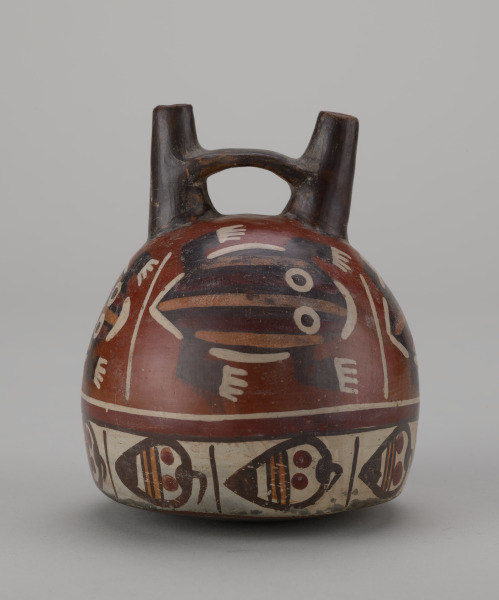
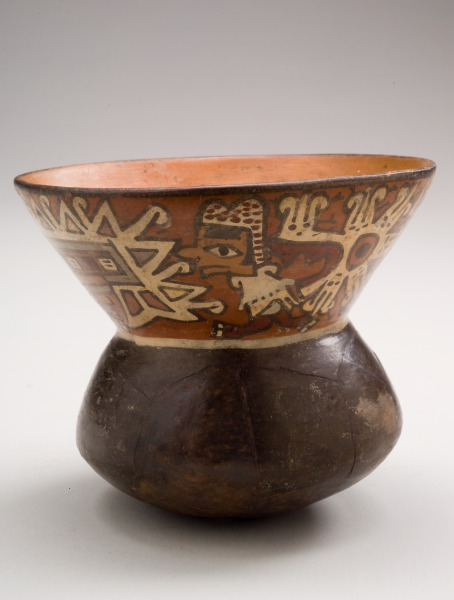
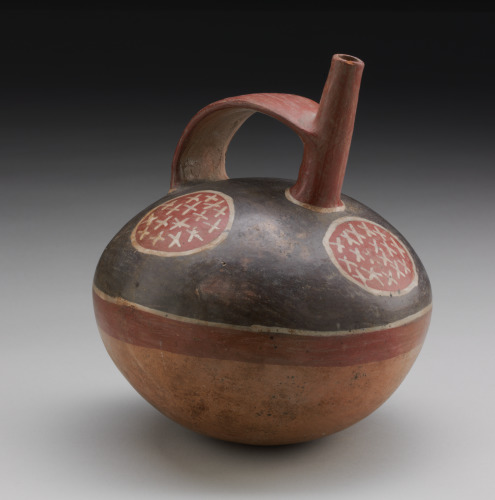
Identifiable by their thin, even walls and shiny surfaces, Nasca ceramics featured up to 13 colors, which was more than appeared on vessels created by any other culture in the Americas in antiquity. The Nasca people, who lived on the southern coast of Peru from around 100 BCE–700 CE, created some of the most vibrant and refined ceramic vessels of the Americas before the arrival of Europeans in the region in the 16th century.
From left to right, note the change in Nasca ceramics. The earliest Nasca works include identifiable figures, like the striped frogs and lúcuma fruit on the double-spout bottle at the far left. Ceramics created in the following centuries, like the jar and waisted vessel, became increasingly abstract. Supernatural figures hover in mid-air with rays emitting from their bodies, which then explode into geometric shapes. Late Nasca ceramics, such as the striped polychrome vase, were taller and focused on geometric patterns. The stripes of this vessel mimic designs from Nasca textiles, which were treasured goods in Andean society.
Group label for 2016.203, 1953.34.3, 2003.193, and 2016.204.
Ancient Americas Gallery Rotations 2021
Ancient Americas Gallery Rotations 2022
Ancient Americas Gallery Rotations 2023
Ancient Americas Rotations 2024
 On View at the BMA