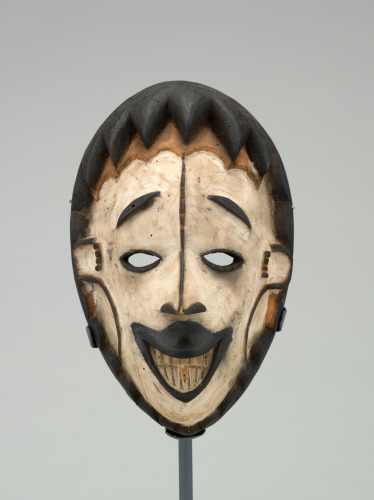
Igbo
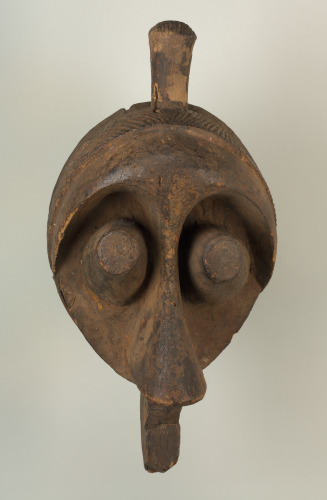
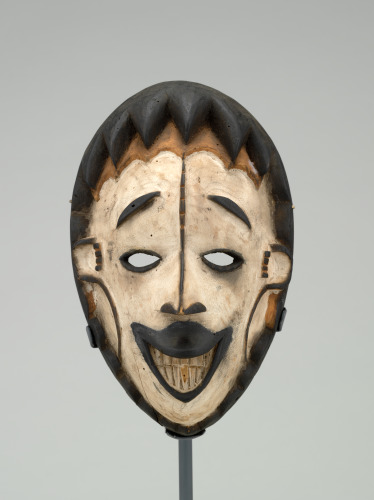
Water Spirit Mask (Okoroshi)
Igbo, 1900-1999
Scroll
Igbo
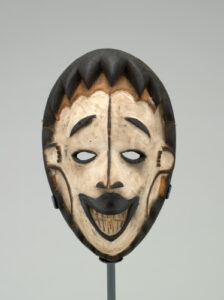
Water Spirit Mask (Okoroshi)
Igbo, 1900-1999
Physical Qualities
Wood and paint, 9 3/16 x 5 7/8 x 3 9/16 in. (23.4 x 15 x 9 cm.)
Credit Line
Gift of Phyllis K. and A. Harvey Schreter, Baltimore
Object Number
1996.118
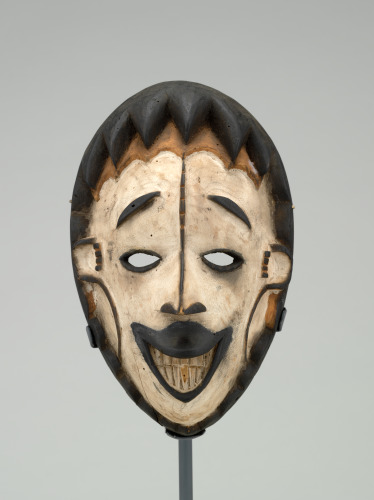
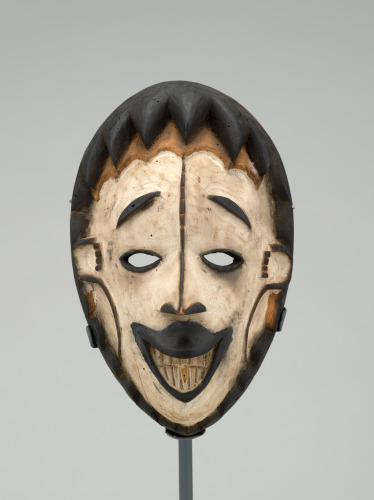
Masks that use a restricted black-and-white palette to define the face are now considered typical of the Cross River region of southeastern Nigeria. However, this striking style can be seen in Ogoni and Ibibio masks from the area near the coast as well as in Igbo and Idoma masks from farther north, near the Benue River.
The original inspiration for this restricted palette may have come from a more distant culture. In 1804, a popular and respected Islamic preacher in northern Nigeria, Uthman dan Fodio, led a war that created the Sokoto Caliphate. The Caliphate was a religious state with a population of more than 10 million subjects. As the Sokoto Caliphate expanded southward, it pushed many groups south of the Benue River. These groups came into contact with the Idoma and Igbo people as well as their trading partners even farther south in the Cross River area. As a result of these new interactions, the black-and-white style spread quickly throughout the entire region.
Diverging Streams: Eastern Nigerian Art