
Djerma
Water Vessel
Djerma, 1933-1966
Scroll
Djerma
Water Vessel
Djerma, 1933-1966
Physical Qualities
Ceramic, pigment, Vessel: 27 9/16 x 17 5/16 in. (70 x 44 cm.)
Base: 3 15/16 x 13 3/8 in. (10 x 34 cm.)
Cover: 2 7/16 x 11 7/16 in. (6.2 x 29 cm.)
Credit Line
Gift of Ambassador Dawn M. Liberi, Washington, D.C.
Object Number
1999.579
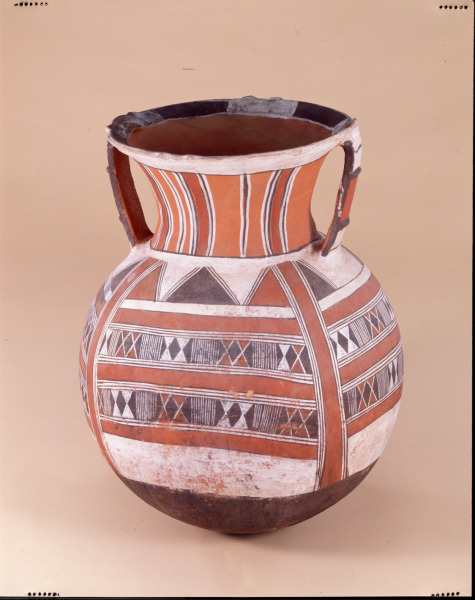
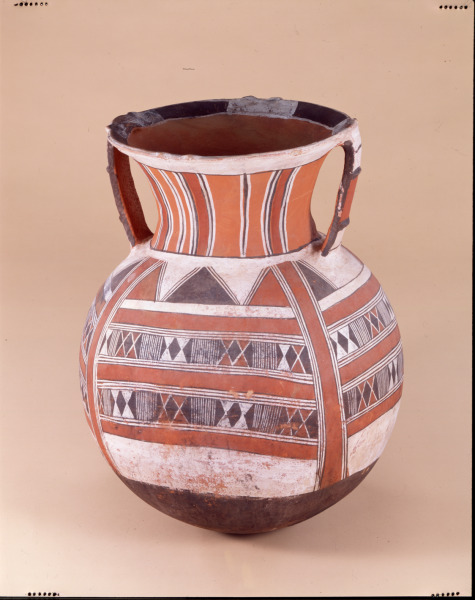
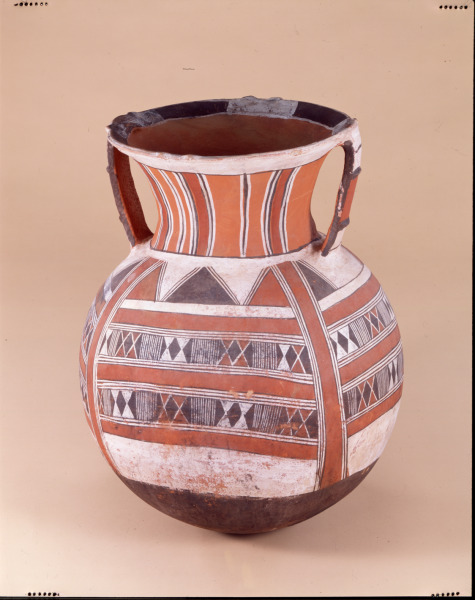
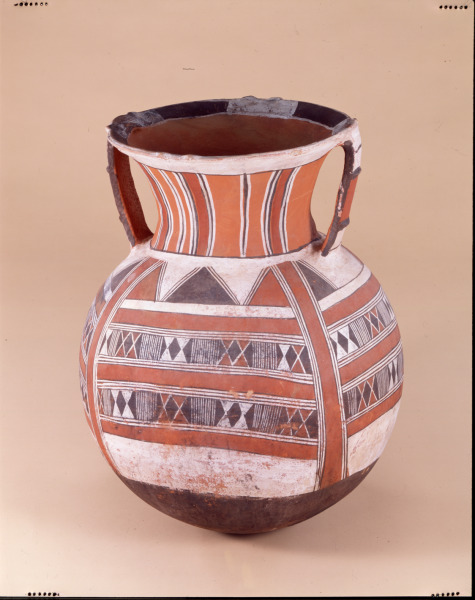
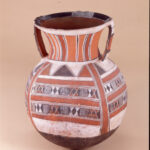
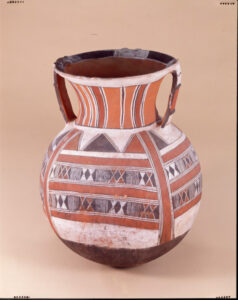
Water is scarce near the plains of the Sahara Desert where Djerma peoples live. Large vessels such as this are highly valued because they store and protect precious water supplies. Natural pigments such as white kaolin, red clay, soft yellow stone, ground charcoal, and ochre enliven the vessel’s surface with bright, dynamic patterns. Because the colors are painted but not fired, the designs are not permanent. Repeated handling will cause them to gradually wear away. A woman may repaint her vessel over time, renewing its surface again and again. Rock paintings found in the Sahara mountain range called Tassili–n-Ajjer portray pots similar in form and decoration, suggesting that ceramic vessels such as these have been used in the Sahara for thousands of years.
Hand Held: Personal Arts from Africa
Kingdoms of Gold and Sand: Art across the Sahara
Frederick John Lamp, "See the Music Hear the Dance: Rethinking African Art at the Baltimore Museum of Art." New York: Prestel, 2004, p.34, ill.
University of Wisconsin Alumni Association. Event Flyer. "Hand Held: Personal Arts from Africa" tour followed by reception. Sunday, January 22, 2012: color image on flyer.
Kathleen Berzock. For Hearth and Altar: African Ceramics from the K. Achepohl Collection. Chicago: Art Institute of Chicago, 2005, p. 58-59.
Frederick John Lamp, "See the Music Hear the Dance: Rethinking African Art at the Baltimore Museum of Art." New York: Prestel, 2003, p.34, ill.
Frederick John Lamp, "See the Music Hear the Dance: Rethinking African Art at the Baltimore Museum of Art." New York: Prestel, 2003, p.34, ill.