Which Way?

Martin Lewis

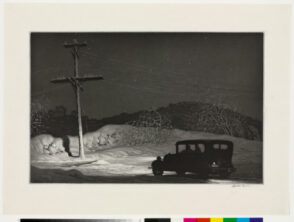
Which Way?

1931

Scroll

Martin Lewis

Which Way?

1931

Physical Qualities Aquatint, Sheet: 362 x 489 mm. (14 1/4 x 19 1/4 in.) Plate: 262 x 402 mm. (10 5/16 x 15 13/16 in.)
Credit Line Purchased as the gift of Dr. Thomas H. Powell in Memory of Dr. William W. More
Object Number 2011.155
This print bookend a time of great upheaval and despair. Kerr Eby’s print depicts an ominous cloud hanging over a mass of soldiers representing the retreat of the German army through the ravaged fields of France in 1918 as World War I came to a close. That cloud, which was said to follow the German soldiers for days, was dubbed “the cloud of blood.” Martin Lewis’ print shows a snowy nighttime scene in rural America. A car that has lost its way shines its headlights on a snowbank at an apparent dead end. Which Way? was created in 1932, a time when Americans were praying for a way out of the Great Depression. Looking for answers, they found only dead ends. The hollowness of victory, as well as the toll that war takes on both people and the landscape, is matched by uncertainty about the future of America.
The Baltimore Museum of Art by purchase, 2011; William P. Carl Fine Prints, Northampton, MA; a Texas Collection
Rena Hoisington, The Baltimore Museum of Art, "New Arrivals: Gifts of Art for a New Century," February 7-May 8, 2016.

Inscribed: lower right in graphite: "Martin Lewis"

Artist

Martin Lewis

1880–1961

American, born Australia, 1881-1962
Meet Martin Lewis

Explore the Collection Further

Martin Lewis
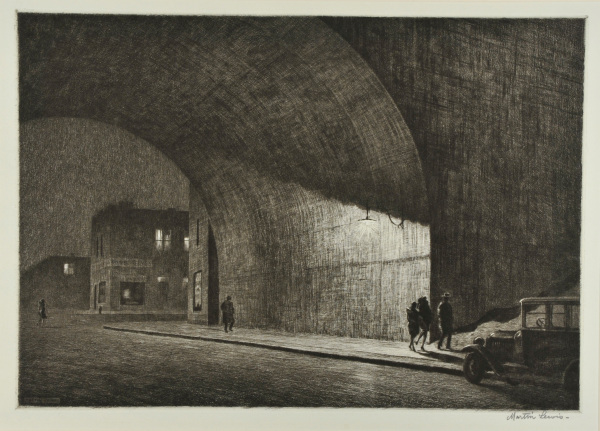
Arch, Midnight
1929
Thomas Nast
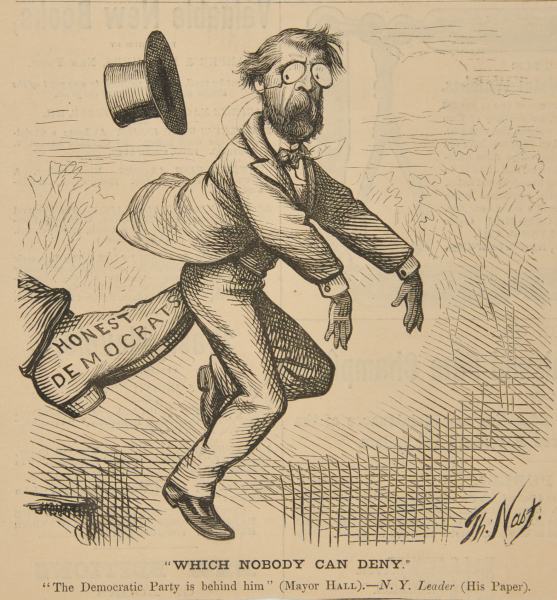
Which Nobody Can Deny
1870
Martin Lewis
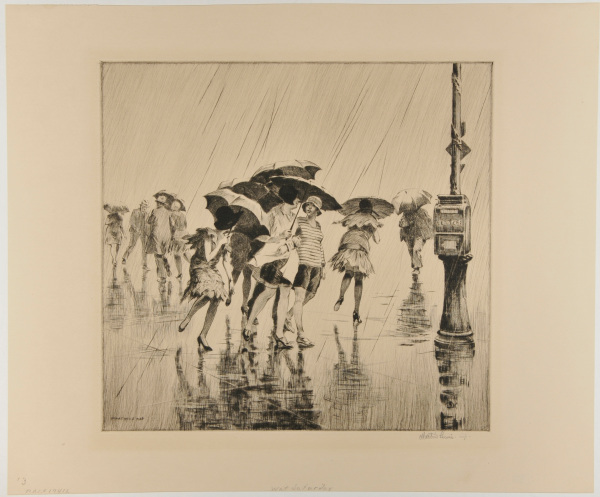
Wet Saturday
1928
James McNeill Whistler
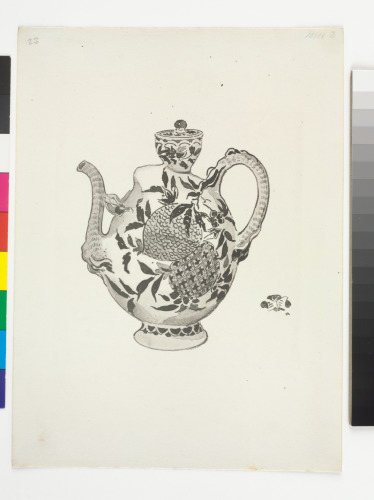
Plate XXIII from the book "A Catalogue of Blue and White Porcelain forming the collection of Sir Henry Thompson (London: Elllis and White, 1878)," which reproduces pen and ink drawings by Whistler. One of a series of proofs, lacking the printed plate numbers and identifying numbers, of these illustrations in the Lucas Collection.
1877
Federico Agnelli
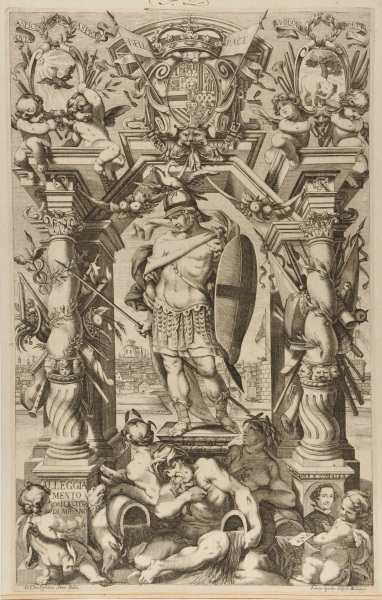
Warrior Standing on a Pedestal, with a Frame on which are Grouped Attributes of War and Peace
1645–1701
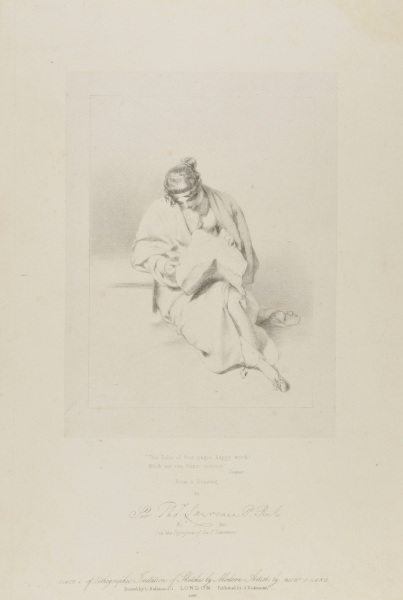
Richard James Lane and Sir Thomas Lawrence P.R.A.
This folio of four pages, happy work! / Which not e'en Critics criticise"- Cowper. From a drawing by Sir T. Lawrence
1826
Ronald Jones and Art Studio Casting
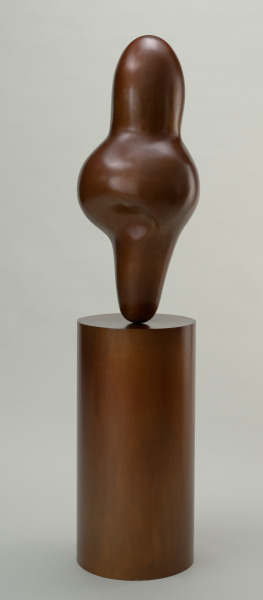
Untitled (DNA Fragment from Human Chromosome 13 carrying Mutant Rb Genes also known as Malignant Oncogenes which trigger Rapid Cancer Tumorigenesis)
1988
Harold Holmes Wrenn
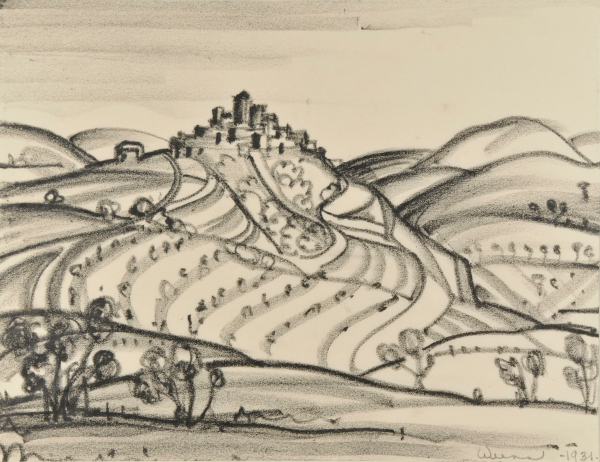
French Landscape. Drawing for a lithograph which was never made.
1930
Henry Jordan, Frederick Halpin, and others
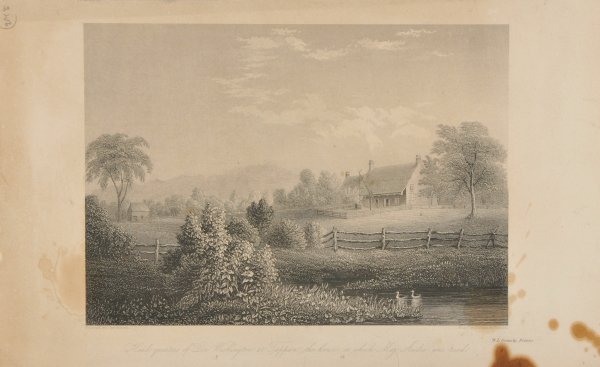
Headquarters of Gen. Washington at Tappan: The House in which Maj. Andre was Tried
1824–1879
Honoré Daumier
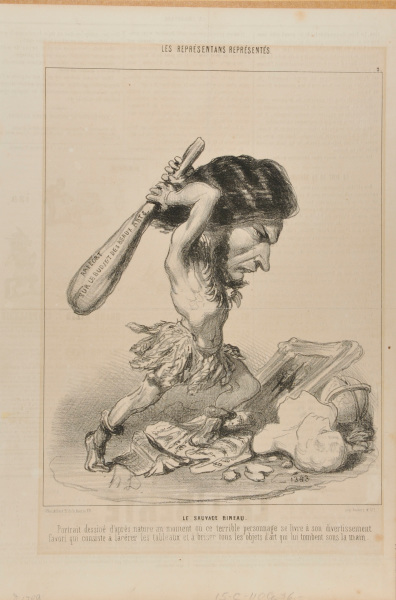
The Savage Bineau. Actual portrait drawn from nature, in the moment when this terrible person indulges in his favourite pastime, which consists of tearing up paintings and breaking all objects of art that he can lay his hands on.
1847
Giovanni Battista Piranesi
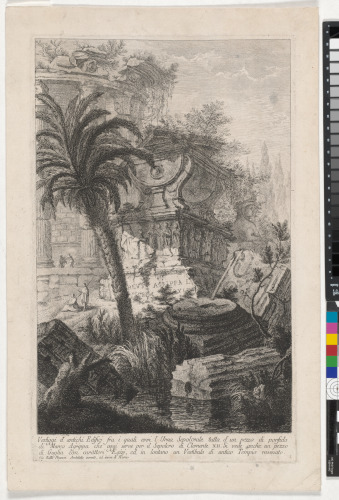
Vestiggi d'antichi Edifici fra i quali evvi l'Urna Sepolcrale tutta d'un pezzo di porfido di Marco Agrippa che oggi serve per il Sepolcro di Clemente XII (Remains of Ancient Buildings Among Which Stands the Sepulchral Urn of Marcus Agrippa Made Entirely o
1742