
Yorùbá
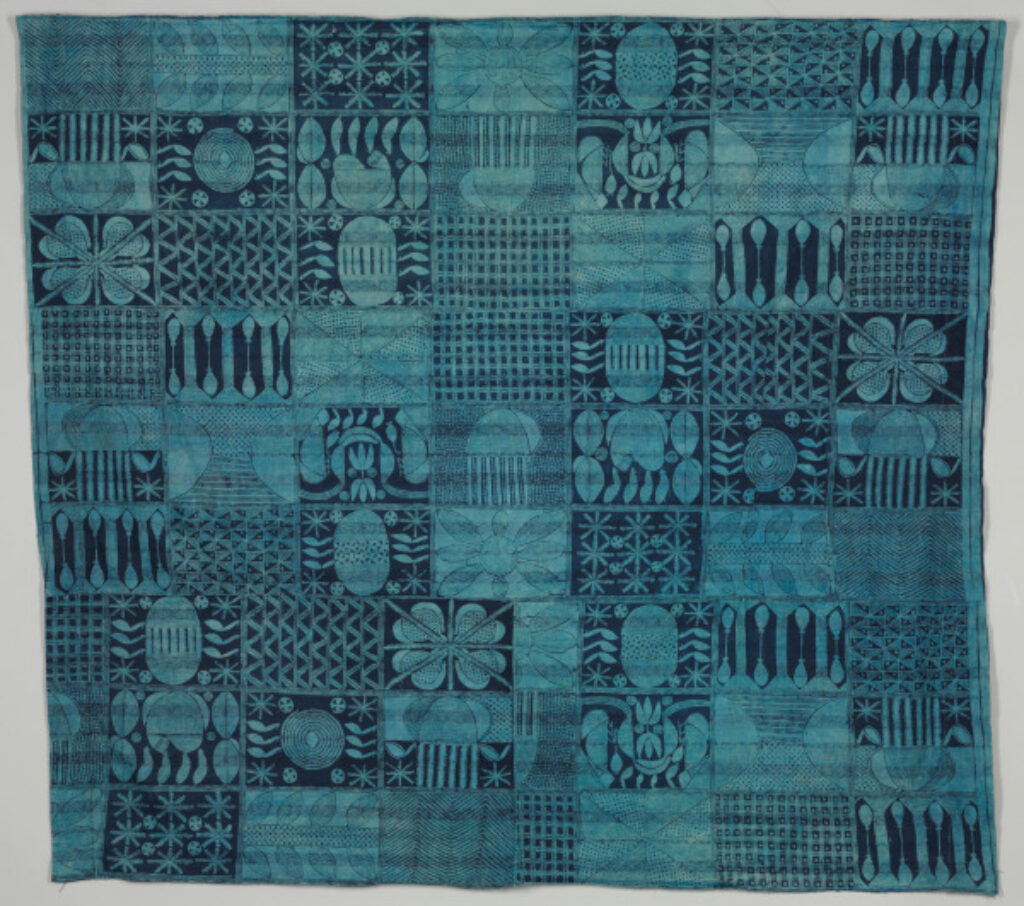
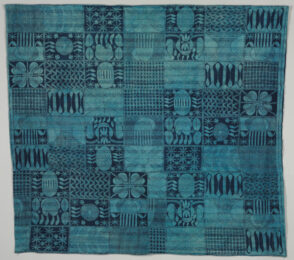
Woman’s Wrapper
Yoruba, 1929-1965



Scroll
Yorùbá
Woman’s Wrapper
Yoruba, 1929-1965
Physical Qualities
Cotton, indigo dye, cassava starch paste residue, 73 x 67 in. (185.4 x 170.2 cm.)
Credit Line
Gift of Geraldine McMurtry, Columbia, Maryland
Object Number
2011.88
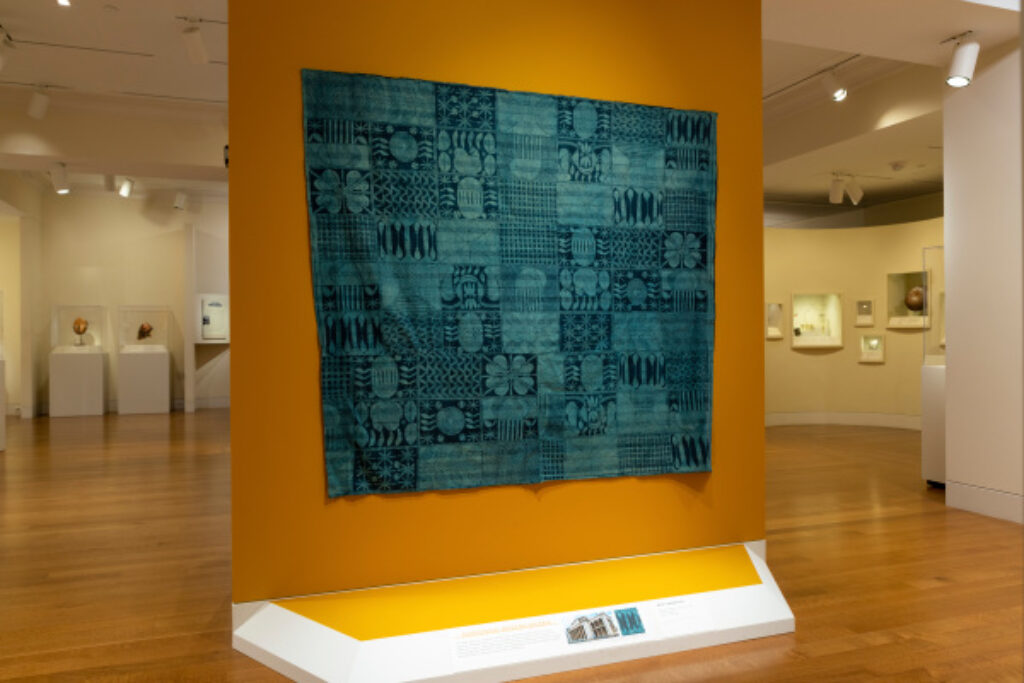
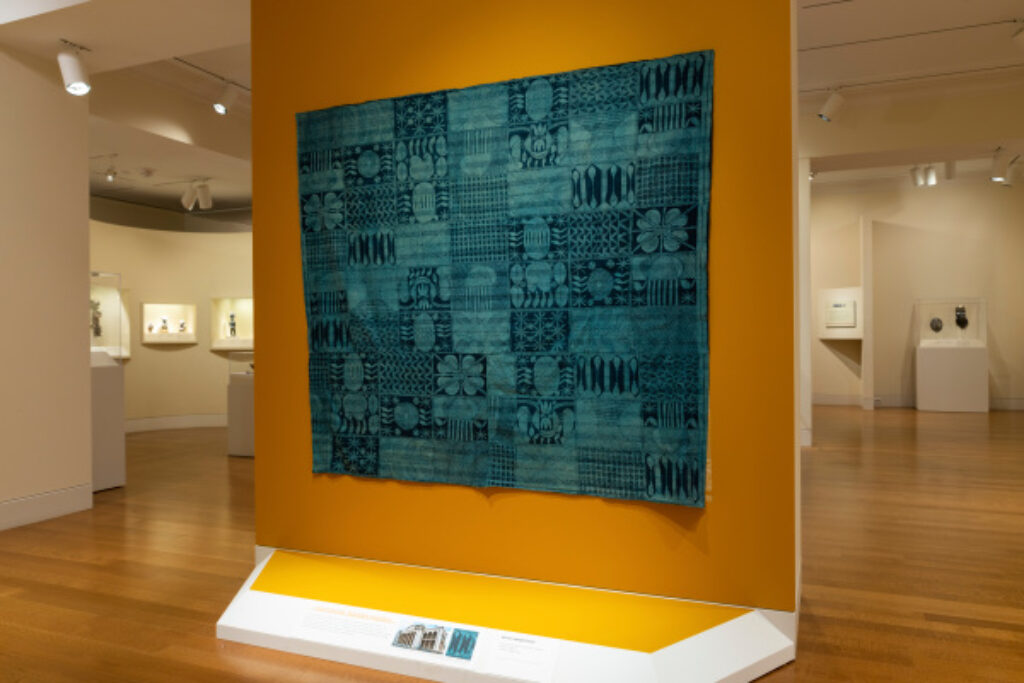
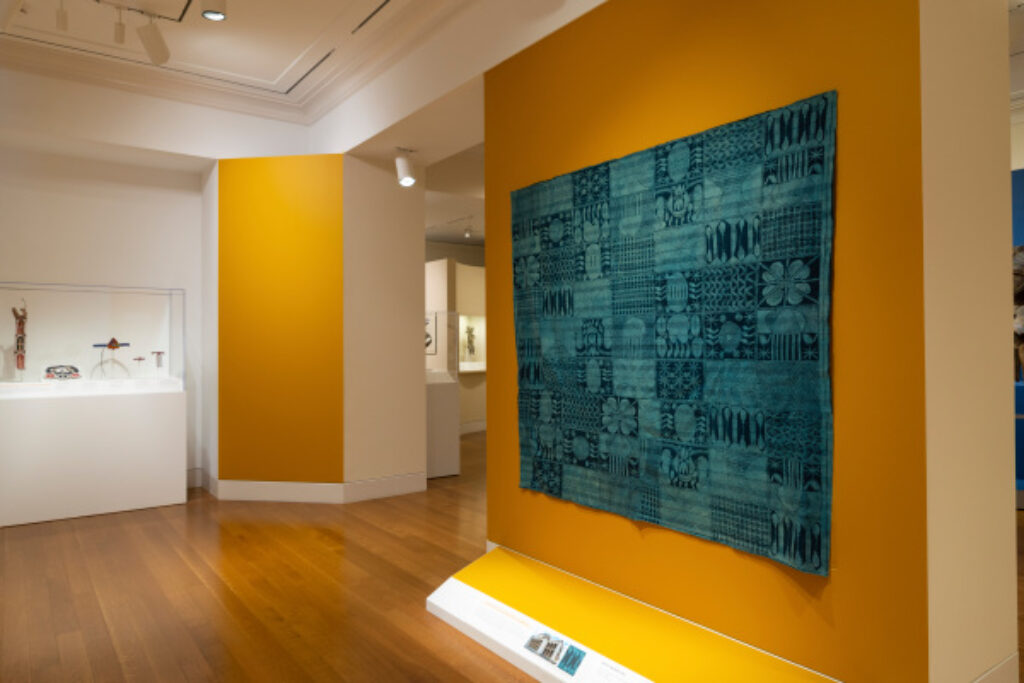
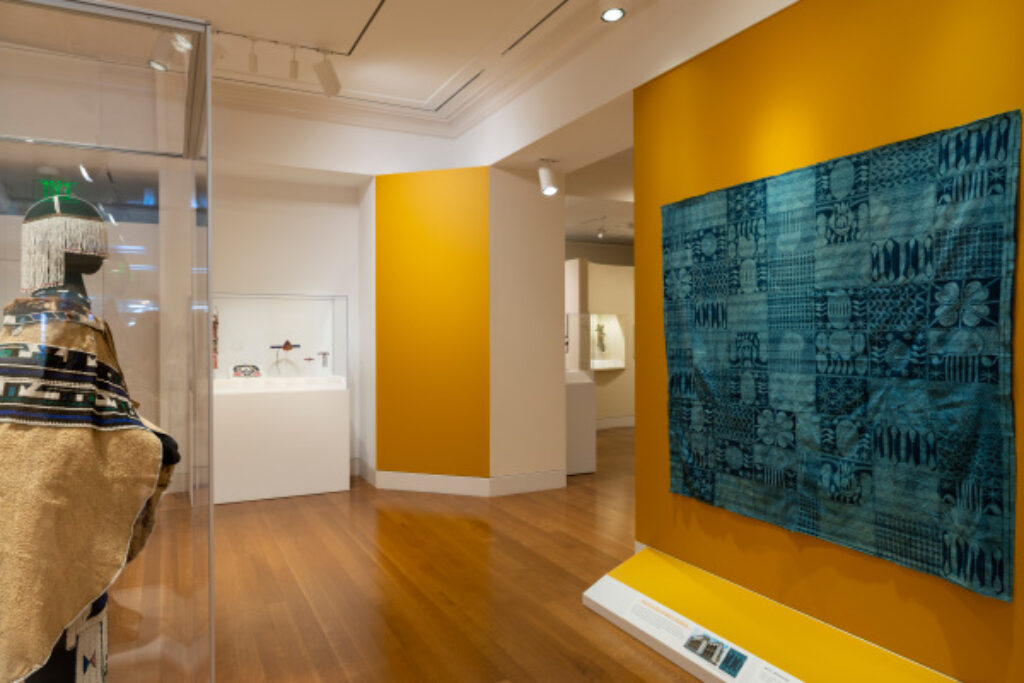
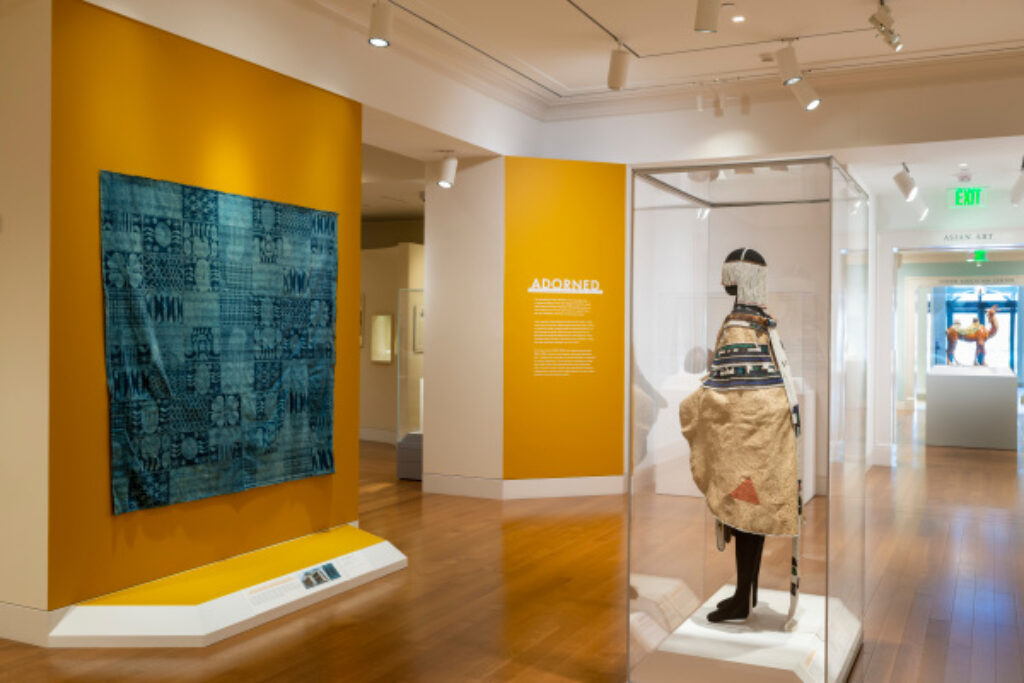
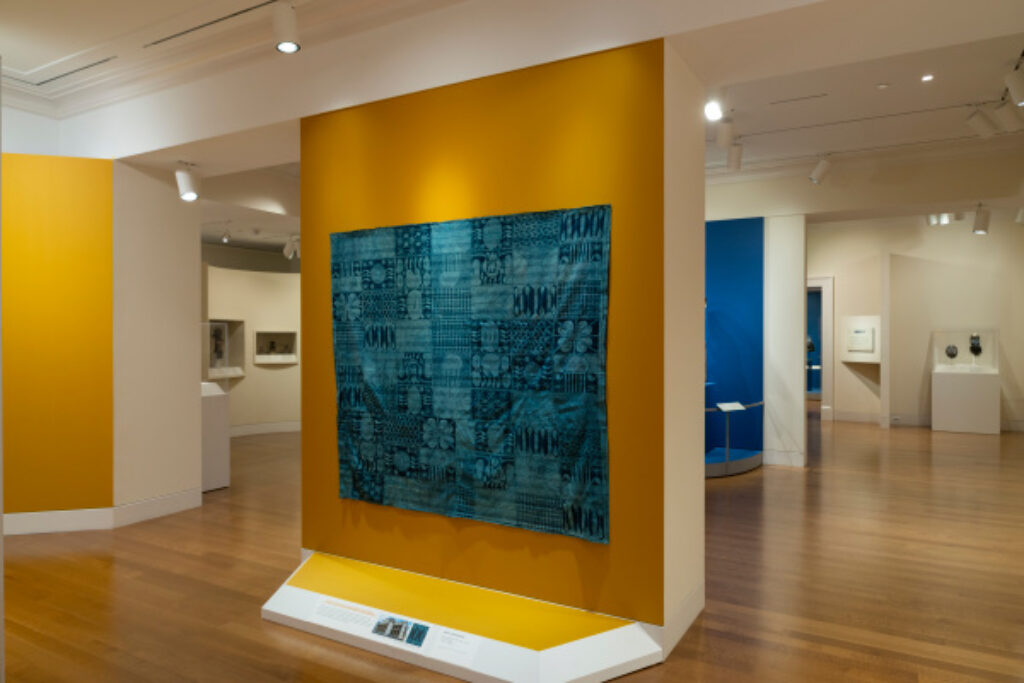
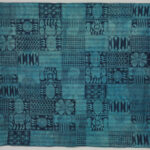
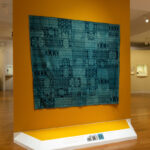
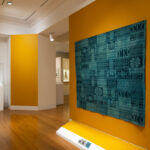
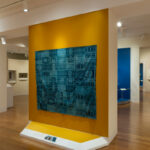
Adire was commonly worn by both women and men as everyday dressing cloth until the 1950s and 1960s, after which multi-colored imported dyes and then industrially-printed cloths became fashionable. Adire is the name for any indigo resist-dyed Yoruba cloth produced through a variety of techniques, such as tying, knotting, binding, stitching or, as in this case, hand-painting. Made by women, eleko designs are created by first applying the designs as resist made from cassava starch paste, then dying the cloth in an indigo bath, and washing out the resist. Collected in West Africa in 1966, this example merges factory-produced brocaded cloth with “Ibadandun,” which celebrates the Nigerian city of Ibadan and is one of several classic adire eleko motifs. Although adire fell out of fashion, new generations of women artists have been trained to create adire
since the 1990s.
The Baltimore Museum of Art by gift, 2011; Geraldine McMurtry, Columbia, MD; collected in 1966 in a marketplace in Bambili or Bambui village, West Cameroon where Gerri and her husband were stationed as Peace Corps volunteers
From Donor Documentation Worksheet 4/23/11:
"I purchased the cloth in Bamenda, West Cameroon, West Africa in 1966, from a shop in Bamenda, Central area of streets lined with shops. I think we called that area Bamenda town. I didnt keep any record of the shops name. As I recall it, it was a tiny shop with little space and just the one man there from whom I bought it."
"I have no more specific information about where the man or the shop obtained the cloth beyond what Ms. Bridges or Ms. Simmons told me in a phone conversation; that The Baltimore Museum of Art researchers had confirmed that it was made in Nigeria."
Per Geraldine McMurtry, Donor Documentation worksheet, entered by M.Dodd 4/26/2011
From Donor Documentation Worksheet 4/23/11:
"I purchased the cloth in Bamenda, West Cameroon, West Africa in 1966, from a shop in Bamenda, Central area of streets lined with shops. I think we called that area Bamenda town. I didnt keep any record of the shops name. As I recall it, it was a tiny shop with little space and just the one man there from whom I bought it."
"I have no more specific information about where the man or the shop obtained the cloth beyond what Ms. Bridges or Ms. Simmons told me in a phone conversation; that The Baltimore Museum of Art researchers had confirmed that it was made in Nigeria."
Per Geraldine McMurtry, Donor Documentation worksheet, entered by M.Dodd 4/26/2011
Hand Held: Personal Arts from Africa
Adorned: African Women & the Art of Identity
Tribal Art, "Museum News: Adorned," 94, no.4 (2019): 48.
Baltimore Museum of Art. "The Baltimore Museum of Art: Celebrating a Museum." Baltimore: The Baltimore Museum of Art, 2014.
"Woman's Wrapper" BMA Today, no. 162 (winter/spring 2020): p. 15
Cooksey, Susan. "Tracing the Routes of Indigo: Four Textiles from West Africa." In Africa Interweave: Textile Diasporas. Exhibition catalogue. Samuel P. Harn Museum of Art: Florida, 2011.
Keyes, Carolyn Marion. Adire: Cloth, gender and social change in Southwestern Nigeria, 1841-1991. Ph.D. Dissertation: The University of Wisconsin, Madison, 1993.
Keyes, Carolyn Marion. Adire: Cloth, gender and social change in Southwestern Nigeria, 1841-1991. Ph.D. Dissertation: The University of Wisconsin, Madison, 1993.

